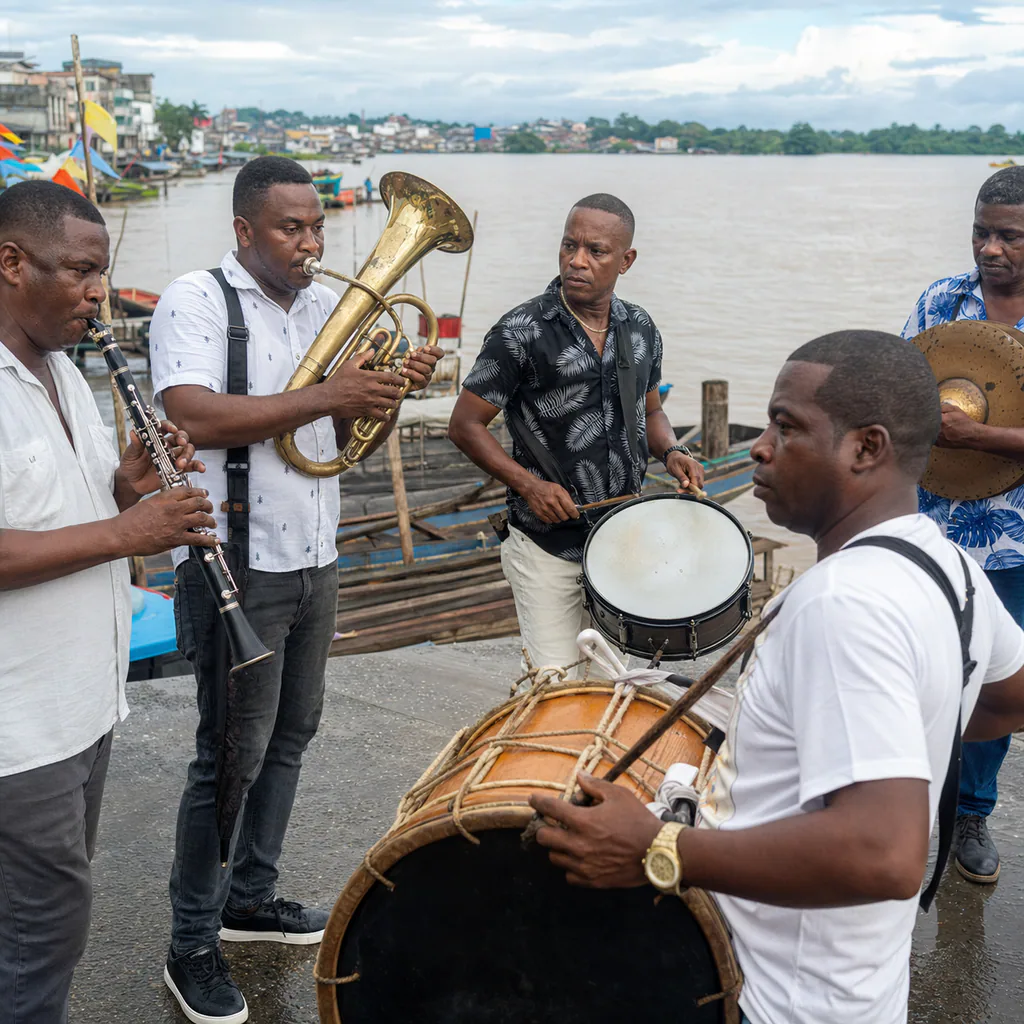
Quibdó is not a Pacific beach town. It is an inland river capital where the Atrato carries people, food, memory, and music through one of Colombia's rainiest regions. Boats gather along the waterfront, chirimía brass and percussion animate public life, and kitchens transform river fish, plantain, coconut, herbs, and fruit into a cuisine inseparable from Chocó.
A thoughtful visit in 2026 begins by seeing Quibdó as a city rather than a gateway to somewhere else. Its strongest experiences are not a checklist of monuments. They emerge from the relationship between the river, Afro-Chocoano culture, Indigenous territories across the wider region, neighborhood organization, food, faith, and everyday resilience.
Meet Quibdó at the Atrato
The Atrato is the city's main orientation point. The official Colombia Travel guide to Chocó highlights Quibdó's riverfront promenade and the small boats that connect the capital with nearby communities. Walk the malecón when the heat is easing, watch the river traffic, and notice how the opposite bank makes the city feel both urban and deeply connected to forest and water.
This is a working river, not a decorative backdrop. Ask before photographing boat crews, vendors, or passengers, and arrange excursions through an established local operator. River levels and rain can alter departures, landing places, and journey times quickly. A flexible schedule is more useful than a tightly timed plan copied from an old itinerary.
A River Recognized as a Living Subject
The Atrato also carries exceptional legal and cultural meaning. In its landmark T-622 decision, Colombia's Constitutional Court recognized the river, its basin, and tributaries as an entity with rights to protection, conservation, maintenance, and restoration. The ruling connects environmental care with the biocultural rights, food systems, health, and traditions of the ethnic communities living throughout the basin.
For visitors, that principle should shape behavior. Avoid single-use waste, never treat the river as an open rubbish bin, and prefer community-connected experiences that explain both beauty and environmental pressure. A boat ride becomes more meaningful when a local guide discusses fishing, transport, rainfall, conservation, and life along the banks rather than offering scenery alone.
San Pacho Is a Neighborhood Tradition
Quibdó's most important celebration is the Festival of Saint Francis of Assisi, known as San Pacho. UNESCO inscribed it on the Representative List of the Intangible Cultural Heritage of Humanity in 2012. Its official heritage profile describes a cycle organized by twelve Franciscan neighborhoods between early September and early October, blending Catholic devotion with chirimía, dance, costumes, floats, street decoration, and communal celebration.
San Pacho is much more than a colorful parade. Families, artists, musicians, craftspeople, and young apprentices maintain knowledge across generations. The river procession, neighborhood events, dawn hymns, and grand religious procession reveal different sides of the festival. If attending, follow the program published by organizers, make room for residents, ask before close-up photography, and remember that worship and community identity are not performances staged solely for tourists.
Listen for Chirimía, Taste Chocó
Chirimía gives Quibdó a recognizable sound through clarinet, euphonium, drums, cymbals, and other percussion. You may hear it during San Pacho, but it also belongs to social gatherings, ceremonies, and the wider musical life of Chocó. Seek public cultural programming or performances that compensate musicians rather than expecting spontaneous entertainment on demand.
Food offers another route into the region. The official Chocó cultural profile emphasizes fish, plantain, coconut, maize, yuca, local herbs, and preparations such as tapao and rice with longaniza. Menus vary, and that is part of the pleasure. Ask what is fresh, try a local fruit drink, and choose small restaurants or market kitchens where staff can explain ingredients. Treat traditional knowledge as expertise, not as an exotic curiosity.
Plan the City and a Nearby Nature Day
El Caraño is Quibdó's airport and the simplest arrival point for many visitors. Flight schedules, baggage allowances, and fares change, so verify them directly with the airline. Overland travel can be slow and vulnerable to rain or road conditions; check the current route before departure and avoid building a same-day connection with no margin.
Spend at least one full day in the city before adding nature. Tutunendo, within the wider municipality, is known for rivers, waterfalls, and extremely wet tropical forest, but access conditions require local confirmation. Use a guide, wear footwear with grip, protect electronics from rain, and never enter a river or pool when local residents advise against it. An extra night makes weather changes less disruptive and supports Quibdó's accommodation and food businesses.
Practical Tips
- Pack a light rain shell, quick-drying clothes, waterproof protection for electronics, and shoes with reliable grip.
- Carry some cash in small denominations while keeping cards and valuables discreet.
- Use registered transport and ask your accommodation for current neighborhood and river guidance.
- Confirm boat conditions, life jackets, return times, and the operator before any river excursion.
- Check current health recommendations for Chocó with an official travel clinic before departure.
- Leave breathing room around flights and road transfers because heavy rain can change plans.
🕵️ Insider Secrets
- Walk the malecón twice: morning reveals working river traffic, while late afternoon brings softer light and more social energy.
- Listen for the conversation between clarinet, brass, and percussion instead of treating chirimía as background noise.
- During San Pacho, learn which neighborhood is hosting the day before choosing where to stand.
- Ask cooks about regional herbs; their aromas often explain a dish better than its menu name.
- Keep one unplanned half-day so rain, a cultural event, or a local recommendation can reshape the itinerary.
Quibdó asks travelers to slow down and listen. The Atrato is transport route, living ecosystem, legal subject, and cultural axis at once; San Pacho is devotion, artistry, memory, and neighborhood work; food and music carry knowledge that no quick photo can contain. Approach the city with time and respect, and Chocó's capital becomes one of Colombia's most powerful cultural encounters.
eSIM for Colombia
Avoid high roaming fees. Get instant 4G/LTE data with Airalo as soon as you land in Bogotá or Medellín.
- Instant Activation
- No Physical SIM Card
- Local & Regional Plans