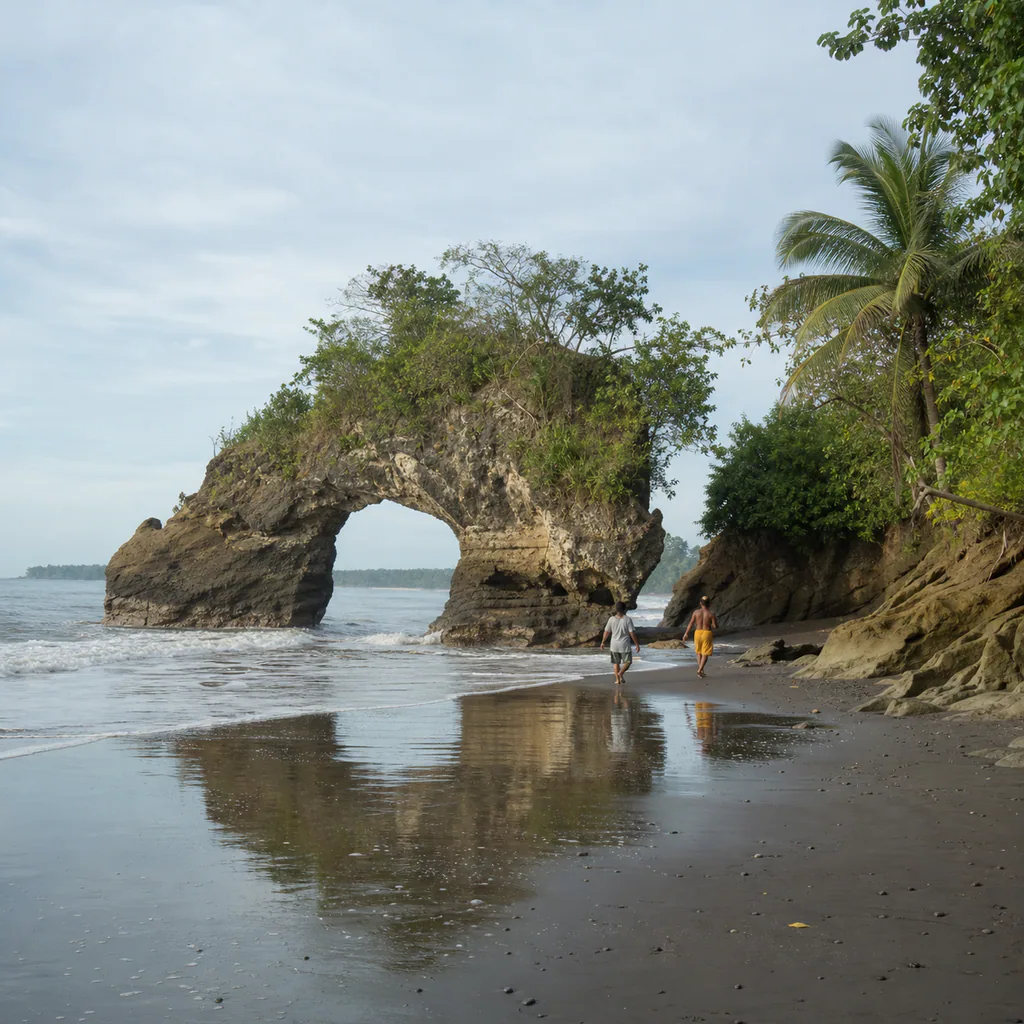
Tumaco changes the meaning of a trip to Nariño. After high Andean roads, volcanic landscapes, and cool mountain cities, Colombia's southwestern edge opens into warm rain, tidal water, dark sand, mangrove roots, fishing boats, and an Afro-Pacific culture carried through food and sound.
San Andrés de Tumaco is a working port district, not a resort built around one beach. Give it at least two nights, begin with a local host, and use the Tumaco marker on the interactive map together with the verified San Andrés de Tumaco city page when planning your stay.
Begin with the Rock Arch at El Morro
Playa El Morro is Tumaco's clearest introduction to the Pacific landscape. The official Colombia Travel profile highlights the natural stone structure rising from the dark sand, a formation that visitors can approach on foot when conditions permit. Its weathered arch, broad tidal beach, and changing reflections make the place more compelling than a simple swimming stop.
Time the visit around daylight and tide rather than chasing a fixed photo. Ask your accommodation or a local guide when the beach route is accessible, keep away from unstable rock faces, and never assume calm-looking water means safe swimming. Watch local guidance, surf conditions, and any posted flags.
Enter the Mangroves as a Guest
Tumaco's coast is shaped by fresh and salt water meeting. According to Nariño's official mangrove tourism information, these tidal forests shelter birds and provide nursery habitat for fish, crabs, shrimp, piangua, and other species central to local food and livelihoods. What looks like a maze of roots is productive infrastructure for both biodiversity and coastal communities.
Arrange a canoe or small-boat outing with a local operator who can explain the route, tide, duration, life jackets, weather decision, and community permissions. Keep music low, do not touch wildlife, and carry every piece of rubbish back. A good guide will make the journey about relationships between tides, species, fishing knowledge, and settlement, not just about passing quickly through a green tunnel.
Bocagrande and other island beaches may appear close on a map, but sea access is conditional. Confirm the departure point, return plan, boat capacity, fuel, flotation equipment, and what happens if weather changes. Do not improvise an offshore transfer with an unverified offer on the waterfront.
Taste a Cuisine Rooted in the Estuary
Tumaco's table explains the mangrove in another language. Coconut, plantain, local herbs, fish, shrimp, crab, and shellfish become encocados, tapaos, soups, rice dishes, and ceviches with distinctly Pacific character. Nariño's tourism authority describes piangua as both a valued ingredient and part of ancestral Afro-descendant knowledge on the coast; its piangua and concha guide connects the mollusc directly with mangrove gathering and family cooking.
Ask what arrived fresh, choose a restaurant or community kitchen that can describe its suppliers, and let the cook recommend the day's preparation. Do not treat traditional drinks as anonymous souvenirs: ask about ingredients and alcohol content before ordering. Paying a fair price and ordering what is genuinely available supports the working food system better than demanding a checklist dish out of season.
Listen Before Calling It a Performance
Marimba, cununos, drums, voices, currulao, and oral memory belong to social and ceremonial life across the southern Pacific. UNESCO's account of traditional marimba music and dance emphasizes collective memory, knowledge transmission, and Afro-descendant identity in Colombia and Ecuador. Tumaco is not merely a backdrop for that heritage; it is one of the places where musicians and communities keep it alive.
Look for a cultural center, workshop, or locally organized event rather than expecting music on demand. Ask before recording, especially during community or religious gatherings. If a musician explains an instrument or rhythm, compensate the session as cultural work. The most respectful encounter may be a conversation about how the music is taught, built, and shared, not a staged photograph.
Plan a Stay That Fits the Coast
The official Nariño tourism profile for Tumaco brings together El Morro, Bocagrande, mangroves, fishing, Afro-Colombian culture, and seafood as one destination. Plan an urban orientation, a beach period, a responsibly arranged water experience, and time for rain or tide changes.
Check current transport and local conditions shortly before departure. Arrange arrivals during daylight, use transport recommended by your accommodation, keep valuables discreet, and ask hosts which routes make sense that week. These habits are more useful than assuming a coastal district operates like an inland city or an all-inclusive beach resort.
Practical Tips
- Stay at least two nights: Tide, rain, and boat conditions can shift the order of a coastal itinerary.
- Verify every boat trip: Confirm the operator, route, return time, life jackets, weather policy, and total price before boarding.
- Dress for water: Carry quick-drying clothing, secure footwear, rain protection, sun protection, and a dry pouch for documents.
- Carry small cash: Digital payment may not be available for every boat, food stall, or community service.
- Respect the mangrove: Do not remove shells, roots, plants, or animals, and take all waste back to town.
- Check local advice: Ask your accommodation about tides, swimming conditions, transport, and neighborhood routes each day.
🕵️ Insider Secrets
- Walk El Morro twice: The same shore can feel completely different as the tide changes the reflections and access.
- Order the catch, not the menu photo: Asking what arrived that morning often leads to the best meal.
- Listen for the low notes: In a marimba ensemble, follow how the wooden keys, drums, shakers, and voices answer one another.
- Bring a dry bag: Pacific rain and boat spray can arrive even when the morning begins bright.
- Leave room for conversation: A boat guide or cook may explain more about the coast than a tightly packed attraction list.
Tumaco rewards travelers who adjust to the coast rather than trying to control it. Follow the tide, choose local expertise, eat what the estuary provides responsibly, and approach music and mangroves as living community knowledge. El Morro may be the image that brings you here, but the wider Pacific relationships are what make the journey memorable.
eSIM for Colombia
Avoid high roaming fees. Get instant 4G/LTE data with Airalo as soon as you land in Bogotá or Medellín.
- Instant Activation
- No Physical SIM Card
- Local & Regional Plans