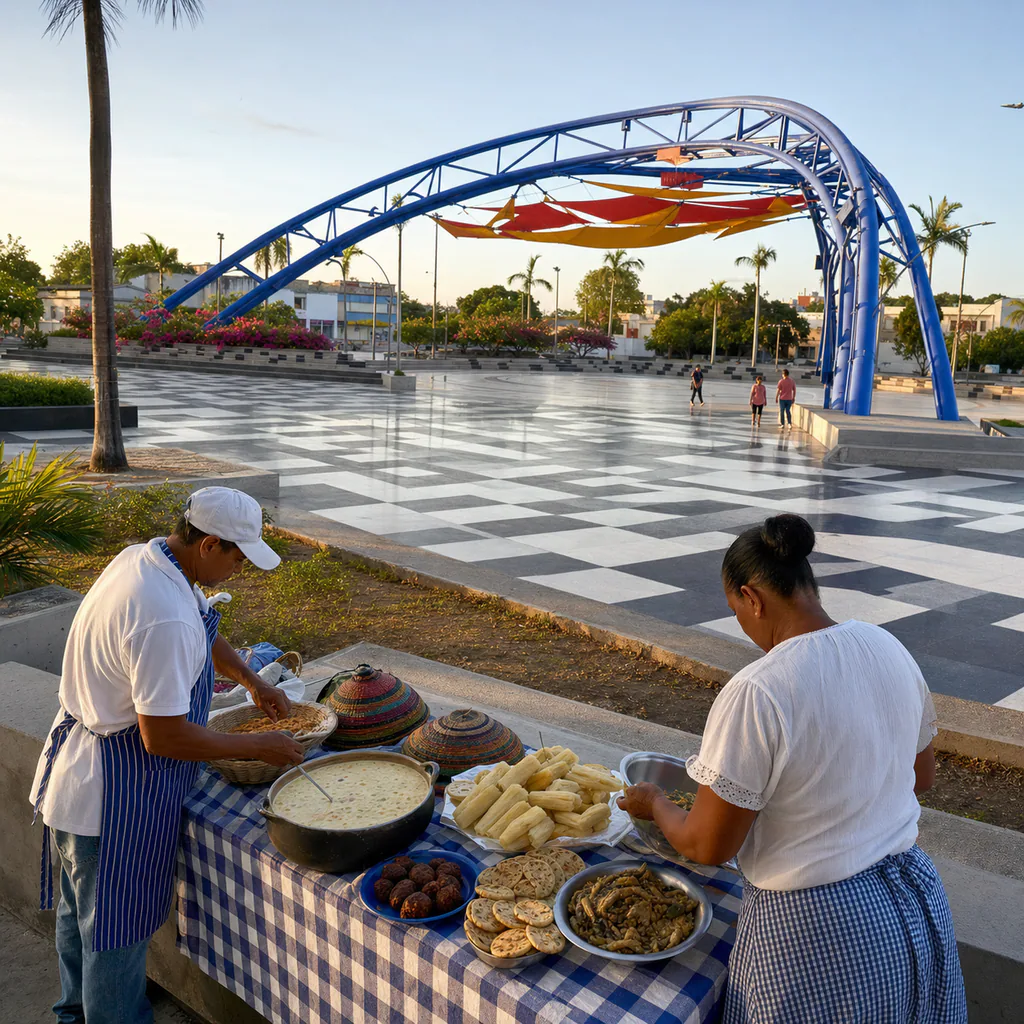
Sincelejo is often treated as the practical stop between an airport, a bus terminal, and the beaches of the Gulf of Morrosquillo. That role is real, but it is incomplete. Sucre's capital belongs to the inland Sabanas, where wind bands, gaita and drum traditions, accordion music, livestock country, Indigenous Zenú knowledge, and generations of migration have shaped a distinctly Caribbean city.
Give Sincelejo two nights in 2026 and it becomes more than a transfer. You can watch Plaza de Majagual wake up, listen for the sounds that define the surrounding savannas, eat dishes that reveal Sucre's cultural crossings, and plan nearby journeys without pretending that the coast is inside the city.
Begin at Plaza de Majagual
Plaza de Majagual is Sincelejo's strongest visual introduction: a broad civic space of geometric paving, palms, stepped edges, and a sweeping blue structure holding a suspended canopy. The official Colombia Travel profile of Plaza de Majagual emphasizes its role as a gathering place for concerts, festivals, and community events.
Visit first in the morning, when the scale and patterns are easiest to read, then return if an evening program is scheduled. The plaza is a working public venue rather than a monument frozen for tourism, so access, maintenance, and event setups can change. Check local cultural listings instead of assuming that a performance happens every night.
From Majagual, continue through central Sincelejo at a deliberately ordinary pace. Cafeterias, small shops, street commerce, and neighborhood movement explain the city better than a checklist of façades. Ask before photographing vendors or customers, keep cameras away from children, and buy something when a business has given you time or context.
Listen to the Music of the Sabanas
Sincelejo's musical identity is broader than one festival or genre. The official Sincelejo destination guide describes gaitas, clarinets, drums, guitars, and accordions meeting in the city and across Sucre. The regional tourism guide adds three important currents: wind bands from the Sabanas, traditional gaita-and-drum music, and vallenato sabanero.
Look for a public concert, band gathering, rehearsal, or small live-music venue, but confirm the program locally. Listening respectfully means more than filming a chorus for social media: stay for a complete set, pay an entry fee or contribution when requested, and learn the name of the group. If musicians are rehearsing rather than performing, ask before recording.
January brings Sincelejo's largest traditional celebrations and much heavier demand for rooms and transport. Review the program event by event. Some festivities include bull-centered traditions that will not suit travelers concerned about animal welfare, while concerts, parades, crafts, and other public cultural activities may offer a different way to participate.
Eat Sucre's Cultural Crossroads
The table is one of the clearest ways to understand the department. The official Sucre regional guide traces influences from Zenú, Afro-descendant, European, and Syrian-Lebanese communities. In the Sabanas and Montes de María it highlights mote de queso, sancocho de gallina, smoked eggplant salad, yuca with roast meat, kibbeh, tabbouleh, and snacks such as diabolines.
Do not try to collect every dish in one oversized lunch. Begin with a bakery or simple breakfast, ask for the day's home-style preparation at midday, and leave room for diabolines or another cassava-based snack. Mote de queso is rich and comforting, while smoked eggplant and kibbeh make Sucre's Levantine inheritance visible without separating it from generations of local adaptation.
Ask what is prepared in-house and discuss ingredients before ordering if you have allergies or dietary restrictions. Independent restaurants may work from a changing daily menu, which is often a better guide than an old online listing.
Use the Capital as an Honest Base
Sincelejo is inland, not a beach town. That distinction improves a Sucre itinerary. The city is a useful base for the savannas and a transport gateway toward Tolú, Coveñas, San Onofre, Sampués, or Tuchín, but each place deserves realistic travel time. The regional guide describes Sucre as five different subregions rather than one interchangeable Caribbean landscape.
Las Brujas Airport is in nearby Corozal, while intercity buses connect the capital with coastal and inland destinations. Confirm current flight, bus, and transfer schedules directly with operators. For a first stay, choose accommodation with verified transport access and ask about nighttime arrival arrangements before booking.
A strong two-night plan keeps the first day in Sincelejo and uses the next morning for the city before continuing elsewhere. If you visit a Zenú weaving community, choose an established local workshop, ask who made each piece, and pay the stated artisan price rather than treating bargaining as entertainment.
Practical Tips
- Plan outdoor walks early or late; shade, water, and sun protection matter in the Caribbean heat.
- Confirm Plaza de Majagual access and cultural events locally because maintenance and schedules change.
- Carry small cash for cafeterias, snacks, markets, and independent transport.
- Use registered taxis or established ride services at the airport, terminal, and after dark.
- Book well ahead for major January dates and review cancellation terms carefully.
- Treat Tolú, Coveñas, and other coastal destinations as separate journeys, not sights inside Sincelejo.
🕵️ Insider Secrets
- See Majagual once in soft morning light and again when local life returns after the hottest hours.
- Ask a host which band or rehearsal is active that week instead of searching only for large festivals.
- Order the daily lunch before requesting a long menu; the kitchen's freshest regional dish may not be listed.
- Pair diabolines with a quiet coffee break and notice how many cassava traditions connect the savannas.
- Leave one evening unplanned for a plaza event, neighborhood recommendation, or unhurried dinner.
Sincelejo rewards travelers who stop seeing it as the space between better-known destinations. Plaza de Majagual gives the city a public stage, the music of the Sabanas supplies its pulse, and Sucre's layered cooking turns migration and regional memory into an everyday meal. Stay long enough to listen and eat well, then continue through the department with a clearer sense of where its routes begin.
eSIM for Colombia
Avoid high roaming fees. Get instant 4G/LTE data with Airalo as soon as you land in Bogotá or Medellín.
- Instant Activation
- No Physical SIM Card
- Local & Regional Plans