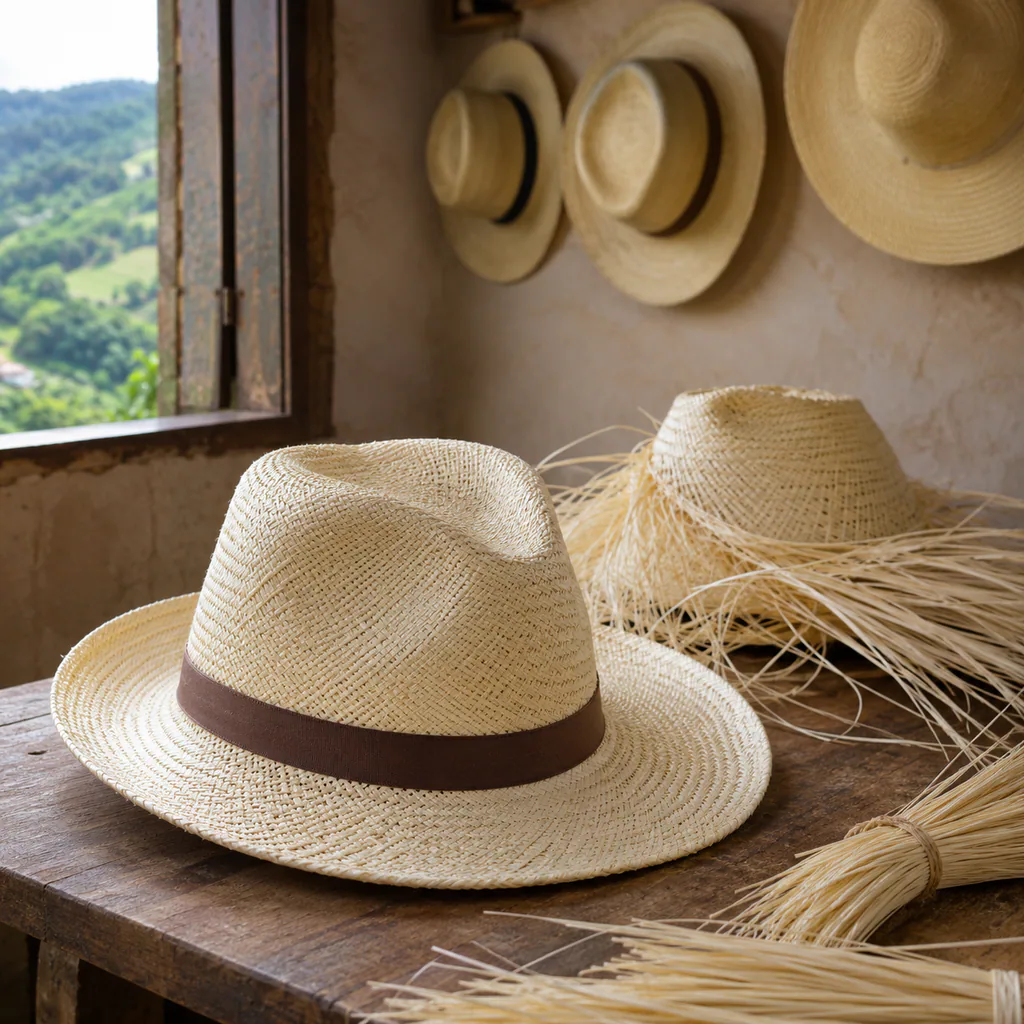
A pale woven hat, a stone church, and a piece of sticky panela candy make an unexpectedly good introduction to Sandoná. This Nariño town brings together skilled handwork, religious architecture, and the agricultural traditions of Colombia's southern Andes. Its appeal comes into focus when you give each of those things time, rather than treating the town as a quick shopping stop.
For a first visit in 2026, plan around one confirmed artisan appointment and a walk through the center. A night in town can make room for a separately arranged countryside experience. Our Sandoná city page and Sandoná map marker provide the starting point for organizing your stay.
Follow the Iraca from Fiber to Finished Hat
Iraca, also called paja toquilla, is the material behind Sandoná's best-known craft. Artesanías de Colombia's history of the local tradition describes links with Ecuadorian hat-making and the growth of the craft across Nariño. Over generations, the work became an important part of Sandoná's identity, with women central to its transmission.
A finished hat reveals only part of that work. The fiber must be prepared before weaving begins, and different makers may handle different stages. When arranging a visit, ask whether you will see weaving, finishing, a product display, or several processes. That distinction helps you appreciate the encounter on its own terms instead of expecting every workshop to perform the entire production chain.
Look closely at the crown, brim, and edge. Artesanías de Colombia's guide to Sandoná weaving records patterns with names such as damero, granizo, and ventilado. Ask the maker to identify the weave in front of you and explain how it affects the piece. Two hats of similar color can represent quite different choices of technique and finish.
Buy with the journey home in mind. Try the fit, examine the edge gently, and ask how the hat should be packed and protected from moisture. Do not assume it can be rolled into a suitcase. If you want a demonstration or a longer conversation, agree on the visit and any fee beforehand; the artisan's working time is part of the experience.
Read the Town through Its Stone Basilica
The Basílica Nuestra Señora del Rosario gives the town center a striking architectural focus. The Nariño tourism authority places it beside Sandoná's central park and describes its Gothic style, three naves, and dressed-stone construction. It also highlights the large wooden image of the Señor de los Milagros, made by the Pasto artist Alfonso Zambrano.
Begin outside, where you can take in the stonework and the building's relationship with the park. If the church is open to visitors, step inside quietly and give your eyes time to adjust. Services and private ceremonies take priority, and permission for photography should be checked locally.
Pair this visit with a seated break and lunch nearby. A morning workshop followed by the basilica creates a useful contrast between delicate fiber work and substantial masonry. Keep some space between appointments: conversations, meals, and the simple pleasure of watching the square should not have to compete with a rigid itinerary.
Taste Melcocha and Explore the Panela Connection
Sandoná's sweet-making provides another way into local craft. The department's guide to melcocha and colaciones describes melcocha as a chewy panela sweet whose preparation involves cooking, beating, and stretching. Its featured recipe includes roasted peanuts, so ask about ingredients before buying if you have an allergy.
Try a small portion and ask how it was made. The change from dark panela to a lighter, worked sweet is worth discussing with a producer when a visit is available. Buying directly can turn a snack into a conversation about family recipes, texture, and the labor behind a familiar ingredient.
For a longer stay, the official Nariño panela route connects Sandoná and Consacá with farms and trapiches, the mills where sugarcane is processed. Arrange a specific visit before traveling out of town. Confirm whether production will be running, what transport is included, and which areas visitors may enter. Keep clear of machinery and hot syrup, following the host's instructions.
Practical Tips
- Use Pasto as a planning gateway: Regional tourism guidance identifies road travel from Pasto to Sandoná. Confirm the current departure point, route, fare, and return arrangements locally rather than relying on an old timetable.
- Allow for changing conditions: Mountain-road journeys can take longer after rain or disruption. Check conditions before departure and keep daylight available for the return.
- Book workshop time: Ask your host to confirm an artisan visit, the language available, and whether purchases and demonstrations are charged separately.
- Match accommodation to your plan: Check whether the property is in the town center or countryside, and whether the final approach requires another vehicle.
- Discuss accessibility: Confirm steps, walking surfaces, bathrooms, and seating at workshops, accommodation, and any farm you intend to visit.
- Carry practical essentials: Bring comfortable shoes, a light rain layer, water, and some cash. Ask sellers about payment methods before choosing a handmade piece.
🕵️ Insider Secrets
- Compare a finished and unfinished piece: Seeing the loose fibers beside a completed brim makes the construction easier to understand.
- Learn the weave's name: Write it down with the maker's details; it gives your purchase a story more specific than “a Colombian hat.”
- Save room for one sweet: A small melcocha tasting fits naturally after lunch and introduces the town's panela connection.
- Choose depth over extra stops: One well-arranged workshop or farm visit is more rewarding than several unconfirmed detours.
Sandoná rewards attention to how things are made: the fibers in a hat, the stonework of the basilica, and the transformation of sugarcane into a sweet. Give those details room in your itinerary, and a small town can become one of the most memorable stops in your Nariño journey.
eSIM for Colombia
Avoid high roaming fees. Get instant 4G/LTE data with Airalo as soon as you land in Bogotá or Medellín.
- Instant Activation
- No Physical SIM Card
- Local & Regional Plans