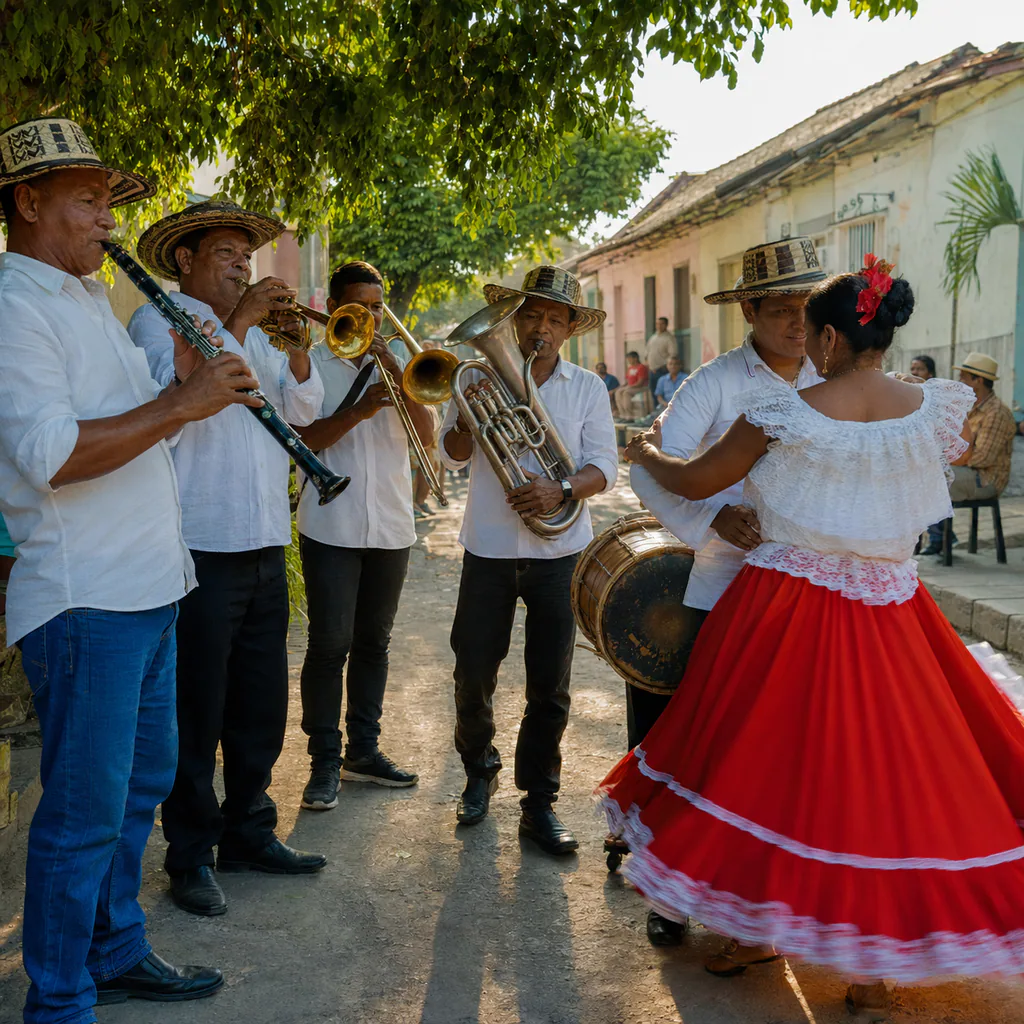
San Pelayo does not treat music as background decoration. On this warm stretch of the Sinú region north of Montería, clarinets answer trumpets, the bombardino fills the middle of the sound, and the bombo marks a rhythm that dancers recognize before a visitor can name it. This is one of the best places in Colombia to understand porro as a living community practice rather than a song added to a travel playlist.
The annual Festival Nacional del Porro brings the tradition into its largest public frame, but the municipality deserves attention beyond those crowded days. Use the verified San Pelayo city page to plan local services and find the town through the San Pelayo marker on the interactive map. One unhurried night gives you a better chance to listen, talk, eat locally, and notice how musical knowledge moves between generations.
Learn What You Are Hearing
Porro pelayero, also called porro palitia'o, grew through the civilian wind-band culture of the Córdoba Caribbean. Señal Memoria's account of San Pelayo traces important local bands to the early twentieth century and explains how the music joins clarinet passages known as the bozá with the bombo player's characteristic striking on the wooden rim.
A traditional ensemble can include clarinets, trumpets, trombones, bombardinos or euphoniums, tuba, bombo, snare drum, and cymbals. Stand where you can hear the low brass and percussion without blocking musicians, then notice how melodic phrases pass through the group and dancers respond to changes in intensity.
Porro palitia'o and porro tapao are related forms, not interchangeable labels for any brass-band performance. Ask a musician or local cultural guide to demonstrate the difference. A short explanation heard beside an ensemble will teach more than memorizing a definition before arriving.
Experience the Festival with Context
The Festival Nacional del Porro began in 1977 during the municipality's bicentennial celebrations. Today it gathers bands, composers, directors, dancers, and listeners around competitions, parades, tributes, and collective performances. Colombia's official tourism portal describes an alborada in which hundreds of musicians come together before much of the town is awake.
The event carries more than promotional importance. Law 2259 of 2022 recognizes porro as intangible cultural heritage of the nation and the San Pelayo festival as an action that helps safeguard it. The law also calls for transmission of knowledge and support for future generations, which is a useful lens for visitors: the headline performance matters, but so do rehearsals, teachers, instrument repair, archives, and young musicians learning their first parts.
Dates, venues, admissions, road controls, and program details can change each year. Check the current schedule with the organizers and local authorities rather than relying on an old poster. During the festival, reserve accommodation and transport early, carry only what you need, agree on a meeting point, protect your hearing near powerful bands, and keep access routes clear.
Follow the Music Beyond the Main Stage
A meaningful visit can happen outside festival week. Ask at local cultural spaces whether a rehearsal, workshop, archive, or public performance is open to visitors. Never walk into a rehearsal as if it were a tourist attraction. Introduce yourself, request permission before recording, and offer to pay when a community host or musician educator has created an experience for you.
Listen for the names attached to the tradition. The piece María Varilla has a special place in the festival's collective memory, while historic local ensembles helped establish the band sound for which San Pelayo is known. Treat these names as an invitation to ask who composed, arranged, taught, and performed the music, not as a checklist to repeat without context.
Leave time for ordinary town life. Walk the center in the cooler morning or late afternoon, buy from neighborhood businesses, and try the day's Caribbean dishes without insisting on a fixed menu. Ask what was prepared locally.
Build San Pelayo into a Córdoba Route
Montería is the most practical regional gateway for many travelers, with San Pelayo reached along the road that continues toward Lorica. Confirm the current bus or shared-transport departure point, return time, fare, and luggage rules at the terminal. Do not assume that an online timetable reflects same-day operations, especially late at night or during major events.
A cultural route can connect Montería's Sinú riverfront with San Pelayo's music and Lorica's heritage architecture. Keep each place distinct and give San Pelayo enough time to meet the music on its own terms.
Practical Tips
- Verify the program: Use current organizer and municipal channels for festival dates, venues, rules, and any ticketed events.
- Plan for heat: Carry drinking water, breathable clothing, sun protection, and a light rain layer. Move demanding walks away from midday.
- Protect your hearing: Bring discreet earplugs for long sessions close to brass and percussion, especially for children.
- Ask before filming: Get consent from musicians, dancers, children, workshop leaders, and people in rehearsals.
- Keep cash available: Small eateries, local transport, market purchases, and informal services may not accept cards.
- Return in daylight: Confirm your last transport before the evening and avoid improvising an unfamiliar road journey after a crowded event.
🕵️ Insider Secrets
- Listen from the side: A position beside the ensemble often reveals the conversation between clarinet, low brass, and percussion better than standing directly in front.
- Watch the bombo: The drummer's hands help you hear why palitia'o is a physical technique as well as a musical label.
- Ask about rehearsal: A permitted daytime rehearsal can be more instructive than the loudest concert because stops, corrections, and repeated phrases expose how the band works.
- Learn one piece well: Hearing María Varilla more than once gives you a reference point for comparing arrangements and performers.
- Stay after the applause: Respectful conversations often begin while chairs, stands, and instruments are being put away.
San Pelayo rewards travelers who arrive ready to listen. The festival is its brightest gathering, but porro survives through daily repetition, shared memory, and people willing to teach the next musician. Give the town time, ask thoughtful questions, and let the sound lead you beyond the stage.
eSIM for Colombia
Avoid high roaming fees. Get instant 4G/LTE data with Airalo as soon as you land in Bogotá or Medellín.
- Instant Activation
- No Physical SIM Card
- Local & Regional Plans