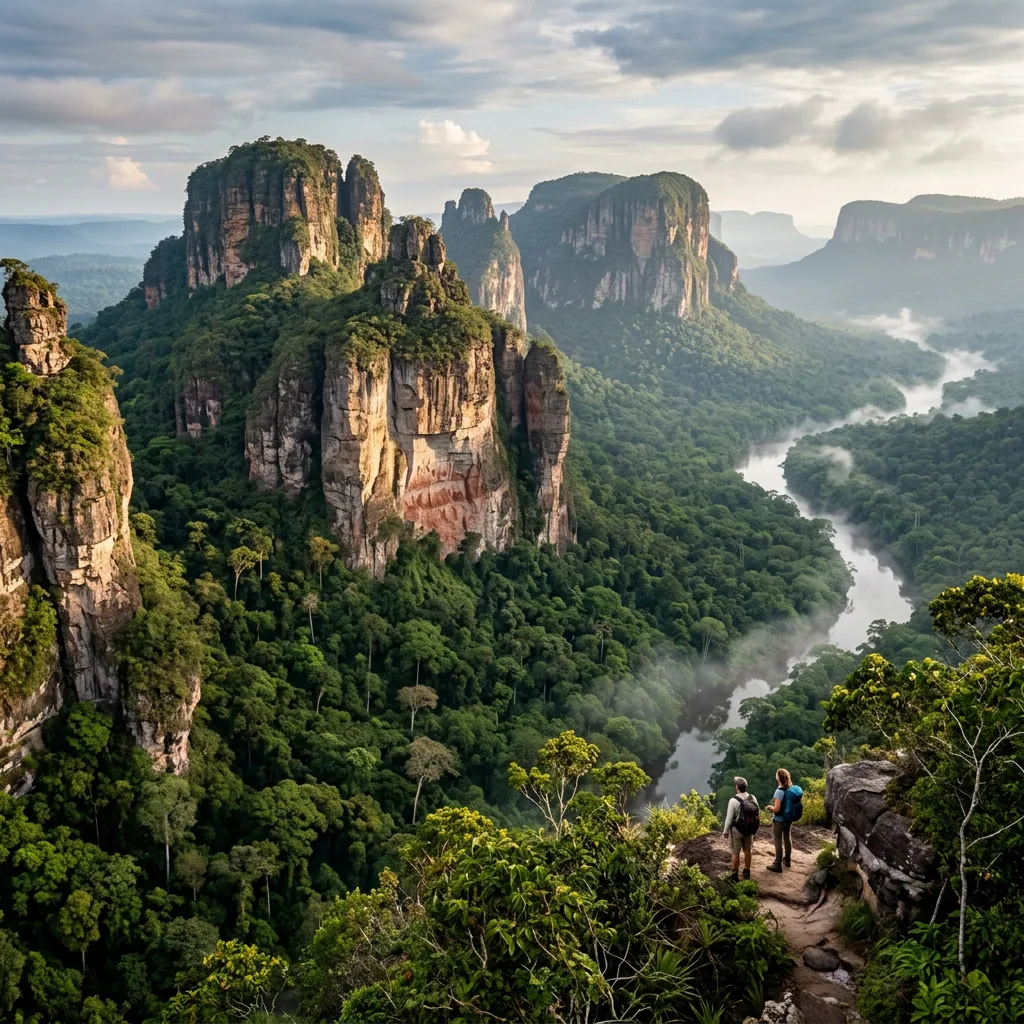
Serranía de Chiribiquete National Natural Park is closed to tourism in 2026 and has no public ecotourism program. Its name belongs in a Colombia nature guide because of its exceptional conservation, cultural, and scientific importance, but it should not be treated as a trek, flight, river excursion, or bookable park visit.
The responsible way to learn about Chiribiquete is through official conservation material and legal experiences outside the protected area. Before planning anything associated with the park, read the official Chiribiquete page from Parques Nacionales and reject any offer that conflicts with its access position.
Is Chiribiquete Open to Visitors in 2026?
No. Parques Nacionales describes Chiribiquete as a protected area without an ecotourism vocation and does not promote visits. That means a nearby airport, river, road, town, or viewpoint is not evidence that entry is authorized. It also means a commercial listing is not a substitute for permission from the park authority.
Do not book an overflight, a trail, an expedition, or a river approach advertised as access to Chiribiquete. Operational rules can change, but a future visit should be considered possible only if Parques Nacionales publishes a formal visitor program with authorized sectors, operators, and conditions.
Why Chiribiquete Is Protected
Chiribiquete protects a vast meeting point between Amazonian, Orinoquian, Andean, and Guianan landscapes. Forest surrounds dramatic table-top rock formations known as tepuis, while rivers and watersheds connect habitats across an immense territory. Its scale gives wildlife room to move and helps preserve ecological processes that cannot survive in fragmented forest.
The park also safeguards archaeological sites and pictographs associated with a long human history in the region. These places are culturally sensitive, not visitor installations. They must be understood together with the rights and territorial protection of Indigenous peoples, including peoples in voluntary isolation whose safety depends on preventing outside contact.
Chiribiquete's UNESCO recognition reflects the relationship between natural and cultural value. It is not a tourism certification. The strongest way a traveler can support that value is to respect the boundary, avoid amplifying unauthorized offers, and learn from material published by conservation and cultural authorities.
What You Can Plan Outside the Park
San José del Guaviare is a useful base for legal nature and cultural experiences in the wider Guaviare region, not a confirmed gateway into Chiribiquete. The region has forest, rivers, rock formations, and archaeological sites outside the national park, but each location has its own land status, community rules, access conditions, and seasonal limits.
When comparing an experience, ask the operator to identify the exact destination and show that it lies outside Chiribiquete. Confirm who manages the site, whether a local guide is required, what registration or insurance applies, and whether current weather or road conditions permit the trip. An RNT registration can help identify a formal tourism business, but it does not itself authorize access to a closed protected area.
Keep the itinerary flexible. Guaviare's road and river conditions can change after heavy rain, and access to a community-managed or archaeological site can pause independently of the national park. A responsible operator should be able to explain an alternative day without presenting a restricted place as a substitute.
Practical Tips for Learning About Chiribiquete
- Start with the source: Recheck the official Parques Nacionales page shortly before travel. Screenshots, old articles, and tour listings can outlive a change in access rules.
- Verify the boundary: Ask for the exact name and location of every proposed stop. "Near Chiribiquete" and "inside Chiribiquete" are not interchangeable.
- Reject unauthorized access: Do not pay for park entry, overflights, river approaches, or treks presented as Chiribiquete visits while the park has no visitor program.
- Respect Indigenous rights: Never seek contact, photographs, objects, or routes connected to peoples in voluntary isolation or culturally restricted sites.
- Choose an outside alternative: Build the trip around places whose access is openly managed by local communities and authorities, with a trained local guide where required.
How to Read Images and Stories Responsibly
Photography and documentaries can reveal the park's geography without making it a destination. Look for context about when and why an image was recorded, who authorized the work, and whether the material protects sensitive locations. Avoid posts that publish route coordinates, normalize entry, or imply that money can bypass conservation restrictions.
🕵️ Insider Secrets
- The most useful question is a boundary question: Ask "Is this location outside the national park, and who authorizes access?" before discussing price or departure time.
- A park name can be marketing shorthand: An experience sold with "Chiribiquete" in its title may actually visit a different Guaviare attraction. Require the exact destination in writing.
- Conservation is the experience: Official talks, museum material, local interpretation, and legal sites outside the park can explain the landscape without creating pressure on a closed territory.
Chiribiquete does not need to be entered to matter. In 2026, the honest travel decision is to keep the park off the booking list, learn why its restrictions exist, and direct time and money toward legal, community-aware experiences elsewhere in Guaviare.
eSIM for Colombia
Avoid high roaming fees. Get instant 4G/LTE data with Airalo as soon as you land in Bogotá or Medellín.
- Instant Activation
- No Physical SIM Card
- Local & Regional Plans