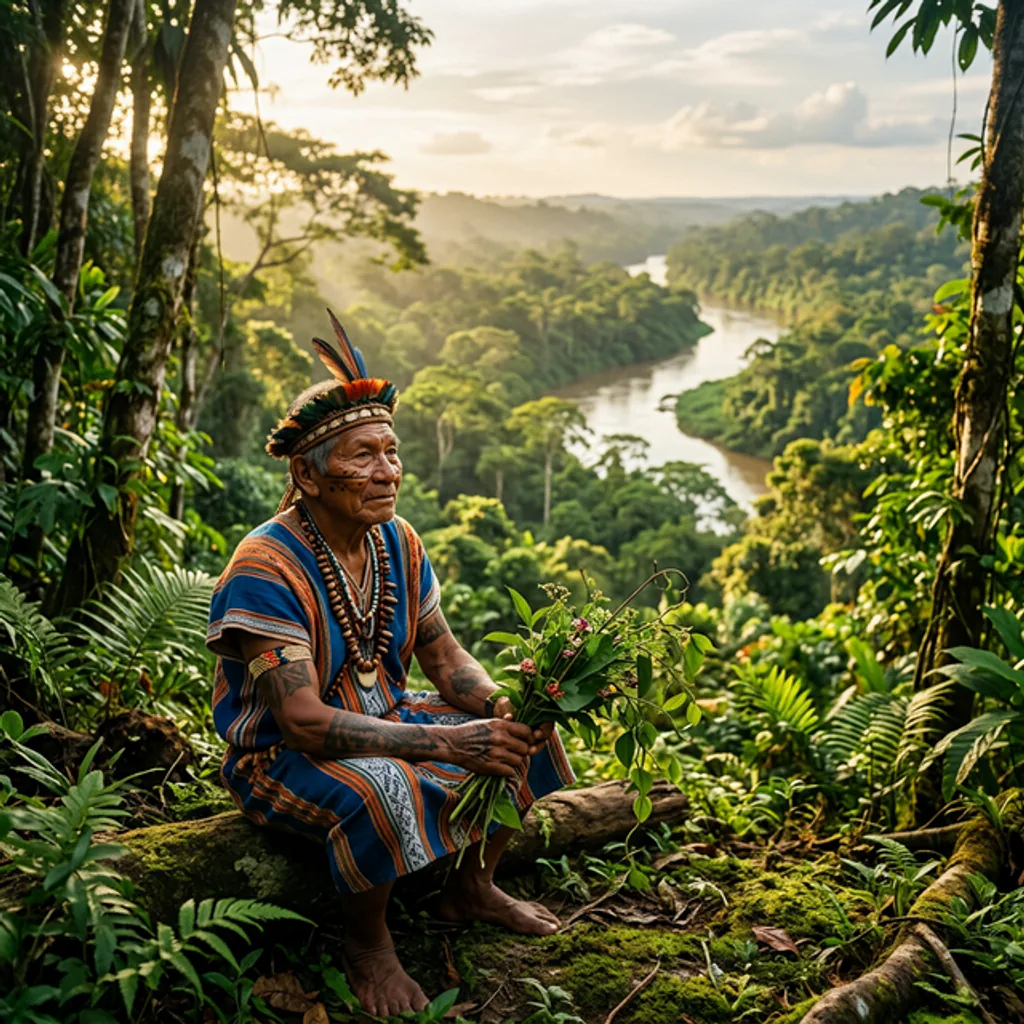
Deep within the emerald heart of Colombia's Amazon, where the canopy is so thick it filters the sun into a permanent twilight, live the true guardians of the rainforest. For millennia, indigenous communities such as the Tikuna, Huitoto, Yagua, and Uitoto have lived in a state of profound equilibrium with one of the most complex ecosystems on Earth. In 2026, as the world faces unprecedented environmental challenges, the ancestral wisdom of these "forest people" has moved from the margins to the center of global conservation efforts. Their knowledge is not just a relic of the past; it is a blueprint for our future.
A journey into the Amazon with an indigenous guide is an exercise in unlearning. It is an opportunity to see the forest not as a collection of resources, but as a living, sentient entity. This guide explores the depth of that wisdom and how you can engage with it ethically and respectfully. When you are ready to turn those principles into a route, use the Colombian Amazon itinerary to sequence Leticia, community-led access, Amacayacu, and Puerto Nariño.
The Living Library: Traditional Ecological Knowledge
To an outsider, the Amazon jungle can seem like a wall of green. To an indigenous person, it is a meticulously organized library, a pharmacy, and a spiritual sanctuary. Their Traditional Ecological Knowledge (TEK) is an incredibly detailed understanding of plant cycles, animal behaviors, and climatic patterns that modern science is only beginning to document.
Many Indigenous-led tourism projects share how communities identify plants, read seasonal changes, and care for forest gardens. Treat explanations of traditional remedies as cultural knowledge, not personal medical advice: suspected malaria and other illnesses require prompt assessment by qualified health professionals. Knowledge is passed down through generations, often in the maloca, the communal house that can also hold deep social and spiritual meaning.
Cosmovision: The Sacred Interconnection
At the core of indigenous wisdom is a "Cosmovision" that recognizes no separation between humans and nature. In the indigenous world-view, every tree has a spirit, every animal is a cousin, and the rivers are the veins of the earth. This is not mere metaphor; it is a lived reality that dictates how resources are used.
Traditional practices include "sacred hunting" and "rotational agriculture" (chagras), which ensure that the land is never depleted. In 2026, many travelers are invited to participate in community ceremonies or listen to the stories of the elders, which explain the origin of the world and the importance of maintaining balance. These encounters are not performances; they are sacred invitations to see the world through a different lens.
The Shaman: Bridge Between Worlds
Spiritual authorities have distinct names and responsibilities across Amazonian peoples; the term Taita should not be applied as though every nation followed one tradition. Practices involving yagé, mambe, or other culturally significant preparations belong to specific community contexts and should not be reduced to tourist products.
This guide does not recommend psychoactive ceremonies. Legal status, composition, medical risks, medication interactions, and safeguarding standards can be uncertain, and a ceremonial title is not proof of clinical competence or ethical conduct. Travelers can learn respectfully through storytelling, forest walks, food, crafts, and community history without consuming a substance or asking for access to restricted practices.
Ethical Engagement in 2026
- Support Indigenous-Led Projects: Ensure that your tour operator is either indigenous-owned or works in a direct, equitable partnership with the local communities. In 2026, the best experiences are found in vehicle-free towns like Puerto Nariño.
- Respect Privacy: A maloca is a home and a temple. Never enter without an invitation, and always ask before taking photos of people or sacred objects.
- Fair Exchange: If you buy handicrafts, such as the beautiful Chambira palm fiber bags or wooden carvings, pay a fair price. These items are often the primary source of income for indigenous families.
- Leave No Trace: The Amazon is a delicate ecosystem. Bring biodegradable products and take all your trash back to a major city like Leticia for proper disposal.
Practical Tips
- Book community-led experiences: Ask who owns the project, who decides what visitors may see, and how income reaches participating families.
- Request consent every time: Permission to enter a community does not automatically permit portraits, audio recordings, geotagging, or publication on social media.
- Prepare for limited services: Carry prescribed medicines, sun and insect protection, safe drinking-water supplies, and an offline copy of emergency contacts.
- Follow local boundaries: Some stories, objects, trails, and ceremonies are not for visitors. Accept a refusal without negotiation.
The wisdom of the Amazon’s indigenous peoples is a treasure trove of knowledge that offers critical insights into how we might survive as a species. Their presence in the forest is the greatest defense against its destruction. In 2026, as you sit in the silence of a Tikuna village, watching the sunset over the world's largest river, you will realize that their wisdom is not just for them—it is a gift for all of us.
🕵️ Insider Secrets
- The "Talking" Trees: Ask your guide about the Renaco tree. It is a type of fig that grows massive aerial roots. Indigenous legend says these trees are the "telephones" of the forest, used by spirits to communicate across vast distances.
- Night Vision: Take a nocturnal walk with an indigenous tracker. They can spot animals—frogs, insects, and even sleeping monkeys—that are completely invisible to the untrained eye. It’s a masterclass in sensory awareness.
- Sustainable Souvenirs: Look for "Yanchama" art. This is a traditional cloth made from the bark of a specific tree, then painted with natural dyes. It is a beautiful, lightweight, and deeply symbolic piece of Amazonian culture.
eSIM for Colombia
Avoid high roaming fees. Get instant 4G/LTE data with Airalo as soon as you land in Bogotá or Medellín.
- Instant Activation
- No Physical SIM Card
- Local & Regional Plans