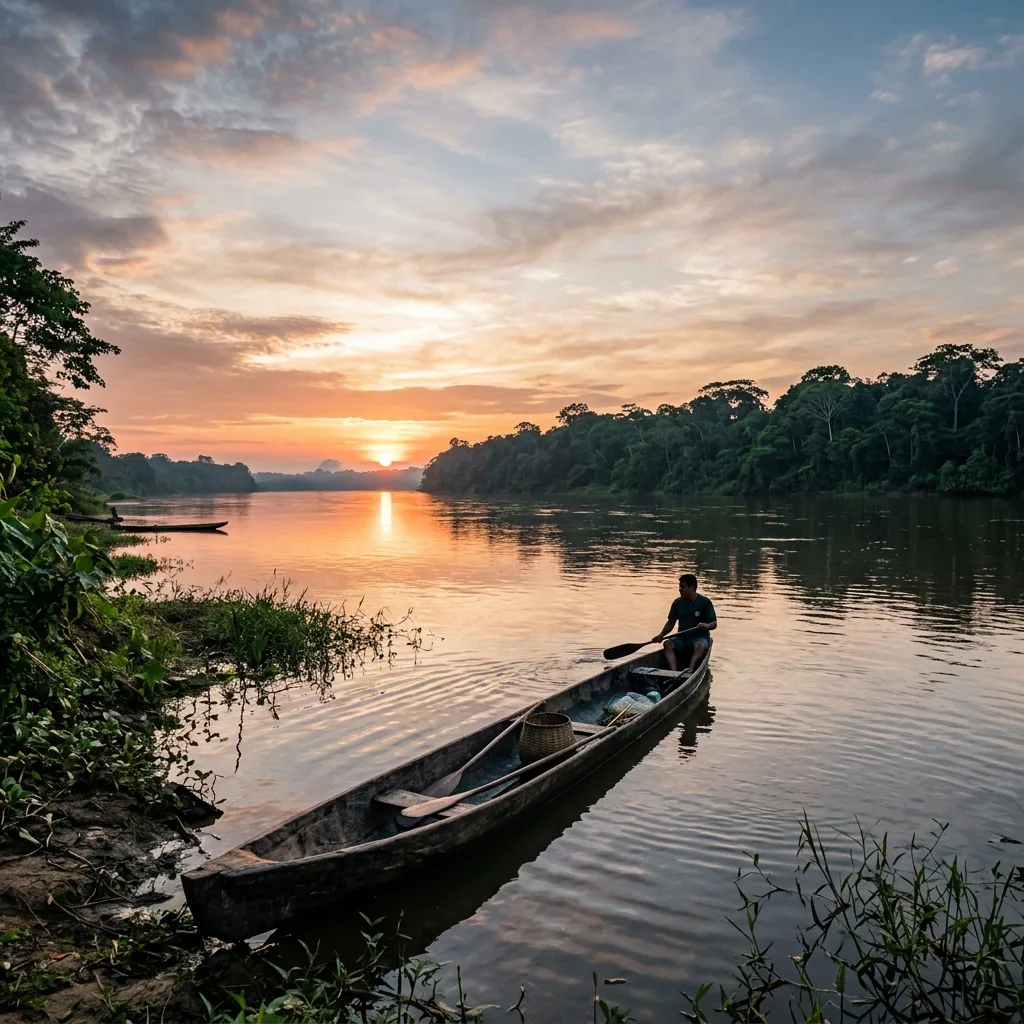
A Colombian Amazon trip is a river journey, not a road trip. For a first visit, the clearest route is to fly to Leticia, use the city as a logistics base, and then travel upstream through Mocagua and Amacayacu toward Puerto Nariño and the Tarapoto wetlands. Five to seven days gives this sequence enough room for weather, changing water levels, community coordination, and a final buffer before the flight home.
This itinerary combines the strongest practical material from our earlier Amazon guides into one canonical planning page. Use it with the Amazon River Journey to see the route in order, then confirm each boat, protected-area requirement, and community visit close to departure.
Days 1-2: Leticia and River Preparation
Leticia is the arrival point for most domestic visitors and the place to solve practical details before heading upriver. Keep the first afternoon flexible, verify the next boat at the civil port, buy any prescribed medicines or basic supplies, and withdraw enough Colombian pesos for places where cards or reliable internet may not be available. The market and riverfront introduce the food and transport systems that connect the tri-border region, while the evening gathering of parakeets around Parque Santander is an easy first wildlife experience.
Do not treat a casual crossing to Brazil or Peru as automatically exempt from immigration rules. Carry your passport and confirm the requirements for your nationality and onward itinerary. If you want more regional food context before leaving Leticia, the Colombian gastronomy guide explains why Amazonian fish, cassava, and fruit belong to a distinct culinary landscape rather than one national menu.
Days 3-4: Mocagua and Amacayacu
The official Amacayacu National Natural Park visitor page describes river access from Leticia toward Mocagua and San Martín de Amacayacu. It also makes an important distinction: activities require advance coordination and accompaniment by a local guide or interpreter, and the community ecotourism teams provide the visitor services. A generic boat ticket is therefore not the same thing as an arranged park experience.
Contact the chosen community before travel and ask exactly where the public boat stops, who meets you, what the itinerary includes, and how the return connection works. On arrival, follow local registration and induction procedures, contribute to the community ecotourism fund where requested, and confirm accident-insurance arrangements. Forest walks, wildlife observation, canoe outings, crafts, and food experiences should follow the route and boundaries set by the hosts rather than an operator promising unrestricted jungle access.
Mocagua and San Martín are not interchangeable hotel products. Each community manages its own visitor relationships, knowledge, and permitted activities. Read the Amazon Indigenous knowledge guide before booking so that consent, photography, community ownership, and cultural boundaries are part of the plan from the beginning.
Days 5-7: Puerto Nariño and Tarapoto Wetlands
Continue upstream to Puerto Nariño rather than trying to return to Leticia between every activity. Colombia's official Puerto Nariño travel page notes that the town is reached by boat and has limited connectivity and banking services. Use it as a quiet base for locally guided wetland and forest experiences, but keep enough cash for accommodation, meals, community contributions, and the return journey.
The Tarapoto wetland system is known for flooded forest, birdlife, and river dolphins. Wildlife sightings are never guaranteed, so choose a small, low-impact outing whose guide explains distance rules, noise, changing water levels, and community management. Never ask a boat operator to chase animals, feed wildlife, or enter a channel that hosts have closed. The wider Colombia biodiversity guide adds useful context without turning a sighting list into a promise.
Spend the final night in Puerto Nariño only if the next day's river and flight connections leave a generous margin. Otherwise, return to Leticia one day before flying. Low water, heavy rain, mechanical delays, and schedule changes can all turn a tightly timed same-day connection into an expensive mistake.
How to Choose an Amazon Experience
Ask who owns and operates the trip, which community receives the visit, and which services are paid locally. A responsible description should name the river route, overnight base, guide or interpreter, group size, insurance, meals, water, and return plan. Be cautious when an itinerary promises contact with several communities in a single rushed day or presents wildlife handling, captive-animal photographs, psychoactive ceremonies, or access to private cultural spaces as standard entertainment.
Match the trip to your comfort with humidity, small boats, basic lodging, insects, mud, and limited mobile service. A shorter community stay with transparent arrangements is more useful than an ambitious package whose transfers depend on perfect weather. Keep the final route flexible enough for the local team to change a walk or water activity when conditions require it.
Practical Tips
- Allow 5-7 days: Use two nights around Leticia, two around Mocagua or Amacayacu, and two around Puerto Nariño, with one of those nights serving as a transport buffer.
- Confirm boats twice: Check the departure when booking and again after arrival. Water levels and operating conditions can affect travel times and landing points.
- Arrange protected-area access: Contact the community ecotourism team in advance and confirm the guide or interpreter, registration, induction, insurance, and exact activities before paying.
- Seek health advice early: Discuss yellow-fever protection, malaria prevention, heat, hydration, and any personal contraindications with a qualified travel-health professional.
- Pack for wet conditions: Bring lightweight long sleeves, sun and insect protection, a dry bag, a headlamp, reusable water capacity, and footwear that can handle mud.
- Protect consent and wildlife: Ask before photographing people, homes, ceremonies, or crafts; do not buy objects made from wildlife parts or join activities that feed or handle wild animals.
🕵️ Insider Secrets
- Make the buffer useful: A spare Leticia afternoon can become market time, a museum visit, or a riverfront walk instead of feeling like a wasted day.
- Ask about the water level: High and low water create different routes and wildlife possibilities. Let current local conditions shape the activity rather than chasing one fixed photograph.
- Carry small notes: Cash is easier to use for community services and small purchases when it does not require change from a large denomination.
- Leave space in the schedule: The best community interpretation often happens during an unhurried meal, craft conversation, or forest stop, not while racing between attractions.
This route works because it respects the Amazon's real geography. Leticia handles arrival and preparation; Mocagua and Amacayacu provide community-coordinated rainforest access; Puerto Nariño opens the way to the wetlands. Build the trip around those relationships, verify the current river and park conditions, and the Colombian Amazon becomes a coherent journey rather than a collection of fragile day tours.
eSIM for Colombia
Avoid high roaming fees. Get instant 4G/LTE data with Airalo as soon as you land in Bogotá or Medellín.
- Instant Activation
- No Physical SIM Card
- Local & Regional Plans