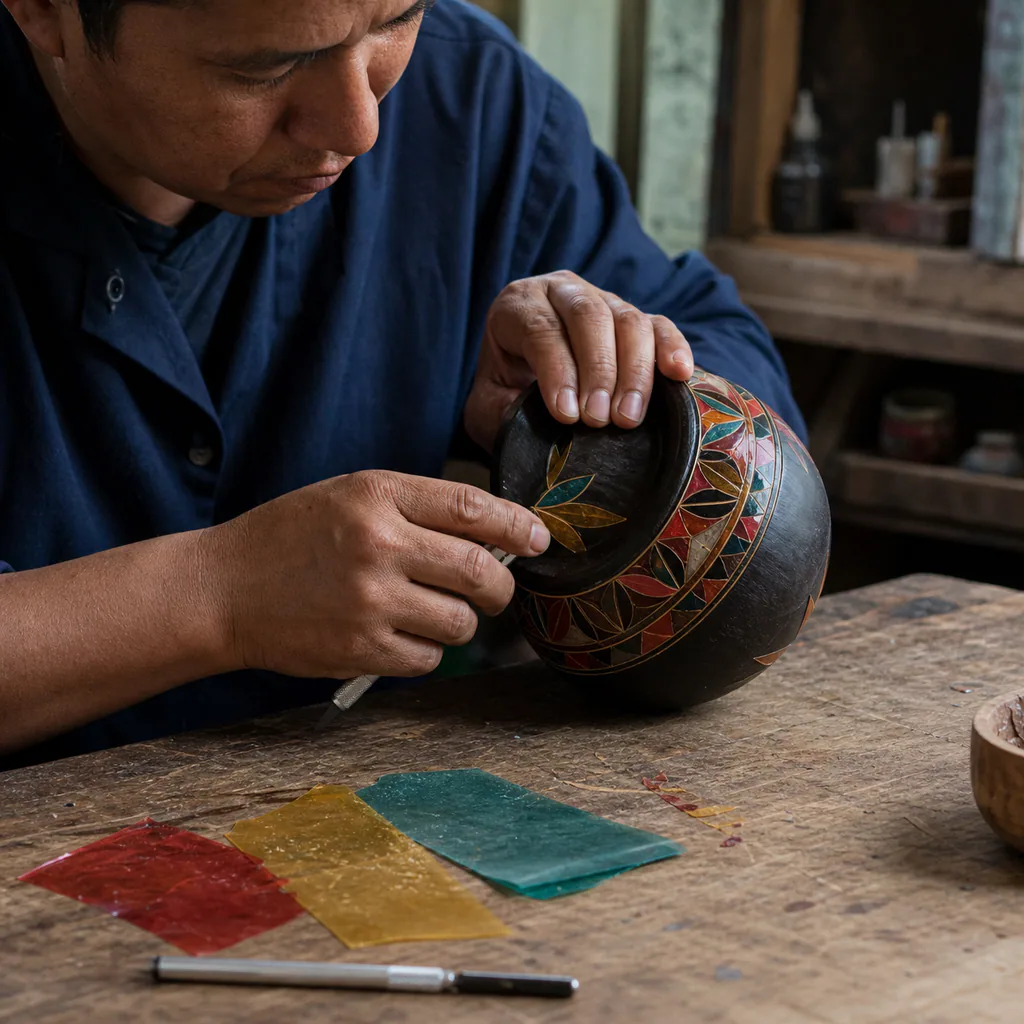
Barniz de Pasto is easy to mistake for painted wood when you first see its polished color and fine lines. Look closer and the design is built from extremely thin sheets of processed plant resin, cut and placed by hand. The craft links forest knowledge in Putumayo with woodworkers and varnish artisans in Nariño.
A thoughtful visit in Pasto is about more than shopping. It reveals material, labor, and transmission while supporting people who keep a vulnerable tradition alive. Workshops are working spaces, so curiosity should arrive with permission and patience.
Follow the Mopa-Mopa Journey
The UNESCO heritage record describes three connected trades: gathering mopa-mopa buds in Putumayo, shaping wooden objects in Nariño, and decorating them with resin in Pasto. UNESCO placed this knowledge on the List of Intangible Cultural Heritage in Need of Urgent Safeguarding in 2020, recognition that also acknowledges threats to its continuity.
The resin does not arrive ready to use. Colombia's Ministry of Culture explains that harvesters collect suitable buds without damaging the wild plant. Woodworkers prepare the base objects, while barnizadores clean, heat, color, stretch, and apply the resin before cutting detailed designs. A piece's value belongs to this whole chain.
Watch a Technique That Is Not Painting
The official Artesanías de Colombia process guide shows how the resin is cooked, beaten, milled, warmed, colored, and stretched with another person into a fine film. That film is laid over a prepared wooden surface. A small blade then defines the motif and removes excess material. Different workshops develop their own combinations of color, line, layering, and finish.
During a demonstration, notice how heat restores flexibility, how several hands may stretch an even sheet, and how the artisan controls a blade on a curved surface. Do not touch resin, tools, or unfinished work unless invited. Interrupting one careful step can waste both time and scarce mopa-mopa.
Arrange a Workshop Visit Respectfully
Pasto has developed cultural routes around the craft. The municipal account of the Barniz de Pasto tourism route describes itineraries connecting heritage and artisan workshops. The city has also supported living museum workshops where artisans can demonstrate and sell their work.
Treat that information as a starting point, not a guarantee that every workshop accepts unscheduled visitors in 2026. Ask your accommodation, a local tourism information point, or a verified guide to confirm which participating workshop is receiving guests, whether an appointment is needed, how long a demonstration lasts, and whether there is a fee. A small group and an agreed arrival time protect the artisan's working day. Request permission separately before photographing people, tools, interiors, or works in progress.
Buy the Maker, Material, and Story
Authentic Barniz de Pasto should invite questions. Ask who made the object, whether the decoration is genuine mopa-mopa resin, where the wooden base was produced, and which stage was completed in that workshop. A maker should be able to explain the process in their own words. Handmade variation, tiny irregularities, and a price that reflects patient labor are more credible signals than perfect factory repetition.
Buy directly from a participating artisan or a reputable craft outlet when possible, request a receipt, and keep any maker card or provenance information. Avoid aggressive bargaining. A small piece made through the complete process can carry more cultural and economic value than a large decorative object with an uncertain origin. Pack it carefully, keep it dry, and ask the maker how to protect the surface from heat, strong sun, and abrasive cleaning.
Build a Slow Craft Day in Pasto
Reserve a morning or afternoon for one workshop instead of collecting several hurried visits. Pasto's cool, high-altitude climate makes a light layer useful, while rain protection helps throughout much of the year. Leave additional time for a museum, local food, or another independent artisan technique, but do not assume that every lacquered, painted, woven, or carved object uses mopa-mopa.
January's carnival period brings exceptional energy and heavier demand for transport and rooms. The craft, however, is not seasonal entertainment. Visiting outside the main festival can create a calmer conversation and keep tourism income moving through the year. Confirm the appointment shortly before you go, as production deadlines, family commitments, and cultural events can change access.
Practical Tips
- Book before arriving: Confirm the workshop, host, meeting point, duration, price, and language of the visit.
- Carry small notes: Direct purchases and visit fees may be easier to pay in Colombian pesos.
- Ask before every photo: Permission to enter does not automatically include permission to photograph.
- Keep your hands clear: Resin sheets, blades, pigments, and unfinished pieces should remain undisturbed.
- Request provenance: Record the maker's name and the material so the story stays with the object.
- Protect the piece: Ask for care advice and pack rigid objects so their decorated surfaces do not rub.
🕵️ Insider Secrets
- Watch the edge: On a work in progress, the edge of the resin film makes the technique easier to understand than the polished center.
- Ask about collaboration: The person decorating the piece may work with a separate turner, carver, or resin supplier.
- Choose conversation over quantity: One well-arranged visit often reveals more than a checklist of shops.
- Look for contemporary design: Living heritage includes experimentation as well as traditional floral and geometric language.
- Keep the maker's details: Following an artisan's official channel can lead to future commissions and accurate referrals.
Barniz de Pasto rewards travelers who slow down enough to see the chain behind the surface. Arrange access, listen before photographing, and buy with questions that recognize harvesters, woodworkers, and barnizadores alike. The object you carry home then becomes evidence of a living relationship between forest material, family knowledge, and Pasto's inventive hands.
eSIM for Colombia
Avoid high roaming fees. Get instant 4G/LTE data with Airalo as soon as you land in Bogotá or Medellín.
- Instant Activation
- No Physical SIM Card
- Local & Regional Plans