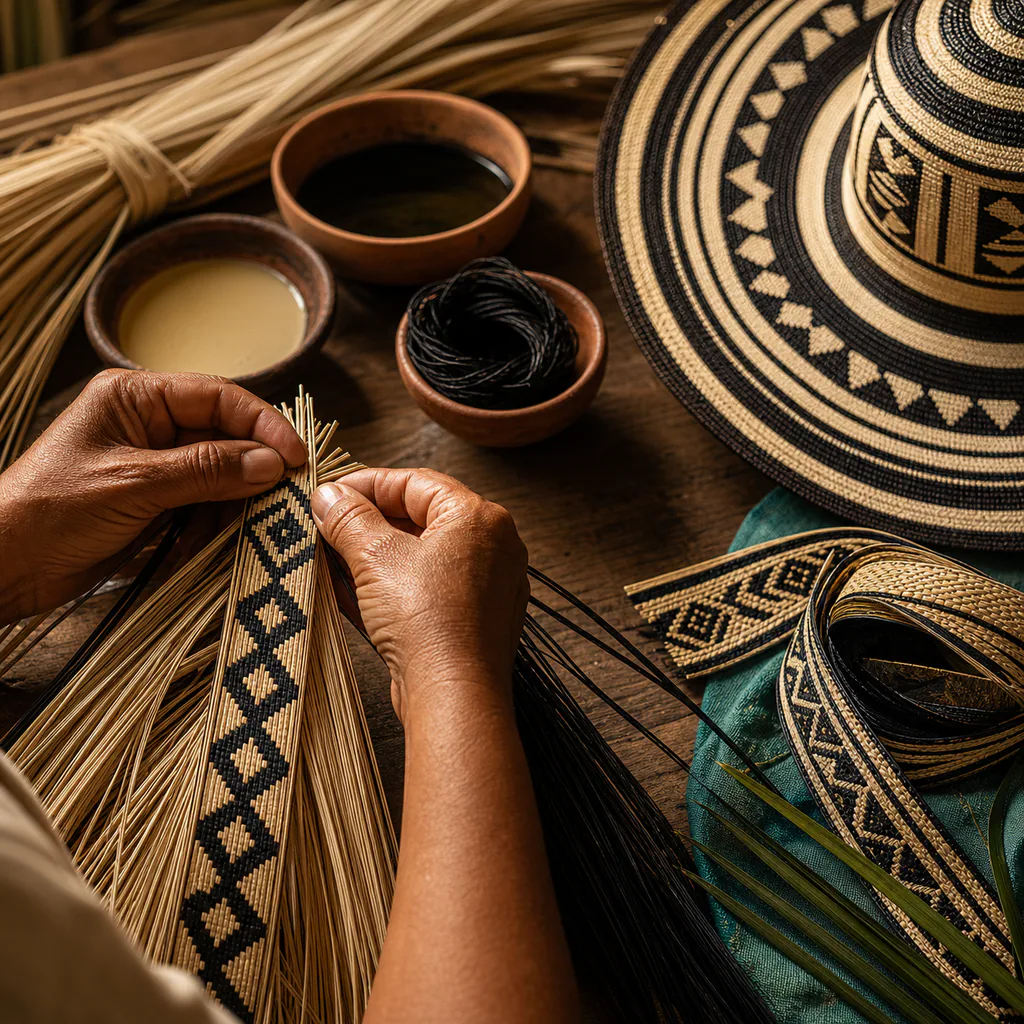
Tuchín is one of those Colombian towns where a national symbol becomes human again. Most travelers have seen the black-and-cream sombrero vueltiao at festivals, concerts, parades, and shops. In Tuchín, Córdoba, the hat is not a costume piece or a quick photo prop. It is fiber, family memory, Indigenous Zenú knowledge, patient hands, and a local economy built around the rhythm of caña flecha.
For travelers in 2026, Tuchín offers a very different kind of Caribbean route. It is not beach-first or resort-first. It is a workshop town, a buying-with-questions town, and a place where the best experience begins when you slow down enough to notice the difference between a cheap imitation and a piece that carries real technique.
Why Tuchín Matters
Tuchín is an Indigenous Zenú stronghold known for artisanal caña flecha weaving, but the town's importance goes deeper than a single product. In September 2025, Colombia's Ministry of Cultures announced the formal delivery of the resolution that includes ancestral caña flecha braiding practices on the national Representative List of Intangible Cultural Heritage, connected with the Zenú reservation of San Andrés de Sotavento and communities in Tuchín.
That recognition matters because it changes how you should approach the town. The sombrero vueltiao is part of a living system of knowledge, transmission, identity, and protection. A good visit to Tuchín should support that system rather than flatten it into a bargain hunt.
The Craft Behind the Hat
Artesanías de Colombia lists Tuchín, Córdoba, as the origin of a sombrero vueltiao made from caña flecha, and describes the hat as traditionally made in the savannas of the Colombian Caribbean. The fiber is not decorative shorthand. It is the whole story: cultivation, selection, preparation, drying, dyeing, braiding, sewing, shaping, and finishing.
The classic colors come from careful natural processing. Artesanías de Colombia explains that some fibers are whitened and others are darkened with materials such as jagua, dividivi, and plantain peel. In another profile, the institution describes how master craftswoman Luisa Flórez sources caña flecha in Tuchín and uses local mud and bija for the dark tone.
Look closely at the pintas, the graphic motifs woven into the bands. They are not random decoration. They can refer to family patterns, animals, plants, and local memory. Learn to read them and the hat feels less like merchandise and more like a portable archive.
How to Visit Workshops Respectfully
The best reason to visit Tuchín is to meet the craft where it is made. If you enter a workshop, bring the same respect you would bring to a small studio or family business. Ask before photographing faces, hands, children, tools, or unfinished pieces. Do not interrupt someone who is counting, tightening, aligning, or sewing.
If someone explains the process, listen before negotiating. A real sombrero vueltiao may pass through many hands and stages. Price differences often reflect fineness, fiber quality, color consistency, complexity of pintas, and finishing. A very low price should make you curious, not triumphant.
Tuchín is also a place to buy more than hats. Caña flecha can become bags, bracelets, belts, table pieces, sandals, and small accessories. Those items are easier to pack and still support local artisans directly. Ask who made the piece and how to care for it.
Planning the Route
Tuchín works best as a cultural detour through Córdoba and Sucre rather than a rushed roadside stop. Many travelers connect it with Montería, Sincelejo, Lorica, or San Andrés de Sotavento. If you are building a broader Córdoba route, pair Tuchín's weaving culture with the Sinú River landscape, Lorica's heritage center, or San Pelayo's music traditions.
Expect Caribbean heat. Start early, carry water, use breathable clothing, and leave margin in the day for conversation. The town's value is not in ticking off monuments. It is in understanding how a national icon is made and why authenticity matters.
Food, Rhythm, and Local Context
Córdoba travel is also food travel. Around the department, look for mote de queso, bollo de yuca, fish preparations, suero costeño, rice dishes, and simple Caribbean lunches. A craft-focused day feels more grounded when you stop for an unhurried meal.
The region is culturally layered: Zenú heritage, river economies, Caribbean music, cattle traditions, and hot-climate life. Tuchín gives that mix a tactile center. You leave understanding Colombia not only through scenery, but through fiber between fingers.
Practical Tips
- Use Tuchín as the anchor: Plan enough time for workshops, market browsing, and questions. The craft deserves more than a quick stop.
- Carry cash: Small workshops and family sellers may not accept cards or transfers from foreign accounts.
- Ask before filming: A short video of weaving can be valuable, but permission matters, especially in family spaces.
- Compare quality: Look at fiber evenness, stitching, color consistency, motif clarity, and how the brim holds its shape.
- Pack for heat: Use sun protection, drink water, and avoid planning your most active walking during the harshest midday hours.
- Buy directly when possible: Direct purchases help more of the value stay with the people who keep the craft alive.
🕵️ Insider Secrets
- Learn two words first: Ask about caña flecha and pintas. Those two terms open better conversations with artisans.
- Do not chase only the finest hat: The best purchase is the one that fits your budget, use, packing style, and respect for the maker.
- Look beyond hats: Small caña flecha accessories are easier to travel with and often show beautiful pattern work.
- Ask about care: Artisans can explain how to store, dry, and shape a piece after travel.
- Pair it with Lorica carefully: Lorica is already a major heritage stop nearby, but Tuchín deserves its own time rather than being treated as a shopping add-on.
Tuchín is a reminder that Colombia's most recognizable symbols are not abstract branding. They come from places, plants, hands, and communities. Compare it with other artisan and community routes in the Colombia cultural travel guide, then visit with patience and buy with respect.
eSIM for Colombia
Avoid high roaming fees. Get instant 4G/LTE data with Airalo as soon as you land in Bogotá or Medellín.
- Instant Activation
- No Physical SIM Card
- Local & Regional Plans