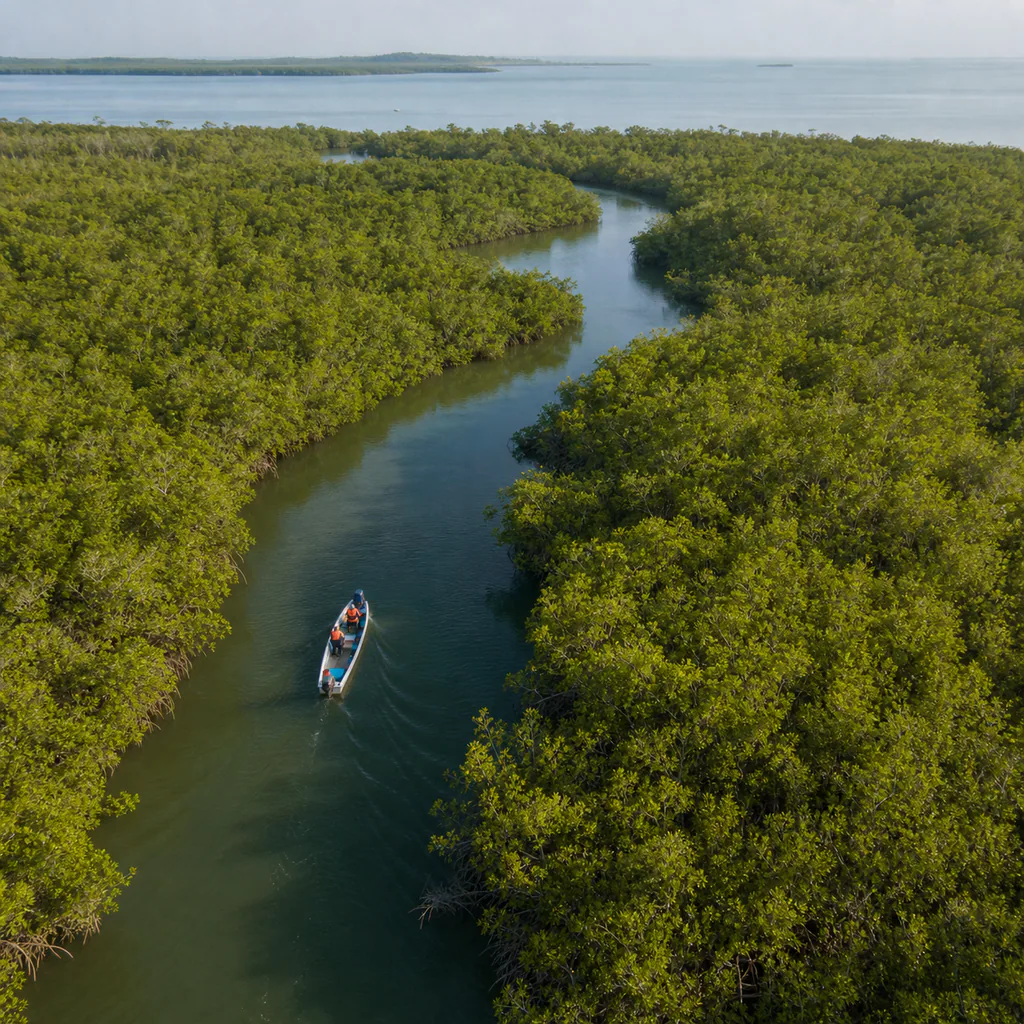
San Antero opens onto one of the Colombian Caribbean's most intricate wetland landscapes. At Bahía de Cispatá, dark tidal channels curve between mangrove roots before meeting open bay water, fishing communities, and the wider delta of the Sinú River. The best visit is not a fast boat ride through green scenery; it is a locally interpreted journey into a protected, working ecosystem.
Plan one or two nights in 2026. Reserve a guided mangrove route for the quieter morning hours, leave a separate period for San Antero's waterfront and coastal food, and keep weather flexibility. The bay deserves enough time to notice roots, water movement, birds, restoration work, and the knowledge of people who navigate these channels regularly.
Begin at the New Cispatá Waterfront
San Antero gained a more organized public gateway to the bay in May 2026. Colombia's National Planning Department reported the completion and opening of the Bahía de Cispatá ecotourism waterfront, including small-boat docks, public plazas, and a lighthouse viewpoint. Treat it as an orientation point rather than the entire destination.
Walk the waterfront first, identify the correct departure area, and confirm your guide and boat by name. Ask where the route enters the protected channels, how long it lasts, what is included, and whether tide, rain, or wind may change the plan. A new dock improves access, but it does not replace local navigation knowledge or environmental rules.
Enter the Protected Mangroves with Local Guidance
The mangroves form part of the regional protected area known as the DRMI Bahía de Cispatá, La Balsa, Tinajones and neighboring sectors of the Sinú delta. The regional environmental authority, CVS, emphasizes that mangroves receive special protection and that management of the area must prioritize conservation.
Choose a registered local or community operator that provides life jackets, a suitable boat, a defined route, and clear safety instructions. Keep speed low inside narrow channels, remain seated while moving, and let the guide decide where the boat may stop. Do not reach into roots, remove seedlings, collect shells, play amplified music, or leave food and waste behind.
Colombia Travel's official mangrove guide identifies December through April as a generally drier period for exploring Cispatá, but no month guarantees calm water or clear skies. Confirm conditions on the day and accept a shortened or postponed route when local crews judge the bay unsafe.
See Blue Carbon as Community Work
Cispatá is also a leading blue-carbon landscape. The Ministry of Environment's Vida Manglar program connects mangrove protection with carbon storage, channel restoration, biodiversity monitoring, and community livelihoods. Its work extends across more than 9,000 hectares in Córdoba and Sucre and involves fourteen community mangrove organizations.
A guide may point out restored channels, monitoring plots, nurseries, or areas where water flow has been recovered. Ask before entering any work site and do not frame restoration as untouched wilderness. The health of these mangroves reflects long-term observation, agreements, maintenance, and local labor. Paying agreed community fees and booking directly through responsible providers helps keep more value near the bay.
Watch Wildlife Without Demanding a Show
Birds, fish, crabs, reptiles, and juvenile marine life depend on the connected channels, roots, mud, and open water. Córdoba's official Cispatá itinerary report also identifies the bay as habitat for the American crocodile, locally called caimán aguja. Its presence is a conservation fact, not a guaranteed tourist sighting.
Never ask a guide to bait, feed, chase, surround, touch, or closely approach wildlife. Avoid flash and loud playback, use binoculars instead of leaning over the boat, and accept distance. A quiet route that reveals kingfishers, herons, roots, and changing salinity can be more informative than pursuing one famous animal.
Build a Slow Coastal Stay
Colombia Travel places Cispatá roughly eighty kilometers north of Montería, but actual road time varies with traffic, weather, and the final approach. Travel in daylight and confirm pickup or parking with your accommodation. San Antero is the honest base for the bay; nearby Coveñas and Lorica can be separate stops rather than rushed additions to the same day.
After the mangroves, leave time for a local lunch and the public waterfront. Ask what fish is in season, choose legally sourced seafood, and avoid purchasing wildlife products or mangrove wood. A second morning provides a useful weather buffer and lets the bay remain the center of the visit instead of one item on a crowded coastal checklist.
Practical Tips
- Reserve a responsible operator: Confirm registration, community connection, route, boat, guide, price, and cancellation terms.
- Wear the life jacket: Keep it fastened throughout the journey, including calm and narrow channels.
- Protect against sun and spray: Bring a secure hat, reef-conscious sunscreen, water, and a dry bag.
- Carry quiet optics: Binoculars are more useful than approaching wildlife for a phone photograph.
- Check conditions locally: Tide, rain, wind, and restoration work may alter the route.
- Keep cash available: Small operators, food stalls, and community services may not accept cards.
🕵️ Insider Secrets
- Choose early light: Morning reflections make roots and channel edges easier to read before midday glare.
- Ask about water flow: A local guide can explain why an open or restored channel matters to the whole forest.
- Look down as well as up: Mud, roots, crabs, seedlings, and small fish reveal the mangrove's nursery role.
- Pause the motor: Where permitted, a quiet drift makes bird calls and tidal movement more noticeable.
- Use the waterfront viewpoint: Seeing the bay from above after the boat trip helps connect individual channels to the larger coast.
Cispatá is most rewarding when access, community knowledge, and conservation remain inseparable. Start from San Antero, move slowly with a trusted local guide, accept the day's conditions, and let the mangrove's details replace the need for a dramatic sighting. The result is a calmer and more honest Caribbean journey.
eSIM for Colombia
Avoid high roaming fees. Get instant 4G/LTE data with Airalo as soon as you land in Bogotá or Medellín.
- Instant Activation
- No Physical SIM Card
- Local & Regional Plans