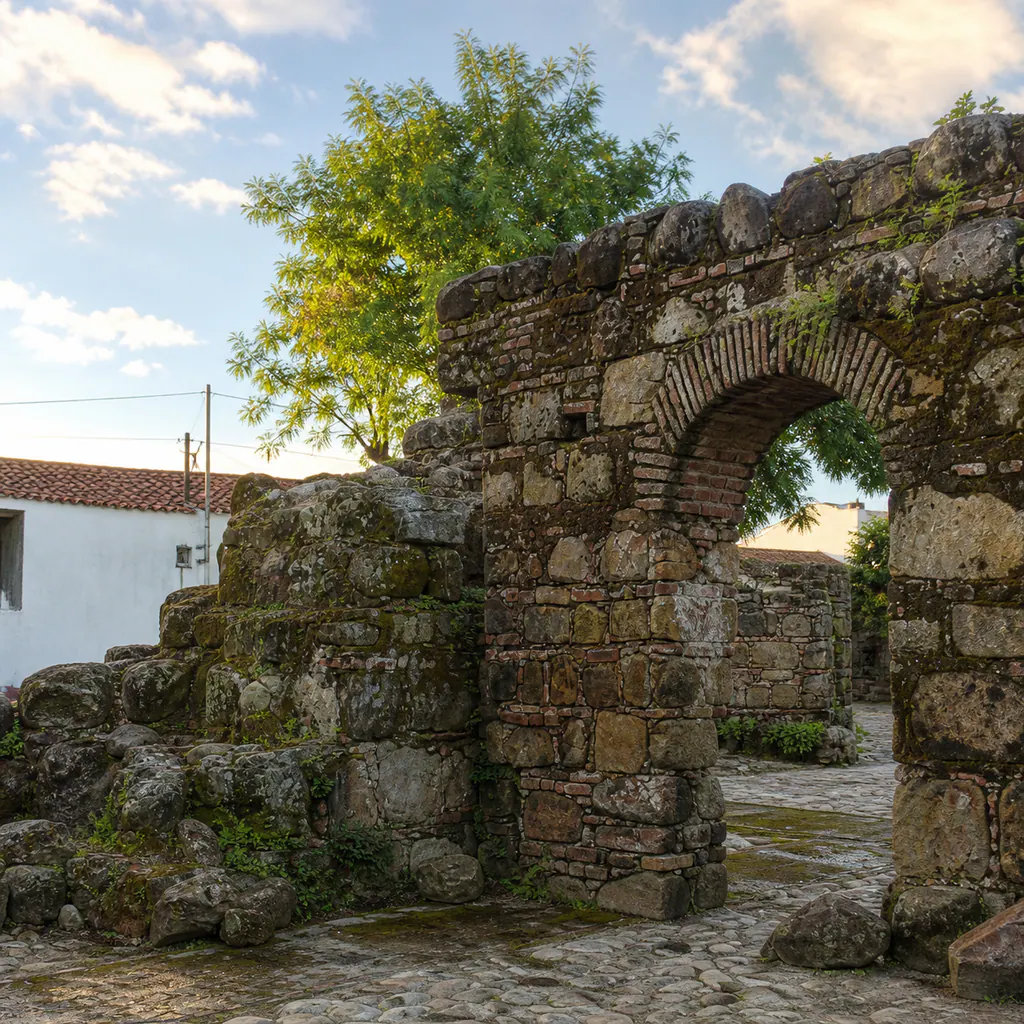
Pore brings Colombia's independence story down from the monument and into a small town of stone fragments, warm streets, llanero food, and open-sky landscapes. Its surviving colonial walls do not form a grand restored fortress. They are modest, weathered remains whose scale makes the history feel unusually close.
Give Pore at least one night rather than treating it as a roadside photograph. Begin with the verified Pore city page, locate the town through the Pore marker on the interactive map, and confirm current opening arrangements locally before assuming every heritage interior or tunnel is accessible.
Read the Ruins as One Historic Complex
The Ruinas de Pore bring together remains of the old church, the building known as the Spanish prison, and the passage historically associated with them. Colombia's Law 936 of 2004 declared Pore part of the nation's historical and cultural heritage and identified that architectural complex as a national cultural asset.
Walk slowly around the masonry and notice the mixture of irregular stone, brick arches, lime-based construction, paving, vegetation, and later town buildings. These are vulnerable remains, not climbing structures or scenery for an improvised photo shoot. Stay on the permitted route, do not sit or stand on walls, and follow any barriers or instructions from the local custodian.
Never enter a closed, unmarked, or unsupported underground space. Ask whether interpreted access to the tunnel is operating on the day of your visit and what the official entrance is. If it is closed, the correct response is to understand the exterior history rather than look for another way in.
Connect Pore with the Campaign of 1819
Pore mattered because the plains were an active political and military landscape, not an empty prelude to events in Boyacá. The town became an important organizing point for patriot forces before the campaign crossed the Andes. Fontur's official account of Pore joining the Heritage Towns network emphasizes its role in the movement toward the decisive Battle of Boyacá.
Use the ruins to ask practical historical questions. Why did a settlement in Casanare matter to troops, supplies, communication, and regional government? What did the route from the plains toward the mountains demand? A local heritage guide can connect the remaining walls with the geography far better than a list of heroic names alone.
Separate documented history from legends attached to the tunnel, prison, and old houses. Community stories are meaningful, but they should be presented as oral tradition when evidence is uncertain. Listening for that distinction makes the visit more respectful and more interesting.
Walk Calle Real Beyond the Monument
Pore became Casanare's first member of Colombia's Heritage Towns network in 2021. The designation covers more than one ruin. Fontur's Heritage Towns guide highlights Calle Real, traditional rammed-earth construction, local food, crafts, historical houses, and community museums as parts of the wider experience.
Start in daylight around the central streets, but avoid reducing living homes to decorative façades. Ask before photographing residents, doorways, workshops, or private courtyards. Museum and cultural-house schedules can change, so verify them the same day and accept that a small community space may open by arrangement rather than on a city-museum timetable.
Look for a local guide who can place Calle Real, the ruins, and the town's llanero identity in one story. Paying for interpretation keeps the visit connected to people who maintain that memory, rather than extracting history from the town without contributing to it.
Taste Pore and Make Room for the Plains
Pore's table belongs to Casanare. Meat cooked in llanero style, rice preparations, fresh cheese, plantain, cassava, soups, and wrapped snacks appear in the regional repertoire. The Ministry of Culture's traditional food inventory specifically records tungos de arroz con pichero in Pore, made with rice, fermented milk, cheese, and a leaf wrapping.
Ask what is genuinely being prepared that day instead of demanding every listed dish. A family restaurant, market cook, local guide, or rural host can explain ingredients and availability more reliably than a generic menu description. If a drink is fermented or alcoholic, confirm before ordering.
The surrounding plains also deserve time, but wildlife and ranch visits must be arranged. Confirm the operator, landowner permission, transport, weather plan, animal-welfare approach, and what the quoted price includes. Do not enter a wetland, farm, or bird roost independently because it appears close on a map.
Practical Tips
- Stay at least one night: Morning and late-afternoon light suit both the ruins and the rhythm of the warm town.
- Confirm heritage access: Ask locally about guides, museum hours, barriers, and whether any tunnel interpretation is officially available.
- Plan transport from Yopal: Verify the current bus or private-transfer timetable, road conditions, luggage rules, and return options before departure.
- Protect the ruins: Do not climb, lean on masonry, remove fragments, fly a drone without permission, or cross closed areas.
- Carry heat protection: Bring drinking water, a hat, sunscreen, light clothing, and a rain layer.
- Keep some cash: Small restaurants, guides, local transport, and family businesses may not accept cards.
🕵️ Insider Secrets
- Begin with the walls, not the legend: Understanding the materials and layout makes the oral stories more meaningful afterward.
- Return near sunset: Warm side light reveals the texture of stone and brick without requiring you to climb for a photograph.
- Ask for a tungu: Availability is not guaranteed, but the question can start a useful conversation about Pore's rice and dairy traditions.
- Listen for llanero music locally: Ask about a cultural space or scheduled performance instead of expecting musicians to perform on demand.
- Leave room for a second day: A locally arranged plains experience works better when it is not squeezed around a long same-day road return.
Pore is valuable because its history is still embedded in an ordinary town. Approach the ruins gently, pay for local knowledge, eat what people actually prepare, and connect the independence route with the living culture of Casanare. The result is a heritage visit with more depth than any restored façade could provide.
eSIM for Colombia
Avoid high roaming fees. Get instant 4G/LTE data with Airalo as soon as you land in Bogotá or Medellín.
- Instant Activation
- No Physical SIM Card
- Local & Regional Plans