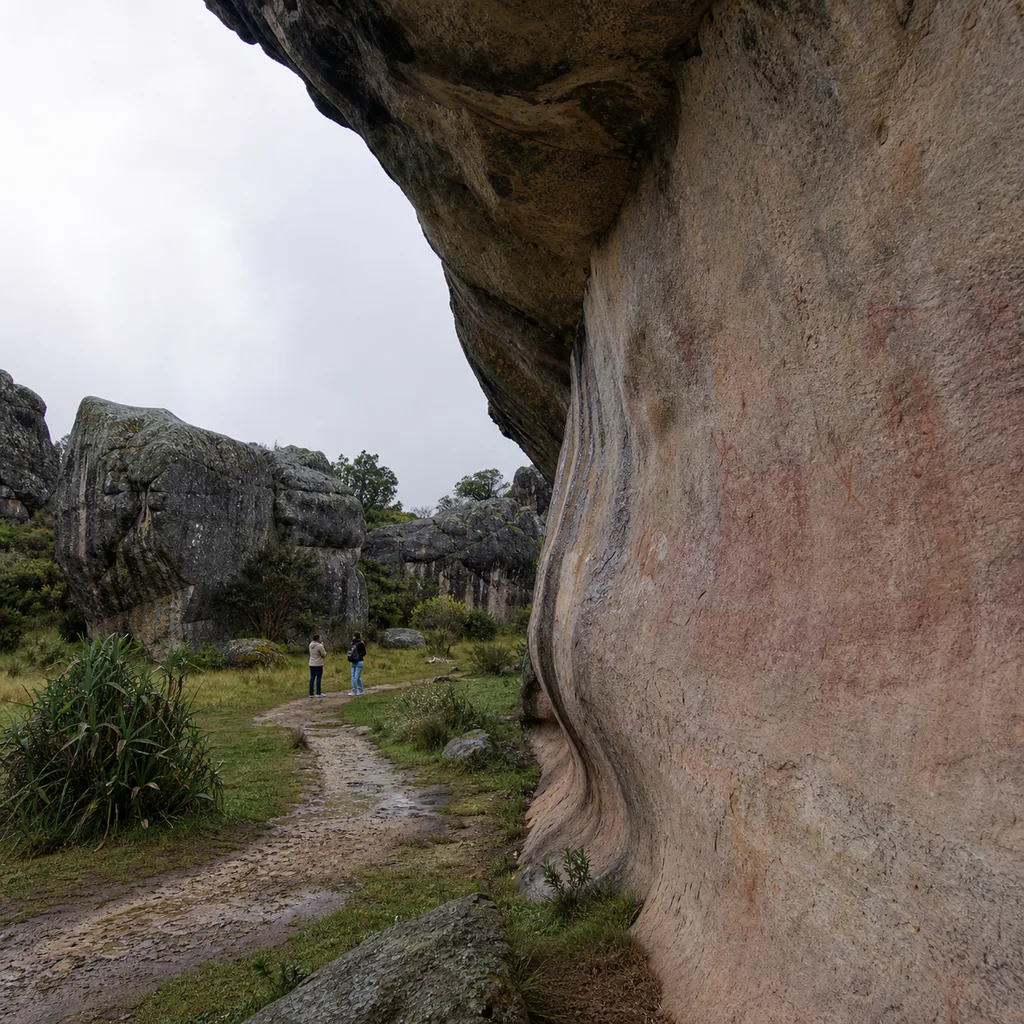
At the southern edge of Facatativá, enormous weathered rocks rise from green highland ground like walls, corridors, and open-air rooms. Look more carefully and some surfaces reveal faint red pictographs: vulnerable traces of people who occupied this landscape before the colonial period. Piedras del Tunjo is both a public park and an archaeological place, so the most rewarding visit combines wonder with restraint.
This 2026 guide is deliberately cautious about what the images mean and who made each one. Interpretations and dates remain more complex than popular legends suggest. Come to observe scale, material, and setting; use official interpretation when available; and leave every surface exactly as you found it.
Begin with the Landscape, Not a Legend
Colombia's official archaeological tourism overview places Piedras del Tunjo about 40 kilometers from Bogotá and describes a 40-hectare park of rocky shelters, rock paintings, and broad scenery. That combination is essential. The art is not displayed in a gallery separated from nature; it survives on stone faces within a living highland environment.
Walk slowly enough to notice how overhangs create dry recesses, narrow passages, framed views, and changes in sound. Grass, water, lichen, and weather are part of the experience, but they also remind visitors that rock art is exposed to natural decay. The park's monumental shapes may invite dramatic stories, yet geology and archaeology are more interesting when they are not turned into fantasy.
Learn to See Pictographs Carefully
Piedras del Tunjo is known for pictographs, meaning images made with pigment on rock. That is different from a petroglyph, which is carved or pecked into a surface. The distinction matters because faint paint can disappear against stains, mineral colors, old graffiti, and shifting light. A panel that looks empty at first may become legible after your eyes adjust.
Do not assign a convenient meaning to every line, spiral, or figure. Some public accounts connect the park broadly with Muisca history, but a responsible visitor should not claim that every mark has a known author, date, ritual, or translation. Follow signs or a knowledgeable guide, separate documented interpretation from oral legend, and accept uncertainty as part of archaeology.
Protect a Vulnerable Open-Air Archive
Rock art can be damaged in seconds and remain altered for generations. ICANH guidance for Colombian rock-art conservation lists actions that visitors should never attempt: repainting figures, scratching stone, making rubbings, wetting panels to improve a photograph, removing fragments, lighting fires, or leaving marked paths. The institute has also documented cases in Cundinamarca where modern paint caused potentially irreversible damage to a pictograph.
At Piedras del Tunjo, keep behind any barrier and never touch, lean on, climb, or clean a painted surface. A hand can leave oils and moisture; a bottle of water can change how pigment and rock react; a closer photograph is not worth physical contact. If you see damage, report it to park staff instead of trying to fix it.
Plan a Calm Visit from Bogotá
Facatativá lies west of Bogotá on the Sabana Occidente corridor. Road time varies sharply with city traffic, weekends, and weather, so treat the short distance as a half-day or full-day outing rather than a quick stop. Intermunicipal transport can take you to Facatativá; from the town, confirm the safest local connection to the park and the correct return point.
Check opening days, admission conditions, guided-visit availability, and any temporary closures directly with the municipality or park before leaving. Recent Cundinamarca reporting confirms organized visits and interpretation at the site, but schedules can change. Bring a light waterproof layer, sun protection, and shoes with grip: the Bogotá savanna can move from bright sun to cool rain quickly.
Add Facatativá to the Story
Do not rush back to Bogotá immediately after the rocks. Facatativá has its own market-town rhythm, local bakeries, highland food, and railway memory. The department's current municipal profile identifies Piedras del Tunjo as the city's principal attraction and notes Facatativá's historic place on the Sabana railway.
A simple lunch and a short walk through town make the archaeological park feel connected to a contemporary community rather than isolated as a scenic relic. Spend locally, ask before photographing people, and remember that heritage management belongs first to the institutions and residents responsible for the site.
Practical Tips
- Confirm access first: Verify the day's hours, fees, entrances, and guided options with the park or municipality.
- Allow traffic time: The distance from Bogotá is modest, but the western corridor can make the journey much longer than expected.
- Dress for highland weather: Carry a rain layer, sunscreen, water, and shoes suited to damp or uneven paths.
- Keep food away from panels: Use designated areas and take every wrapper and bottle with you.
- Respect the frame: Photograph from paths and barriers; never wet, trace, touch, or climb a rock-art surface.
🕵️ Insider Secrets
- Let your eyes adjust: Stand back quietly before searching for pigment; subtle marks often emerge when you stop chasing them.
- Use people only for scale: A companion on the path can show the size of the shelters without approaching a fragile panel.
- Visit in soft light: Overcast conditions reduce harsh glare on stone and preserve the park's natural color in photographs.
- Ask what is uncertain: A good guide should distinguish evidence, interpretation, and local legend rather than flattening them together.
- Stay for Facatativá: Lunch in town turns a rushed attraction stop into a more grounded day in Cundinamarca.
Piedras del Tunjo rewards a quieter kind of attention. Its strongest impression comes from the relationship between immense stone, exposed pigment, wet highland vegetation, and the modern city beside it. Visit with curiosity, resist easy explanations, and protect the fragile traces that make this Facatativá landscape irreplaceable.
eSIM for Colombia
Avoid high roaming fees. Get instant 4G/LTE data with Airalo as soon as you land in Bogotá or Medellín.
- Instant Activation
- No Physical SIM Card
- Local & Regional Plans