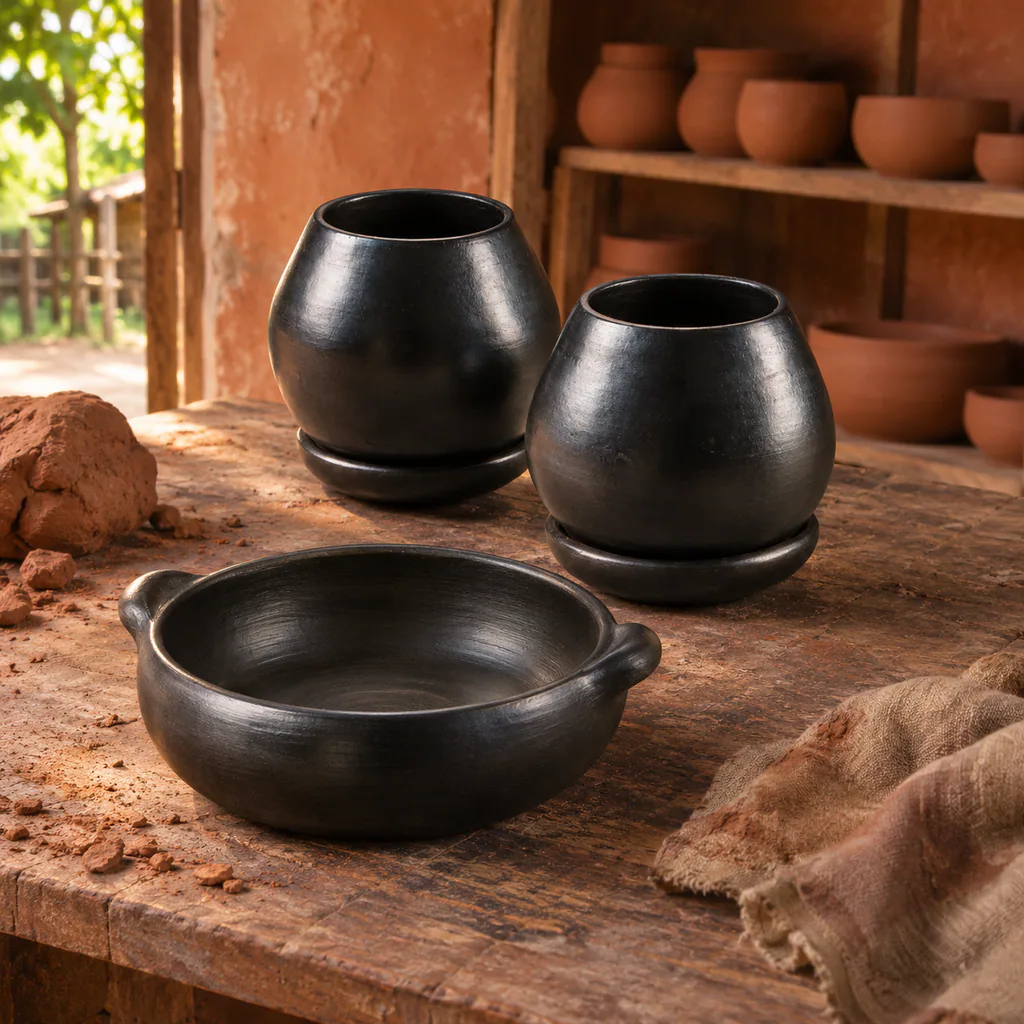
A black clay bowl can hold a whole journey: the earth it came from, the hands that shaped it, and the patient work behind its sheen. In La Chamba, a pottery community in the municipality of Guamo, Tolima, those connections are still part of everyday life. A visit brings you close to an object that might otherwise appear only at a restaurant table or in a shop window.
For a first trip in 2026, build your day around a confirmed workshop encounter, time to choose a piece, and a riverside pause. Use our Guamo destination page for the correct municipality and the La Chamba map marker for the craft community itself. They are separate stops, so confirm your workshop's exact meeting point before setting out.
Understand the Black Pottery Before You Buy
La Chamba's craft belongs to a much longer history of working with local clay. Artesanías de Colombia's account of the tradition traces its roots to Indigenous pottery in the Magdalena valley and describes the transmission of skills across generations. Women have played a central role in shaping that inheritance, alongside other family members involved in preparing materials and making pieces.
The finished surface is worth a closer look. The 2024 technical reference for La Chamba and Chipuelo Oriente pottery documents a red clay coating followed by careful burnishing with agate or quartz. The black finish comes later through the firing and smoking process. A red piece waiting on a workbench can therefore belong to the same production story as a polished black bowl.
La Chamba and neighboring Chipuelo also share a recognized place-based identity: the black pottery received denomination-of-origin recognition in 2019. When shopping, ask where a piece was made and who made it. Look beyond color to the curve of the rim, the handles, and the intended use; a useful conversation often reveals more than a shelf label.
Make Time for a Working Workshop
The municipal tourism directory describes La Chamba as a community of workshops where visitors can learn about the process and purchase directly. Treat those workshops as workplaces. Arrange an appointment, agree on any demonstration fee, and ask which stages will be underway. Drying, polishing, and firing follow production needs; one visit may show only part of the sequence.
If a hands-on session is available, clarify what it includes. Ask whether you will shape a practice piece, whether firing is included, and whether collection or delivery will be needed later. Let the artisan decide when tools or unfinished vessels can be handled. Photography also deserves a separate question, especially when people, family spaces, or a maker's individual designs are in view.
Choose purchases for how you will use and transport them. Ask the maker about first use, cleaning, suitable heat sources, and whether the particular object is intended for cooking, serving, or decoration. Request protective packing and check that lids and handles have room around them. A smaller bowl that travels securely can be a better souvenir than a large vessel squeezed into an already full bag.
Connect the Craft to the Magdalena
The river adds context to the workshop visit. Guamo's tourism office lists Malecón de La Chamba–Puerto Los Chapetones as a waterfront stop with views, shaded areas, and access to boat outings. Leave time simply to look across the broad water and wooded bank. Confirm current access and facilities locally rather than planning around every amenity in a directory.
Lunch can continue the story of clay. The municipal listing for Ágata La Chamba describes food experiences served in local ceramics alongside cultural visits. Contact the provider for availability, menu, dietary needs, and price. This is an option to arrange, not a guaranteed daily service or a meal included with every workshop.
For a longer stay, the department's Ruta del Artesano connects pottery with palm weaving, other craft encounters, and local food traditions around Guamo. Choose one additional stop with a local guide rather than rushing through the whole route. Keep the workshop as the day's anchor and allow room for conversation.
Practical Tips
- Plan the final transfer: Confirm onward transport to La Chamba from Guamo or El Espinal, including the return journey. Agree on waiting time if hiring a driver.
- Choose a realistic pace: A workshop, lunch, and the waterfront make a manageable outline. Stay nearby if adding other parts of the craft route.
- Prepare for heat: Bring drinking water, sun protection, and comfortable shoes. Ask about shade and step-free access if either affects your visit.
- Confirm costs: Separate transport, guiding, demonstrations, food, and purchases when requesting a quote. Check payment methods before arriving.
- Keep river activities optional: Use an established operator, wear a properly fitted life jacket, and follow local decisions about river and weather conditions.
🕵️ Insider Secrets
- Ask to compare stages: Seeing an unfinished red vessel beside a finished black one makes the transformation easier to understand.
- Watch the reflected light: With permission, turn a finished bowl gently to notice the surface produced by patient hand burnishing.
- Keep the maker's details: Record the workshop name and care advice with your purchase so its story survives the trip home.
La Chamba rewards attention to ordinary things: a polished rim, a practiced movement, a meal served in clay. Give the makers time, buy thoughtfully, and let the river complete a visit grounded in the work of the people who live here.
eSIM for Colombia
Avoid high roaming fees. Get instant 4G/LTE data with Airalo as soon as you land in Bogotá or Medellín.
- Instant Activation
- No Physical SIM Card
- Local & Regional Plans