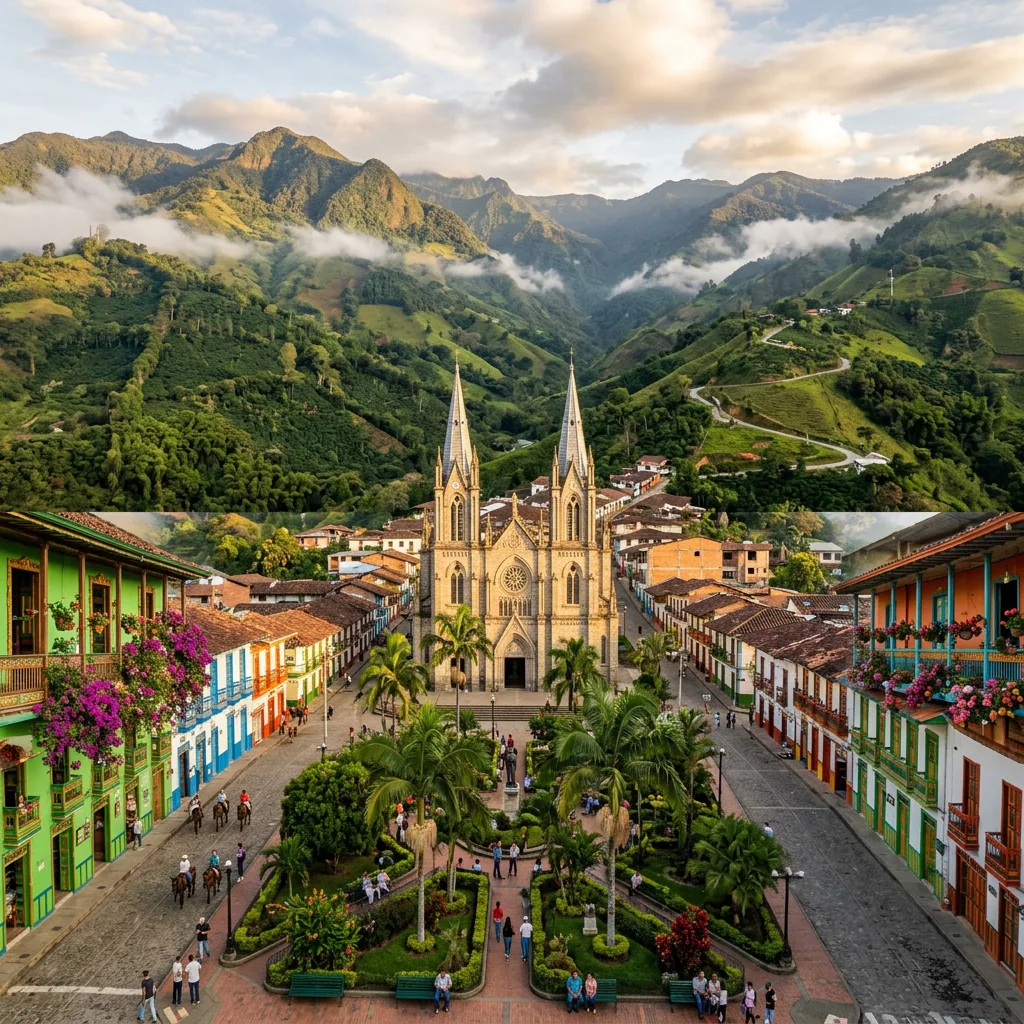
For a coffee-farm tour in Jardín, Colombia, stay at least two nights and book a local experience that explains cultivation, processing, and tasting instead of promising a staged harvest. Three nights give you enough flexibility to add the heritage center, birdwatching, or a waterfall outing without turning the winding transfer from Medellín into a rushed day trip.
Jardín is a coffee-producing mountain town in southwestern Antioquia, and Colombia Travel's official coffee-culture page confirms that farms near the town receive visitors. The useful question is therefore not whether coffee grows here, but which farm visit fits your mobility, interests, language, and transport plan.
Choose Jardín for Coffee and a Heritage-Town Stay
Jardín works best for travelers who want coffee within a broader small-town trip. Its painted balconies, Parque El Libertador, stone basilica, rural roads, rivers, and forested slopes create a different experience from using Salento or another classic Coffee Triangle base. The national tourism portal describes Jardín as one of Colombia's heritage towns, while MinCIT recorded its recognition as a Best Tourism Village for rural tourism in 2024.
Do not treat “coffee region” and the UNESCO Coffee Cultural Landscape as interchangeable labels. Jardín has a genuine Antioquian coffee economy, but the UNESCO property's official nomination identifies defined areas in Caldas, Quindío, Risaralda, and Valle del Cauca. Use the Coffee Region planner if you want to compare those bases, or the broader Colombia coffee-tourism guide to compare farm experiences across the country.
What a Useful Jardín Coffee-Farm Tour Should Include
A strong visit connects the plant to the cup. Depending on the farm and the work happening that day, that can mean walking among coffee trees, identifying ripe cherries, seeing depulping or drying equipment, discussing fermentation, comparing roast profiles, and tasting the finished coffee. Harvest and processing are agricultural cycles, not performances on demand, so no responsible host should guarantee that every stage will be active.
Before paying, ask the farm or operator these questions:
- Learning scope: Does the visit cover cultivation and processing, or is it mainly a tasting and sales stop?
- Terrain: How steep, muddy, or exposed is the walk, and is there a shorter option for limited mobility?
- Language and group: Is the explanation available in your language, and is the visit private or shared?
- Transport: Does pickup include your accommodation, or must you arrange a tuk-tuk, jeep, or rural transfer?
- Inclusions: Are tastings, food, protective equipment, return transport, and accident insurance included?
- Weather policy: What changes, postponements, or refunds apply if heavy rain affects the road or farm walk?
For a commercial tour, ask for the provider's business name and check Colombia's official National Tourism Registry. Registration does not replace reading recent terms or asking safety questions, but it is a useful basic check before sending money.
Build a Two- or Three-Night Jardín Plan
On arrival day, keep the plan simple: walk the center, sit in Parque El Libertador, visit the basilica when it is open, and confirm the next day's rural transport. The Colombia heritage-towns guide adds context for Jardín's architecture and living plaza culture. Use the exact Jardín map marker to place the town within a longer Antioquia route.
Give the coffee farm a separate morning or afternoon rather than squeezing it between transfers. With a third night, choose one nature experience according to current access: an early birding visit, a locally verified waterfall route, or an easy countryside walk. Rural roads and trails can change after rain, and wildlife sightings are never guaranteed. Confirm the meeting point, walking grade, return arrangement, and whether a guide or advance reservation is required.
Jardín is connected to Medellín by road, but published journey estimates cannot account for city traffic, works, weather, stops, or the final approach to your accommodation. Treat the transfer as a substantial part of the day. If you continue toward another Antioquia town or the Coffee Triangle, verify the actual connection rather than assuming nearby points on a map have a direct service.
Practical Tips
- Pack for a working landscape: Wear shoes with grip, carry light rain protection, and use sun protection even when the morning is cloudy.
- Keep payment flexible: Ask whether the farm accepts cards and how much cash is sensible; rural connectivity can interrupt electronic payments.
- Protect the crop: Follow the host's instructions, stay on the agreed path, and never pick cherries or handle equipment without permission.
- Buy with context: Ask for the producer, origin, roast date, and recommended brewing method instead of choosing only by packaging.
- Check the final mile: Save the farm's contact details and meeting instructions offline before leaving town.
🕵️ Insider Secrets
- Ask what is active today: A thoughtful explanation of one real stage can teach more than a hurried demonstration of the whole process.
- Compare one coffee twice: Taste the same lot with two brew methods or roast levels to understand how preparation changes the cup.
- Leave space after rain: A flexible third night is more useful than stacking a farm, waterfall, bird reserve, and departure into one brittle day.
- Return to the plaza early: Morning in the center shows Jardín as a working town before visitor traffic becomes the main rhythm.
Jardín earns a place in a Colombia coffee itinerary because farm learning, rural scenery, and heritage-town life reinforce one another. Choose a visit that is transparent about the day's agricultural work, transport, terrain, and weather, then give the town enough time to be more than a stop between Medellín and your next destination.
eSIM for Colombia
Avoid high roaming fees. Get instant 4G/LTE data with Airalo as soon as you land in Bogotá or Medellín.
- Instant Activation
- No Physical SIM Card
- Local & Regional Plans