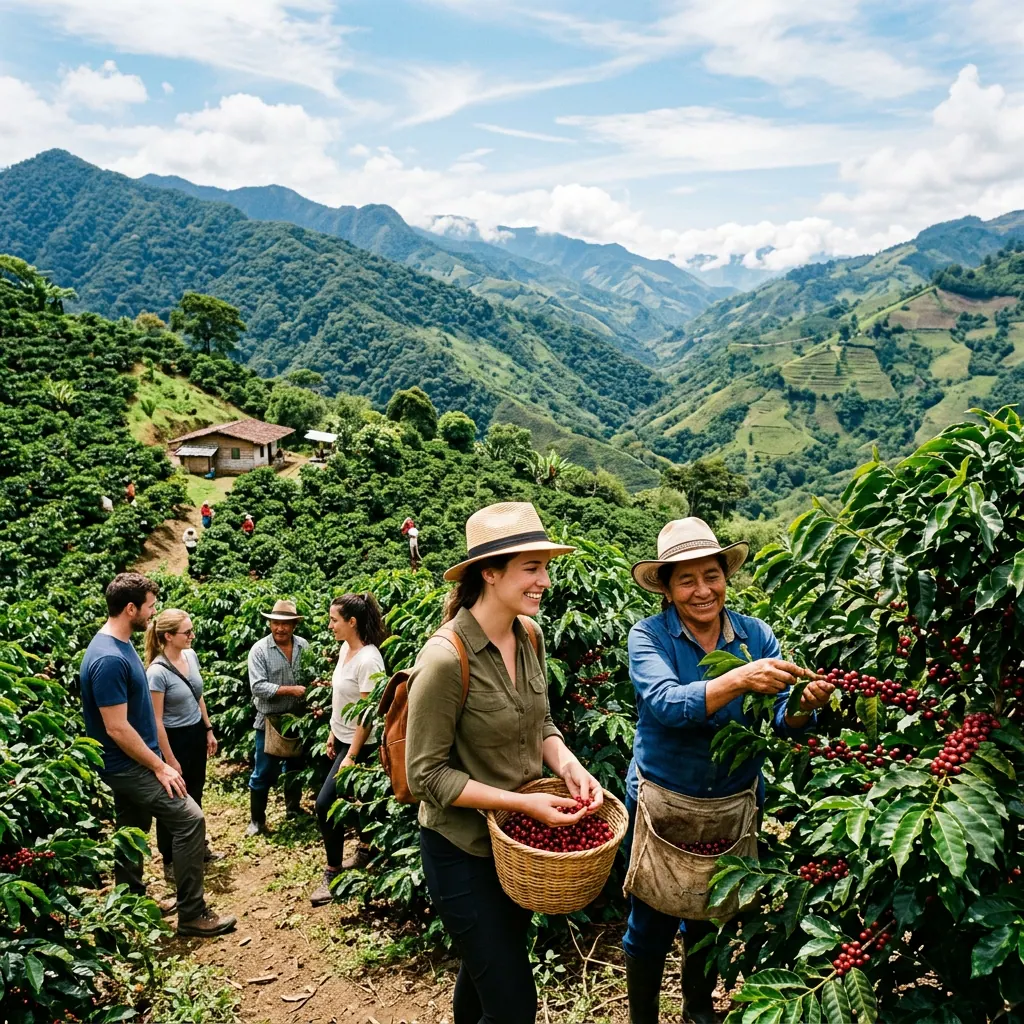
For a Coffee Region tour in Colombia in 2026, choose between an independent trip with separately booked farm visits, a shared day tour from one base, a private driver-guide circuit, or a multi-day package. The right format depends less on how many towns appear in the itinerary and more on rural transport, time at the farm, group size, and whether every promised activity is confirmed in writing.
Begin with the Colombia Coffee Region planner to compare bases and road sequences. The official Coffee Cultural Landscape covers defined areas in Caldas, Quindío, Risaralda, and northern Valle del Cauca; it is not a label for every town or farm. Check Colombia Travel's landscape overview and UNESCO's World Heritage record.
Choose the Right Coffee Region Tour
Independent travel offers the most control. Reserve a finca directly, arrange the final rural transfer, and avoid squeezing it between distant towns. It suits travelers comfortable confirming transport in Spanish. A shared day tour is simpler when pickup, admission, and return transport are itemized, but ask how many pickup stops reduce farm time.
A private driver-guide circuit works well for two bases or flexible pacing. Confirm whether the driver is also the guide or a local farm host leads the coffee component. A multi-day package can bundle hotels and transfers, but compare it with booking independently. Reject itineraries that treat Manizales, Salento, and remote fincas as quick neighboring stops.
The free Coffee Region Highlights route shows an ordered public itinerary, while the interactive Colombia map helps reveal the distance between stops. Travelers wanting a denser, saved planning layer can compare the optional Coffee Region Insider private map before paying.
Build the Route Around One or Two Bases
For a short trip, select one cluster. Salento, Filandia, and Armenia form a practical Quindío base for Cocora Valley and nearby farms; the Salento and Cocora guide explains when a combined valley-and-farm day becomes too rushed. Pereira and Santa Rosa de Cabal provide another gateway for Risaralda, thermal stops, and the Otún side of the region. Manizales is useful for Caldas, urban coffee culture, northern heritage towns, and properly planned high-altitude excursions.
With five to seven nights, use two bases instead of changing hotels daily. Ask for door-to-door transfer times, including the final finca approach. Compare options through where to stay in Colombia; if lodging is included, request the exact property or minimum standard.
Los Nevados is not an automatic coffee-tour add-on. The official Los Nevados visitor page says sectors have different access rules and entry requires a registered ecotourism agency or guide. Confirm the sector, provider, accident insurance, altitude suitability, equipment, transport, and current access.
Compare Coffee Farm Experiences
A farm walk may explain cultivation and processing in two hours; a production-focused visit may add depulping, fermentation, drying, roasting, or cupping; an overnight stay can show rural life beyond the demonstration. None guarantees that every stage will be active. Colombia produces coffee across varied regions and calendars, so ask what visitors will genuinely see on the chosen date and what replaces picking or processing when weather and harvest timing change.
Request the walking distance, slope, surface, toilets, water, language, group size, and accessibility limits. Ask whether tasting means one cup, a guided comparison, or a structured cupping. Verify the host's role instead of assuming every tasting has a certified professional. For coffee beyond the classic triangle, compare the Jardín coffee-farm guide.
Ask who receives the tour fee, how workers participate, and whether guests may photograph people. When buying coffee, check roast date, whole-bean or ground format, baggage limits, and destination-country import rules.
Check the Operator and Written Inclusions
Before paying an agency, search its legal name or registration number in Colombia's official National Tourism Registry. Registration is a baseline check, not a quality guarantee. Match the business name, municipality, and current status to the seller, then keep the itinerary, receipt, cancellation terms, and emergency contact.
Ask for pickup and return points, vehicle type, maximum group size, guide language, farm admission, meals, tastings, park or attraction fees, insurance, gratuities, and optional purchases in writing. Clarify the weather policy and who pays if rural access changes. For high-altitude, hiking, cycling, or riding components, request activity-specific safety procedures rather than accepting a generic coffee-tour description. The Colombia tours planner provides the same comparison framework for other destinations.
Practical Tips
- Allow a buffer: Mountain roads, rain, and rural pickups can move the schedule. Do not place a flight or long-distance bus immediately after a farm visit.
- Carry the right layers: Use closed shoes with grip, light rain protection, sun protection, water, and a dry layer for changing elevations.
- Confirm the final approach: A map pin may mark the farm but not the correct gate, road condition, or last available transport.
- Separate sales from inclusions: Coffee bags, premium tastings, meals, horseback rides, and transport may cost extra even when the listing uses “bean to cup.”
- Recheck one or two days before: Confirm the meeting point, contact number, language, weather plan, and any access change.
🕵️ Insider Secrets
- Ask what is active: A precise answer about the day's cultivation or processing work is more valuable than a long generic activity list.
- Compare one coffee carefully: Sampling the same lot with two brew methods can teach more than racing through unrelated flavored drinks.
- Use moving days sparingly: A direct farm visit between two bases can be efficient only when luggage storage and the full rural transfer are confirmed.
The best Coffee Region tour is the one whose route, farm access, host, inclusions, and fallback plan still make sense after the marketing language is removed. Verify those details first, then choose the format that leaves enough time to listen, taste, and understand the work behind the cup.
eSIM for Colombia
Avoid high roaming fees. Get instant 4G/LTE data with Airalo as soon as you land in Bogotá or Medellín.
- Instant Activation
- No Physical SIM Card
- Local & Regional Plans