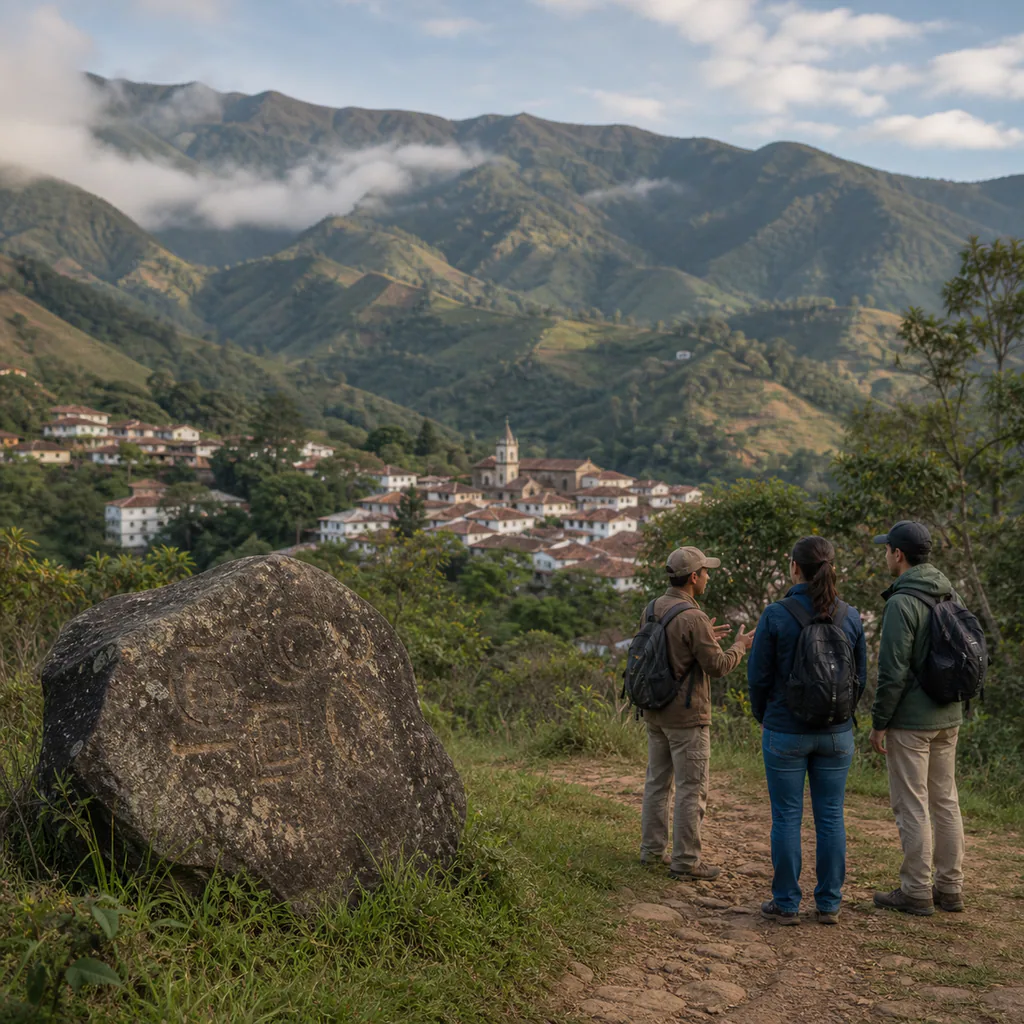
Támesis sits above the Cartama landscape in southwestern Antioquia, where a compact town center opens toward steep green ridges, farms, streams, and an extraordinary archaeological record carved into stone. Visitors often arrive for mountain scenery, but the petroglyphs change the meaning of the trip. These rocks are not outdoor decoration. They are protected heritage within a lived rural landscape.
A thoughtful visit begins in town, continues with local interpretation, and leaves the carvings exactly as it found them. In 2026, Támesis works best as a two-night stay: one day for the museum and urban viewpoints, another for a guided rural route chosen according to weather, land access, and current trail conditions.
Begin at the Museo Arqueológico Cartama
The Museo Arqueológico Cartama gives the journey essential context. Antioquia's cultural records identify the museum in the Casa de la Cultura, while the department's recent southwest tourism portfolio includes it among the municipality's principal cultural experiences. Its collections and interpretation connect archaeological objects with the region's pre-Hispanic history.
Visit before heading to a rock-art site. Learning how objects are studied, conserved, and presented helps replace the usual treasure-hunting mindset with better questions: Who cared for this landscape? What can a symbol tell us, and what remains uncertain? Confirm opening hours through the Casa de la Cultura or municipal tourism contacts, because a small local museum may not follow the schedule of a large city institution.
Read the Petroglyph Landscape Carefully
Támesis is known for a remarkable concentration of engraved rocks. A 2026 ICANH heritage grant supported a community project to create an illustrated stewardship guide for this archaeological and natural landscape. That emphasis on local care is as important as the number of carvings.
Colombia's archaeological heritage belongs to the nation and is legally protected. Never chalk, wet, clean, trace, rub, climb on, or touch a carving to improve a photograph. Do not move nearby objects, collect fragments, or publish precise coordinates for an unmonitored site. Use an authorized local guide, respect private property, keep your group small, and accept when landowners or conservation conditions make a route unavailable.
Town Views, Cristo Rey, and the Botanical Garden
Not every rewarding walk needs to reach a remote boulder. The 2025 departmental tourism material highlights Cerro Cristo Rey, the botanical garden, the Casa de la Cultura, and petroglyph experiences as complementary parts of Támesis. A community tourism guide, Al Compás de Antioquia, also connects the garden area with a nearby petroglyph and the heritage path toward Cristo Rey.
Use these closer sites to understand the relationship between town and mountains. Begin early, carry water, and turn back when rain makes stone or clay slippery. The viewpoints are valuable because they reveal the agricultural mosaic and the scale of the Cartama terrain, not because they provide a summit trophy.
Community Tourism Beyond the Carvings
Támesis is more than archaeology. Rural initiatives combine gardens, birdlife, regenerative agriculture, coffee, and family knowledge. The community-led Jardineros del Cielo route, for example, links campesino gardens and birdwatching with local environmental work. Experiences like this distribute tourism income and show how cultural and natural heritage continue in everyday life.
Choose one well-run rural activity rather than stacking several distant stops. Ask what the price includes, how much walking is required, whether transport is arranged, and how the host community benefits. Buy directly from local growers or makers when possible, and avoid treating working farms as freely accessible viewpoints.
Food, Weather, and the Rhythm of the Stay
At around 1,600 meters above sea level, the town has a mild mountain climate, but sun, cloud, and heavy rain can rotate through the same day. Pack a light waterproof layer and shoes with dependable grip. For meals, look for Antioquian staples, local coffee, fruit, trout, maize preparations, and simple set lunches rather than expecting a single signature dish.
Evenings are useful planning time. Confirm the next morning's guide, trail, pickup point, and forecast before going to bed. Mobile coverage can weaken outside the urban area, so share your plan with your accommodation and carry an offline map without using it to bypass a guide or enter private land.
Practical Tips
- Stay at least two nights: This allows a museum visit, a town walk, and one weather-dependent rural experience without rushing.
- Start with interpretation: Visit the Museo Arqueológico Cartama before seeing petroglyphs in the landscape.
- Book a local guide: Access may cross private farms, and an informed guide can protect both visitors and heritage.
- Never enhance a carving: Water, chalk, rubbing paper, brushes, and hands can damage the rock surface or its context.
- Prepare for steep terrain: Bring water, rain protection, sun protection, and grippy footwear; cancel when conditions are unsafe.
- Carry cash: Small museums, rural hosts, transport, and family-run restaurants may not accept cards.
🕵️ Insider Secrets
- Ask what is uncertain: The most honest guides distinguish archaeological evidence from later stories and personal interpretations.
- Photograph with side light: Gentle morning or afternoon light can reveal shallow relief without touching or wetting the stone.
- Skip the exact geotag: Name Támesis, not the coordinates of an unguarded carving, when sharing online.
- Pair rock art with living knowledge: A garden, farm, or community coffee visit prevents the past from becoming the town's only story.
- Leave time for the plaza: A quiet evening in town helps the rural landscape feel connected to contemporary local life.
Támesis offers a rare chance to connect archaeology, mountain travel, and community knowledge in one weekend. The quality of the experience depends on restraint: look closely, listen carefully, walk with permission, and leave no physical mark. The petroglyphs have endured precisely because generations treated these rocks as more than scenery.
eSIM for Colombia
Avoid high roaming fees. Get instant 4G/LTE data with Airalo as soon as you land in Bogotá or Medellín.
- Instant Activation
- No Physical SIM Card
- Local & Regional Plans