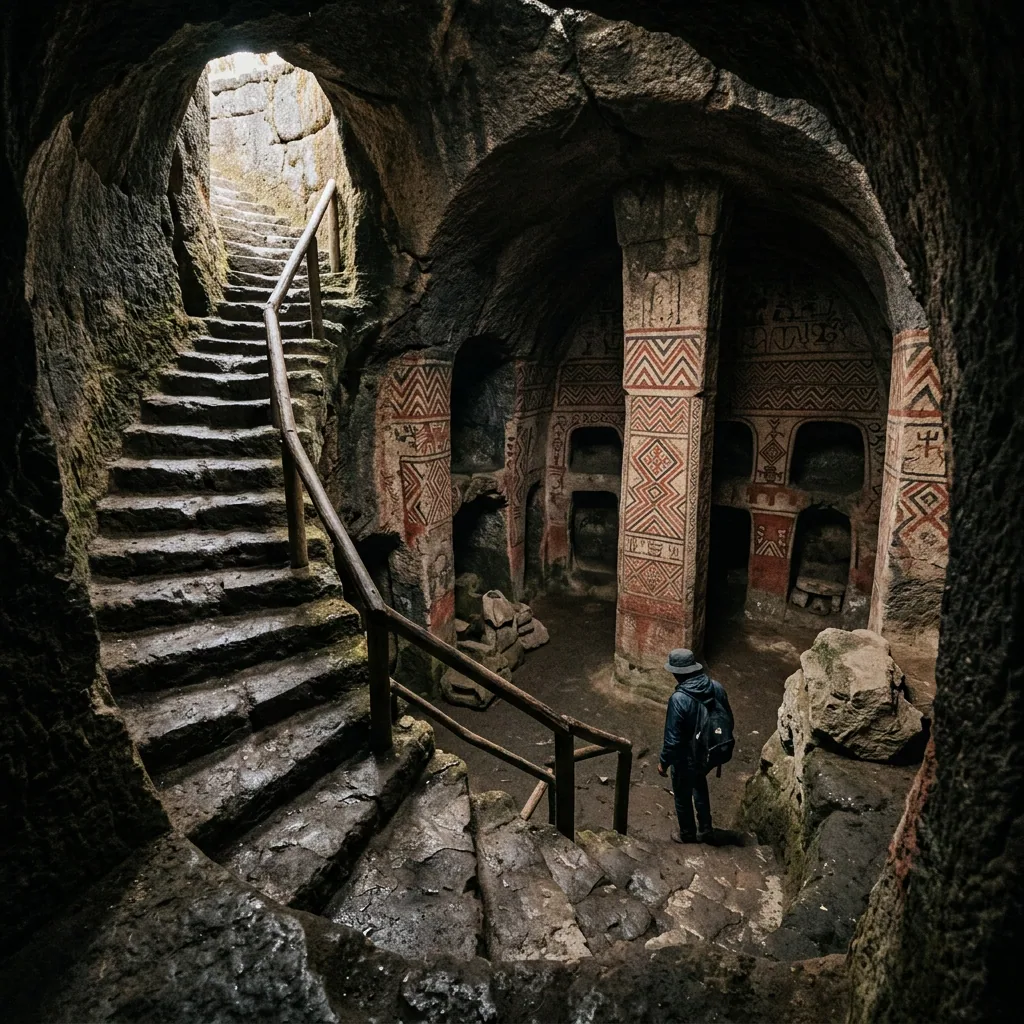
Tierradentro is a remote archaeological park near Inzá, Cauca, known for painted underground tombs reached by steep stairways and mountain trails. Plan at least one full day for the main sectors and a second day if you want longer hikes without racing changing weather, opening hours, or rural transport.
A practical 2026 visit requires shoes with grip, water, a headlamp, and a check of current ICANH tariffs and closures before departure. Most travelers approach from Popayán or Neiva and use San Andrés de Pisimbalá as a base, so the journey should be planned as part of the experience rather than treated as a simple day trip.
Whispers from the Andes: Setting the Stage
Tierradentro is situated in the southwestern region of Colombia, specifically near the municipality of Inzá, a landscape characterized by lush mountain foothills and tropical biodiversity. This area has been a crossroads for various cultures over thousands of years, leading to the development of complex social structures and highly refined artistic practices. The tombs (hypogea) are not merely graves; they are intricate architectural complexes designed to honor the deceased and facilitate a connection between the living community and their ancestors.
The most compelling aspect of Tierradentro in 2026 is the sheer scale and meticulous craftsmanship of these structures. They suggest a powerful, enduring culture that possessed deep spiritual belief systems and a mastery of stonecarving and engineering that rivaled any civilization of its time.
A Descent into History: Structure and Design
The underground chambers are remarkable for their consistent design principles. Archaeologists have noted a highly uniform construction style, featuring spiral staircases that lead deep into the earth. These tombs are often decorated with elaborate, painted murals in red, black, and white pigments, featuring geometric patterns and anthropomorphic figures.
In 2026, the preservation of these murals is a major focus. The pigments, though faded by time, still reveal a world of symbols—rhombuses, zig-zags, and faces that depict the journey of the soul. The artistry suggests a culture deeply invested in the sanctity of death, viewing the passage into the afterlife as a momentous, decorated ritual.
- The Architecture: The hypogea feature carved tunnels, massive stone columns that support the "ceiling," and numerous individual niches for urns.
- The Murals: These represent some of the most complex examples of pre-Columbian wall painting in the Americas, depicting the cosmology of a culture that left no written records.
- The Spiral Stairs: Carved directly into the volcanic rock (tuff), these staircases descend up to 7 meters into the cool, dark belly of the earth.
Immersive Travel: Visiting the Sites
Visiting Tierradentro in 2026 is a physically demanding and spiritually enriching experience. The journey itself—reaching the remote sites like Alto de Segovia, Alto de San Andrés, and El Aguacate—is part of the adventure. Hiking between these hills offers spectacular views of the Central Cordillera and the colorful villages below.
When exploring, pay close attention to the nuances of the passage dimensions. The narrow tunnels contrast sharply with the main ceremonial chambers. This varied spatial experience mimics the journey of passage, evoking the feeling of leaving the known world and entering the sacred domain of the ancestors. In 2026, the use of low-heat LED lighting has helped protect the murals while allowing visitors to appreciate the incredible detail of the carvings.
Practical Tips for the 2026 Tierradentro Traveler
- Getting There: Tierradentro is remote. Most travelers arrive from Popayán or Neiva. The road from Popayán is legendary for its beauty and its bumps—be prepared for a long, scenic journey.
- Entry and Closures: ICANH publishes the current tariffs, opening hours, and scheduled closure dates for Tierradentro and the San Agustín-area parks. Check the official 2026 notice rather than assuming one ticket or timetable covers every archaeological park.
- What to Pack: High-grip hiking boots are essential, as the trails can be slippery. Bring a headlamp for the darker tombs, plenty of water, and a light jacket for the cool Andean evenings.
- Stay in San Andrés de Pisimbalá: This charming indigenous village is the perfect base for your explorations. In 2026, several family-run guesthouses offer warm hospitality and traditional local meals.
Tierradentro is a destination that demands curiosity, respects history, and rewards the effort with an unforgettable passage into the monumental past. Prepare to be awestruck by the endurance of human ingenuity carved deep into the Colombian earth.
🕵️ Insider Secrets
- El Aguacate Sunrise: The site of El Aguacate is located on a high ridge. Hike up early in the morning in 2026 to see the sunrise over the clouds as they fill the valley below—it’s one of the most serene moments you can find in the Andes.
- The Secret Museum: Don't skip the Ethnographic Museum in San Andrés. It offers a fascinating look at the current Nasa indigenous culture of the region, providing vital context for the ancient sites.
- Local Gastronomy: Look for Mote, a traditional hearty soup made with corn and various meats. In the village of San Andrés, several local homes serve this on weekends—it’s the ultimate "fuel" for a long day of hiking.
eSIM for Colombia
Avoid high roaming fees. Get instant 4G/LTE data with Airalo as soon as you land in Bogotá or Medellín.
- Instant Activation
- No Physical SIM Card
- Local & Regional Plans