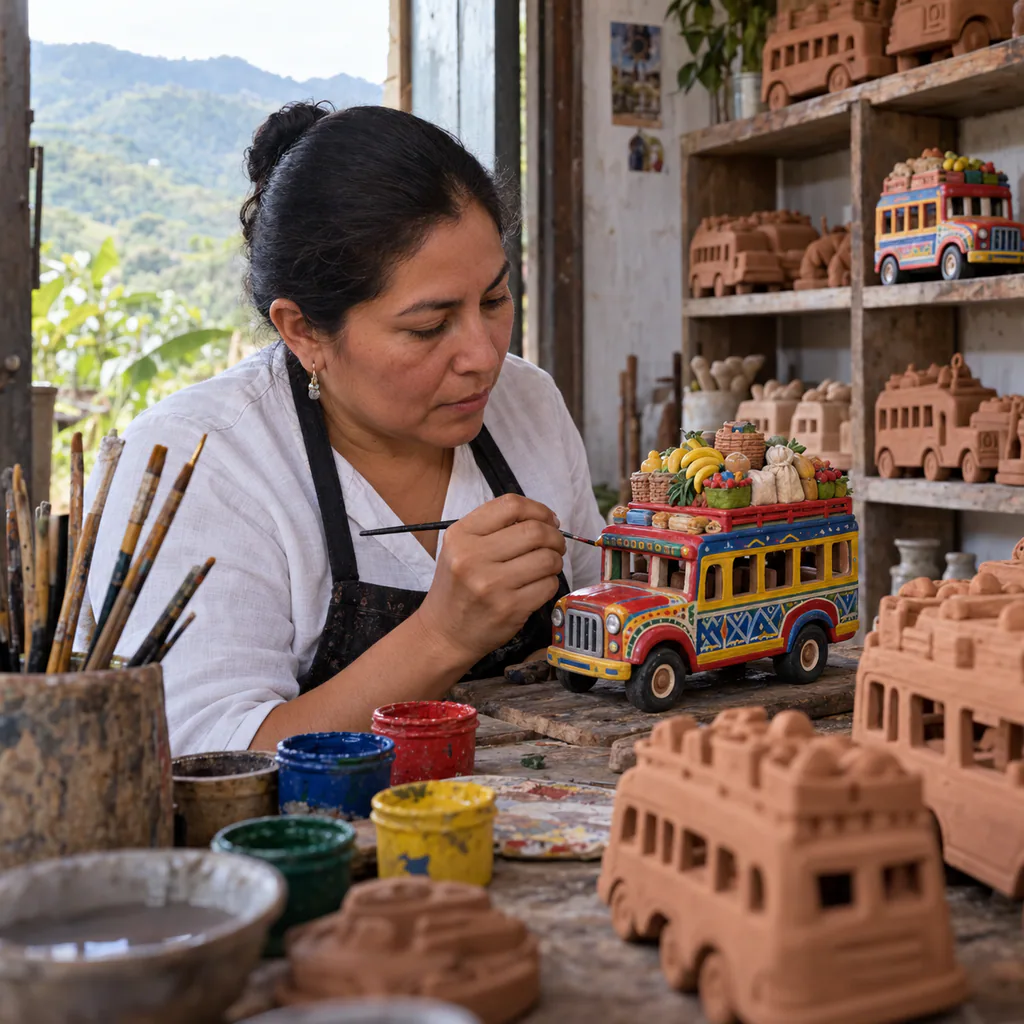
Pitalito sits in southern Huila where the Central and Eastern Andes open around the upper Magdalena valley. Many travelers see it only as the transport hub for San Agustín, but the city has a strong identity of its own: coffee grown on surrounding slopes, clay workshops that turn rural buses into intricate sculptures, busy produce markets, and public art shaped by the wider archaeological region.
Give Pitalito at least a full day, or use it as a two-night base while exploring nearby farms and towns. Start with the verified Pitalito city page and locate the destination on the Visit Colombia interactive map.
Make Pitalito More Than a Transfer
The city is a useful arrival point, yet its value is not limited to buses and flights. The official Colombia Travel guide to Pitalito places it in a fertile valley between two mountain ranges and describes a municipality built around agriculture, fruit, craft production, and high-quality coffee.
Begin around Parque Principal José Hilario López, then walk through the central commercial blocks in daylight. Look for coffee shops that identify the producer and origin rather than offering only a generic regional label. Public sculptures and murals introduce farming, transport, and the ancient stonework associated with southern Huila.
Taste Huila Coffee at Its Source
Pitalito is one of the principal coffee centers of Huila, with farms and producer groups spread through rural districts such as Bruselas. Varied slopes, rainfall, and smallholder knowledge create many flavor profiles, so there is no single "Pitalito taste." A tasting might reveal fruit, panela, chocolate, floral notes, or bright acidity depending on the farm and process.
Book a farm or cupping visit through a recognized local host and ask what the experience includes. The Government of Huila's southern coffee-route initiative links Pitalito with Isnos, Palestina, and San Agustín through distinct local circuits. Treat those names as a planning framework, not a promise that every farm accepts unannounced visitors. Confirm transport, walking difficulty, language, meal arrangements, and the producer payment before leaving the city.
Meet Pitalito's Clay Chiva
The most recognizable local craft is a miniature rural bus modeled in clay and loaded with tiny passengers, animals, sacks, fruit, and household goods. These pieces preserve the memory of vehicles that connected farms, markets, celebrations, and family life. Wheels, roof cargo, faces, and painted panels become a compact story.
Artesanías de Colombia traces the first clay chiva in Pitalito to artisan Cecilia Vargas Muñoz and describes how other makers developed the form. The craft is not merely a souvenir category. The Government of Huila records that the Chiva de Pitalito received a protected denomination of origin for its local clay, traditional methods, and regional character.
When visiting a workshop or cooperative, ask who shaped and painted the piece, how long it took, and how it should be packed. Buy directly when possible, respect the stated price, and request permission before photographing makers or unfinished work. A genuine piece may show small variations because it was formed and decorated by hand.
Eat with the Southern Huila Landscape
Pitalito's table reflects a productive valley and the routes that meet there. Seek out local fruit, fresh juices, coffee, achiras, corn preparations, soups, and Huila dishes offered by family-run kitchens. Ask what is fresh rather than arrive with a fixed checklist.
Markets are working spaces. Keep aisles clear, handle produce only when invited, and ask before photographing vendors. A short conversation about where an ingredient was grown can reveal the geography of the surrounding municipalities more clearly than a hurried drive through them.
Build a Responsible Southern Route
Pitalito can anchor a longer journey toward San Agustín, Isnos, Palestina, or the upper Magdalena landscapes, but each deserves enough time. For the archaeological parks, use the Visit Colombia San Agustín guide, verify official conditions, and do not treat ancient sculpture as decorative scenery. Pitalito works best before or after that visit.
Road and air schedules can change, especially around heavy rain, maintenance, holidays, or regional disruptions. Confirm the operating flight or bus directly, keep daylight for onward transfers, and leave a buffer before a fixed international connection. For rural outings, use an established local operator, share your route with your accommodation, and follow current official travel advice.
Practical Tips
- Stay centrally: A base near the main commercial area simplifies meals, coffee tastings, and arranged pickups.
- Reserve farms: Coffee properties are private workplaces, so confirm every visit before traveling into the countryside.
- Pack for rain and sun: Carry water, sun protection, a light waterproof layer, and shoes with reliable grip.
- Protect ceramic work: Ask the artisan to secure protruding figures and carry the chiva in hand luggage when practical.
- Use registered transport: Arrange airport, bus-terminal, and rural transfers with your lodging or a recognized operator.
- Check current conditions: Review weather, road updates, official travel advice, and insurance coverage before departure.
🕵️ Insider Secrets
- Compare two cups: Taste coffees from different elevations or processes side by side and ask the barista to explain the contrast.
- Read the roof rack: The miniature cargo on a clay chiva often tells the most specific story about rural life.
- Visit before lunch: Central markets and workshops tend to reveal more of their working rhythm earlier in the day.
- Keep one unscheduled hour: Pitalito's best recommendation may come from a producer, artisan, or cook you have just met.
- Separate the journeys: Use one day for Pitalito and another for San Agustín instead of turning both into transit stops.
Pitalito becomes memorable when you stop measuring it by the distance to somewhere else. Taste coffee with attention to its producer, read the clay chiva as a record of rural movement, and let the market and workshops introduce southern Huila on their own terms.
eSIM for Colombia
Avoid high roaming fees. Get instant 4G/LTE data with Airalo as soon as you land in Bogotá or Medellín.
- Instant Activation
- No Physical SIM Card
- Local & Regional Plans