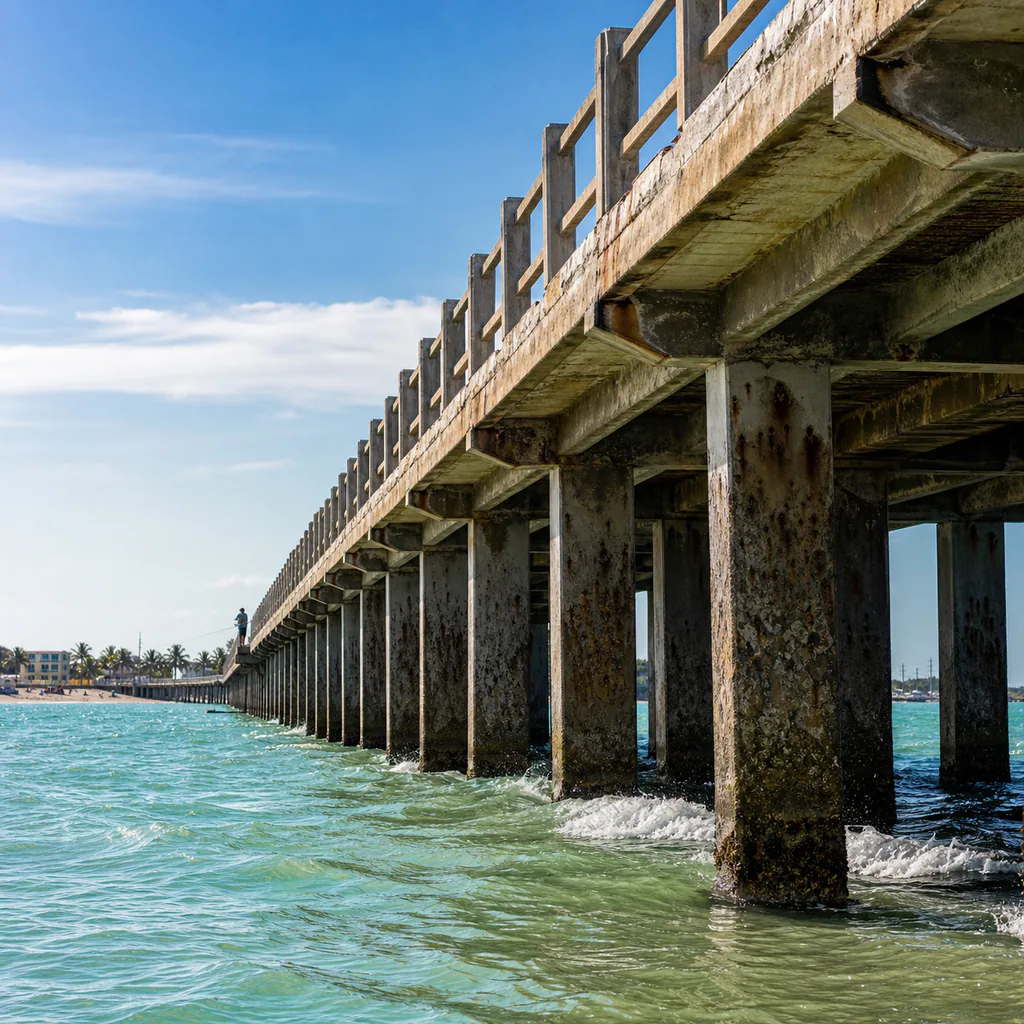
Puerto Colombia, Atlántico, works best as a full-day trip from Barranquilla built around the historic pier, Muelle 1888, railway heritage, and the Salgar coast. The town was once Colombia's great maritime threshold, where passengers, merchandise, technologies, and communities arrived by sea before continuing inland by rail.
In 2026, old infrastructure and ambitious public spaces stand side by side. A day can move from the historic pier and Plaza Francisco Javier Cisneros to railway heritage, a Caribbean lunch, and the coast around Salgar.
The Pier That Opened Colombia to the World
The official Colombia Travel profile dates the pier's inauguration to 1893. Until the opening of Bocas de Ceniza in 1936, it served as the country's principal maritime terminal, helped by its railway connection. Cuban engineer Francisco Javier Cisneros directed the project linking the Caribbean landing point with Barranquilla and the Magdalena River corridor.
This was more than a technical achievement. The Ministry of Culture's heritage management plan for the pier identifies its historic, aesthetic, and symbolic importance as a national cultural asset. Migrants entering through Puerto Colombia contributed to the commercial and cultural development of Atlántico. Standing beside the structure, look beyond its length: the repeating supports tell a story about movement between ocean, rail, river, and city.
Reading the Renewed Waterfront
Begin around Plaza Francisco Javier Cisneros, where the pier meets the town. Notice how the rebuilt public realm frames the maritime symbol. Wind, salt, and strong sun are part of the experience, so morning and late afternoon are usually more comfortable than midday. The waterfront becomes livelier toward evening.
Nearby, Muelle 1888 adds a contemporary chapter. It is not the original nineteenth-century dock: it is a modern international gastronomic center whose name recalls the year construction of the historic pier began. According to the Government of Atlántico, the space opened in 2024 as a tribute to the cultures that arrived through the port. Its varied kitchens make it an easy meal stop, but the concept is most meaningful after learning why migration matters to the town.
Railway Memory Beyond the Sea
The port worked because the railway carried people and cargo onward. Puerto Colombia's old railway station therefore belongs in the same narrative. A short walk between the waterfront and heritage sites reveals shaded streets, shops, homes, and coastal life beyond the visitor zone.
Architecture and public access can change, so ask locally about exhibitions or cultural programming instead of assuming that every historic building is open. Buying a drink, snack, or meal from an independent business also keeps the visit connected to the community that safeguards this history. Try Caribbean staples such as fish, coconut rice, patacones, or an egg arepa, while remembering that menus vary by season and venue.
Salgar, Sea Views, and a Careful Beach Day
West of the town center, Salgar expands the route with beaches and the striking Castillo de Salgar above the coast. Atlántico tourism officials have long grouped the castle, waterfront, and railway station into Puerto Colombia's historic-cultural circuit. The building is especially photogenic from outside, but interior access may depend on maintenance or events; confirm the day's conditions before making it the anchor of your schedule.
On the beach, treat the Caribbean as a changing natural environment rather than a guaranteed swimming pool. Wind, waves, currents, and authorized bathing areas can vary. Follow lifeguards, posted flags, and maritime guidance. Colombia's maritime authority, DIMAR, asks coastal visitors to use authorized operators, respect safety controls, and follow local instructions. These habits matter more than finding the most isolated stretch of sand.
Planning a Day Trip or Overnight Stay
Puerto Colombia lies beside the Barranquilla metropolitan area, making a day trip practical by taxi, app-based ride, or arranged transport. Travel time changes with traffic. A useful sequence is the town and railway history in the morning, the pier and lunch, then Salgar or another authorized coastal area later.
An overnight stay changes the pace. You can experience the waterfront after day visitors leave, support local accommodation, and avoid compressing history, lunch, and the beach into a rushed circuit. The department's 2026 tourism program continues to position Puerto Colombia as part of a broader Atlántico offer combining beaches, culture, gastronomy, and water sports.
Practical Tips
- Carry water, sunscreen, a hat, and breathable clothing; shade can be limited along the exposed waterfront.
- Use the verified Puerto Colombia destination in transport apps because another Colombian municipality shares the same name.
- Confirm opening hours and event access directly with cultural venues, especially before visiting Castillo de Salgar.
- Keep a flexible coastal plan and follow current flags, lifeguards, and DIMAR guidance before entering the water.
- Choose established transport for the return to Barranquilla, particularly after dark or during busy weekends.
- Allow time for a local meal instead of treating the town as a quick photo stop at the pier.
🕵️ Insider Secrets
- View the pier from the side as well as from the plaza; its repeating supports reveal the engineering scale better than a straight-ahead photograph.
- Read about the railway before arriving, then look for the invisible route that once joined ships to Barranquilla and the Magdalena.
- Visit Muelle 1888 after the historic pier so its culinary migration theme has context.
- Weekday mornings are generally calmer for examining the waterfront, while evenings reveal its social life.
- Ask residents which fish is freshest that day rather than ordering by a fixed online recommendation.
Puerto Colombia rewards travelers who see a system rather than a single landmark. The pier, railway, migrant histories, renewed waterfront, kitchens, and beaches all explain how a Caribbean town helped connect Colombia with the wider world. Give those layers time, and the visit becomes richer than a simple detour to the sea.
eSIM for Colombia
Avoid high roaming fees. Get instant 4G/LTE data with Airalo as soon as you land in Bogotá or Medellín.
- Instant Activation
- No Physical SIM Card
- Local & Regional Plans