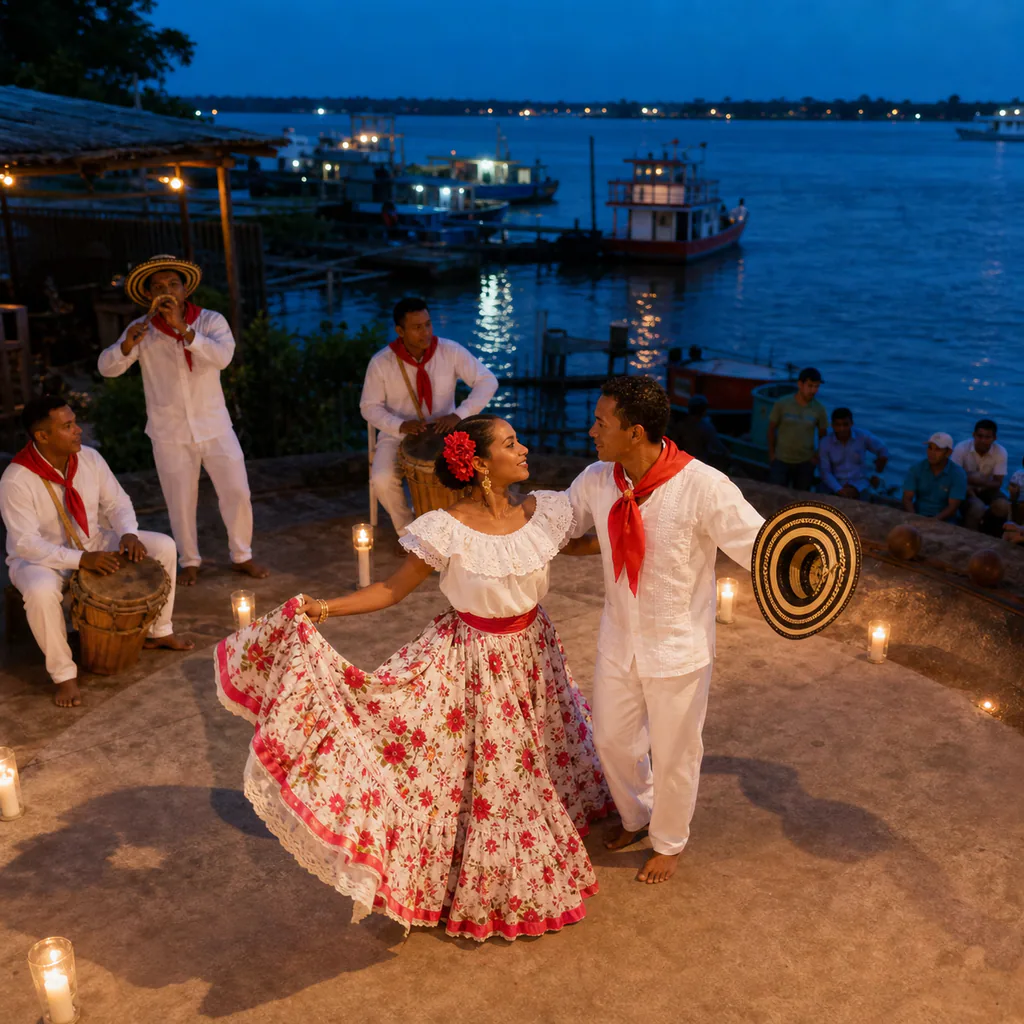
At Colombia's inland Caribbean crossroads, El Banco faces the water with music in its memory. The town sits where the Cesar River meets the Magdalena, at the entrance to the vast wetlands and channels of the Momposina Depression. This is not a polished resort stop. It is a hot, working river town where boats, fish, markets, family gatherings, and cumbia all belong to the same cultural landscape.
El Banco deserves more than a festival-only visit. Travelers who stay for a night or two can understand how the river shaped one of Colombia's most recognizable musical traditions, why composer José Barros remains central to local identity, and how cumbia continues through dancers, musicians, teachers, cooks, and neighborhood groups.
Where Cumbia Meets the River
Cumbia is often presented as a national symbol, but in El Banco it feels specific and local. Traditional ensembles bring together drums, maracas, voices, and the caña de millo, while dancers trace a measured circle with candles and deliberate footwork. The rhythm is social memory rather than background entertainment.
The Ministry of Cultures' Special Safeguarding Plan for traditional Caribbean cumbia identifies El Banco as an important place of transmission, performance, and festival history. That official recognition matters because the tradition depends on living practitioners. Watch closely, ask before photographing performers at close range, and support local events as a guest rather than treating them as a costume display.
José Barros and the Music of El Banco
José Benito Barros Palomino was born in El Banco in 1915 and grew up around processions, dances, tambora groups, and cumbiones. The Banrepcultural biography of José Barros describes how those sounds shaped a composer whose work crossed cumbia, porro, currulao, vallenato, pasillo, tango, and bolero.
His songs carried river imagery far beyond Magdalena. The best-known example is La Piragua, but El Banco invites a broader listen. Ask local musicians about Barros before building a playlist; the conversation may lead to songs, stories, and details that a generic streaming selection misses. A visit becomes richer when you hear the town as the source of a musical imagination, not merely the backdrop to one famous composition.
The National Cumbia Festival
Barros and local collaborators founded the National Cumbia Festival in the early 1970s. Today, the Festival Nacional de la Cumbia Jose Barros Palomino brings dancing couples, cumbiambas, traditional musicians, new compositions, artisans, and cooks to El Banco. Colombia's Law 1701 of 2013 recognized the festival as national cultural heritage, while Colombia Travel describes its dance and original-song competitions.
Festival dates and venues can change, so confirm the program before buying transport. During the celebration, reserve accommodation early and expect heat, crowds, amplified music, street closures, and late nights. Outside festival week, El Banco is quieter but no less meaningful. Dance schools, cultural groups, and informal music-making reveal how the tradition continues.
Riverfront Life and the Momposina Depression
The riverfront is the town's natural orientation point. Go early or near sunset, when the temperature eases and daily movement becomes easier to observe. The water is transport route, pantry, workplace, meeting place, and recurring subject in local music. Conditions change with the season, so the river never offers exactly the same view twice.
Boat outings can open a window onto channels, wetlands, fishing life, and bird habitat, but they require local judgment. Arrange any trip through an established operator, confirm the route and return time, wear a properly fitted life jacket, and travel in daylight. Never assume that a route suitable in one season will be practical in another. The water level, current, weather, and local navigation advice should decide the plan.
What to Eat in El Banco
River fish is the obvious starting point. Look for bocachico prepared fried, grilled, or in a regional stew, often accompanied by yuca, plantain, rice, or bollo. The official Colombia Travel guide to Magdalena highlights bocachico with vitualla, corn bollo, cayeye, and other dishes shaped by the department's Indigenous, African, Arab, and European influences.
Choose busy, simple restaurants and ask what arrived fresh that day. River fish populations and fishing seasons matter, so avoid demanding a particular species when cooks recommend another option. Carry cash for small eateries, fruit stalls, mototaxis, and local crafts.
Practical Tips
- Allow at least one night: El Banco is a long overland journey from major Caribbean hubs, and rushing straight back removes the best riverfront hours.
- Confirm transport locally: Road conditions, departure points, and schedules can shift. Check with your accommodation and operator before each leg.
- Plan around the heat: Walk early, rest at midday, and return outside when the light softens. Bring water, sun protection, and breathable clothing.
- Book festival stays early: Rooms become scarce during major cumbia events. Verify the official dates before committing to non-refundable plans.
- Use life jackets on the water: Choose a maintained boat, a local operator, and daylight departures. Do not accept an improvised night crossing.
- Check current travel advice: Review official guidance and ask local contacts about road conditions before traveling through the wider region.
🕵️ Insider Secrets
- Listen before the trip: Begin with José Barros, then ask musicians in town which recordings best represent local cumbia today.
- Choose the cooler riverfront hours: Sunrise shows working life; sunset brings families, softer light, and a more social atmosphere.
- Watch the dancers' feet: Traditional cumbia is restrained and precise. The small steps and circular movement tell more than a dramatic pose.
- Ask what is fresh: Let the day's catch guide lunch instead of ordering from a fixed idea of river cuisine.
- Stay after the headline event: Festival workshops, smaller performances, artisan stalls, and conversations often provide the strongest cultural encounters.
El Banco is compelling because music and geography remain inseparable. The Magdalena is visible, but it is also heard in drums, lyrics, stories, and the rhythm of daily work. Come with time, curiosity, and respect, and this southern Magdalena town offers a grounded way to understand why cumbia continues to belong both to Colombia and to the river communities that keep it alive.
eSIM for Colombia
Avoid high roaming fees. Get instant 4G/LTE data with Airalo as soon as you land in Bogotá or Medellín.
- Instant Activation
- No Physical SIM Card
- Local & Regional Plans