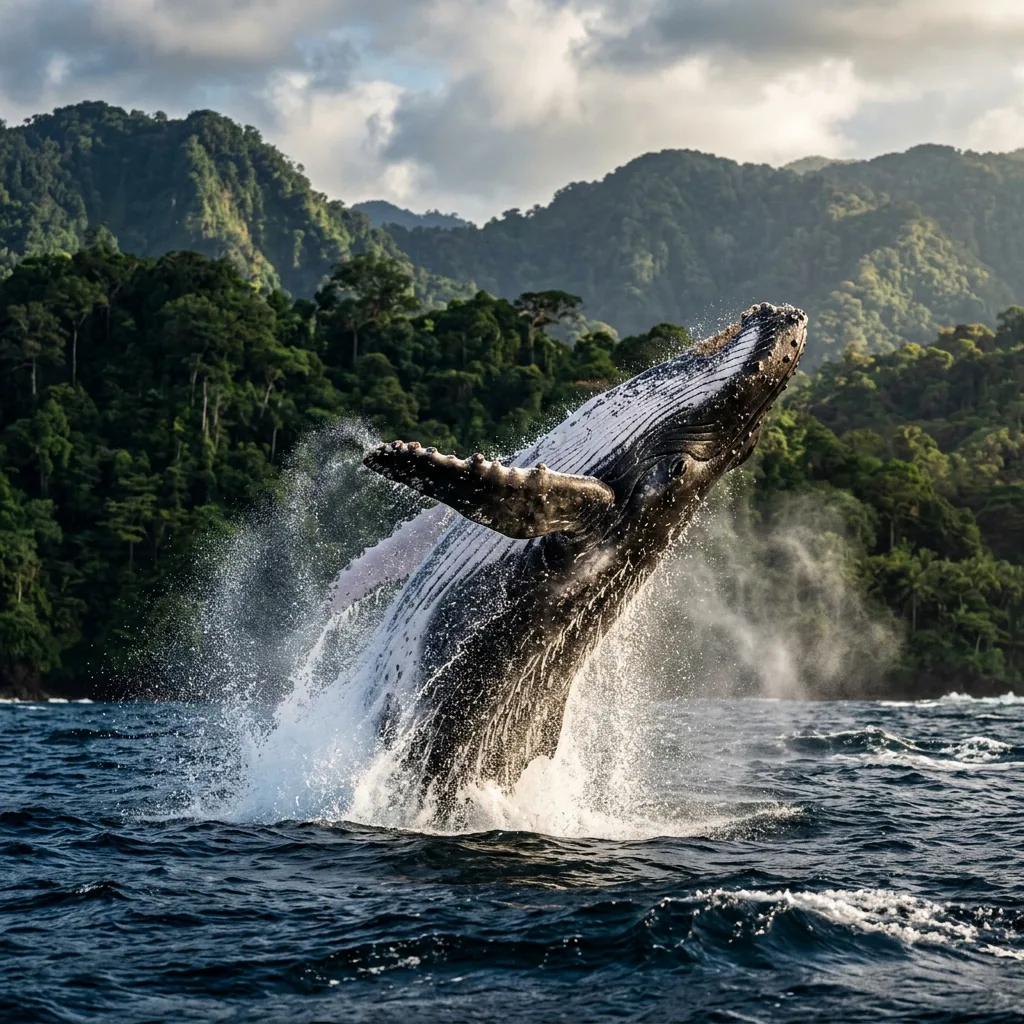
For whale watching in Colombia in 2026, visit the Chocó Pacific from July to October and choose either Nuquí or Bahía Solano as your base. Nuquí suits travelers who want remote beach lodges and a slower stay, while Bahía Solano offers access to El Valle and northern Utría. In both places, reserve with a local operator, keep a weather buffer, and treat every sighting as a possibility rather than a promise.
When Is Whale Watching Season in Colombia?
Parques Nacionales opened the official 2026 Pacific whale season for July through October. Humpback whales reach Colombia after a long migration from Antarctic feeding grounds, using warmer Pacific waters for reproduction, birth, and the first stage of calf development. The window is broad, not a guarantee that every date or departure will produce the same activity.
Stay several nights rather than timing the trip around one excursion. That gives the operator another safe window if rain, visibility, swell, or port instructions affect the first plan. Ask whether outings leave from your exact overnight location and how a weather cancellation is handled.
Nuquí or Bahía Solano: Choose Your Base
These are separate gateways with their own flights, stays, beaches, and boats. Do not book one and assume an easy transfer to the other. Use the Wild Pacific Coast map route as an overview, then confirm every segment locally.
- Choose Nuquí for small coastal lodges, beach time, thermal springs, waterfalls, and the Gulf of Tribugá. Check the Nuquí travel guide before selecting where to stay.
- Choose Bahía Solano for access through Ciudad Mutis, stays around El Valle, rainforest walks, and northern-coast outings. The Bahía Solano guide connects the town, beaches, and local boat plans.
- Add Utría carefully. The official Utría National Park visitor page says the park does not operate whale excursions. Confirm the provider, registration, guide or interpreter, accident insurance, park fees, and inclusions. Also review the site's Utría park page.
What to Check Before Booking a Whale-Watching Tour
A good listing should explain more than the word “whales.” Ask for an itemized answer before paying, especially when accommodation sells the excursion as part of a package. Useful questions include:
- Departure point: Which beach, dock, town, or lodge does the boat use, and is the transfer from your accommodation included?
- Operator and crew: Who operates the vessel, who gives the wildlife briefing, and how does the crew follow current maritime and environmental guidance?
- Safety equipment: Is there a correctly sized life jacket for every passenger, working communications equipment, first-aid capacity, and a passenger limit?
- Viewing practice: How does the captain control speed, approach direction, distance, noise, crowding, and time near mothers with calves?
- Weather policy: Who makes the final departure decision, and does a cancellation lead to another attempt, a different activity, or a refund?
- Complete price: Are local transfers, park entry, insurance, guide services, food, waterproof storage, and taxes included or paid separately?
Compare the answers, not just the headline price. A smaller local operation can be an excellent choice when it communicates clearly, uses appropriate equipment, and refuses unsafe departures. No responsible operator should guarantee a breach, a calf, a close approach, or any sighting at all.
Responsible Viewing Protects the Encounter
Colombia's Ministry of Environment publishes responsible whale-watching guidance for operators and visitors. Its recommendations address approach distance, low and constant speed, limited time and boat numbers around animals, silence, unobstructed travel paths, extra care around mothers and calves, and withdrawal when whales show stress. Follow the current briefing given by the authorized crew, even if an older blog or advertisement quotes a different rule.
Stay seated when instructed, keep arms and cameras inside the boat, never ask the captain to chase an animal, and do not enter the water for contact or a photograph. Carry every item ashore and respect the crew's safety call.
Build a Weather-Resilient Chocó Stay
Make whale watching part of a Chocó stay, not a fragile out-and-back appointment. Leave room for a rainforest walk, community-led food or culture, beach time, or a lodge day while the sea settles. The Colombian Pacific guide adds regional context.
Keep the night before your flight free of an essential long boat excursion, and avoid a tight international connection after a small-aircraft sector. Confirm baggage limits and transfers directly. For Colombian tours elsewhere, compare the Colombia tours planner without treating a marketplace listing as proof that a local departure operates.
Practical Tips
- Pack for water: Use a proper dry bag for documents and electronics, plus quick-dry layers and secure rain protection.
- Protect yourself: Bring reef-conscious sun protection, insect repellent, any personal medication, and advice from a qualified travel-health professional.
- Carry payment options: Connectivity and card acceptance can be unreliable. Ask your accommodation how much cash is sensible without carrying more than needed.
- Confirm luggage limits: Small aircraft and boat transfers may impose strict weight or size rules that differ from a mainline flight.
- Keep plans flexible: Treat departure times, transfer durations, and wildlife windows as locally confirmed information rather than fixed promises.
- Buy the complete route: Know who is responsible for every flight, land transfer, boat, overnight stay, and contingency before leaving the inland hub.
Colombia whale watching is at its best when the trip is designed around the Pacific rather than a single photograph. Choose the base that fits your wider stay, ask exact questions before booking, and give trained local crews permission to put weather and wildlife first. That combination makes a Chocó encounter safer, more useful to local communities, and far more memorable.
🕵️ Insider Secrets
- Watch from land too: Ask your host whether the beach or lodge has a safe viewpoint. Shore sightings are never guaranteed, but a quiet lookout can add time without adding pressure from another boat.
- Listen to the briefing: The guide's explanation of breathing patterns and calf behavior can help you notice more than a dramatic breach.
- Use the spare day well: If the sea closes, ask for a locally guided land alternative instead of pushing a captain to depart in poor conditions.
eSIM for Colombia
Avoid high roaming fees. Get instant 4G/LTE data with Airalo as soon as you land in Bogotá or Medellín.
- Instant Activation
- No Physical SIM Card
- Local & Regional Plans