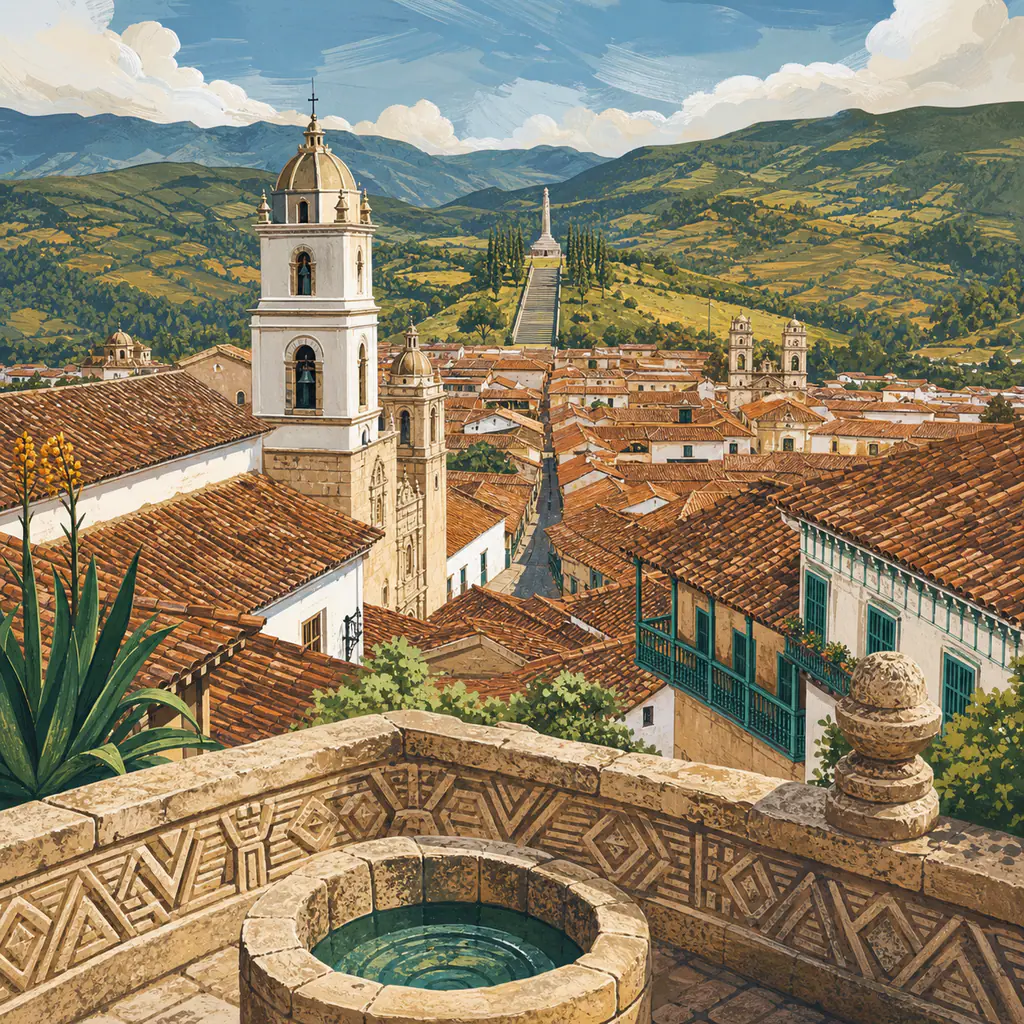
Tunja is worth at least one full day for Plaza de Bolívar, colonial houses, church interiors, Muisca memory, and access to the Boyacá independence route. The highland capital also makes a practical cultural base between Bogotá, Villa de Leyva, Paipa, and the smaller towns of central Boyacá.
For a focused 2026 visit, walk the historic center in the morning, combine one or two museums or churches with Pozo de Hunzahúa, and leave a separate half day for Puente de Boyacá if it matters to your route. The city rewards a planned walking loop more than a quick stop at the bus terminal.
Why Tunja Deserves More Than a Transfer
Many travelers pass through Tunja's bus terminal, feel the cool weather, and keep moving. Stay longer and the city separates itself from the better-known towns nearby. Villa de Leyva is photogenic and preserved; Paipa is restorative and thermal; Tibasosa and Nobsa lean into gardens, fruit, ruanas, and crafts. Tunja is a working capital with university life, government buildings, churches, narrow streets, and daily routines moving around old stone.
That working-city energy matters. You can walk from a museum to a bakery, from a chapel to a student café, and from a busy avenue to a quiet colonial facade. Tunja feels used, lived in, and still carrying its long memory.
The Historic Core and Plaza de Bolívar
Start in Plaza de Bolívar, the city's traditional center. SITUR Boyacá describes the plaza as the historic Plaza Mayor, founded with the Hispanic city on August 6, 1539, and a stage for more than four centuries of public life. Around it: cathedral, civic buildings, old balconies, arcades, and streets that drop or climb like a highland city should.
The best route is deliberately slow. Walk the plaza first, then move into nearby streets for carved doors, heavy walls, tiled roofs, inner patios, and domestic architecture that hints at Tunja's colonial importance. The Museo Casa del Fundador Gonzalo Suárez Rendón and the Museo Casa del Escribano Don Juan de Vargas turn the architecture into context rather than background.
Churches, Murals, and Sacred Layers
Tunja's religious architecture is one of its strongest reasons to visit. The city tourism portal groups major attractions into historical sites, religious architecture, museums, civil architecture, heraldry, contemporary works, and natural sites. Churches such as Santo Domingo, San Ignacio, Santa Clara, El Topo, and Nuestra Señora de Las Nieves are part of a dense colonial and republican story.
Look for interiors, retables, paintings, courtyards, and changes in light. Tunja rewards travelers who slow down indoors as much as outdoors. If a church or museum has limited hours, keep the route flexible.
Muisca Memory: Pozo de Hunzahúa
One of the most meaningful contrasts in Tunja is the way Muisca memory remains present beside the colonial city. Pozo de Hunzahúa, also known as Pozo de Donato, is described by regional tourism information as a sacred Chibcha place connected to the Zaque Quemuenchatocha and local stories of gold and emeralds.
The colonial center can make Tunja feel Spanish; Pozo de Hunzahúa reminds you that the urban story is older and more complex. Pairing both in the same day gives the visit more depth.
Puente de Boyacá and the Independence Route
Tunja is also a natural base for the independence route. The Puente de Boyacá sits outside the city in the Teatinos valley, but it is strongly tied to Tunja's tourism narrative and to the department's identity. Official regional material presents it as the landscape connected to the decisive Battle of Boyacá.
Do not treat this as a quick monument photo. Go with time to walk the site, understand the geography, and see how close the freedom story sits to today's city. Tunja pairs well with Paipa, Villa de Leyva, or smaller highland towns.
Food, Weather, and Highland Rhythm
Tunja's altitude shapes everything. Days can feel bright and dry, then suddenly cold once wind moves across the hills. Bring a jacket even if Bogotá felt mild, and do not underestimate the sun. Look for simple Boyacá food: arepas, mute, longaniza, caldo, cheese, bakery snacks, hot chocolate, and hearty lunch menus.
For a first stay, choose accommodation near the historic center if walking is the priority, or near transport if Tunja is your base.
Practical Tips
- Give Tunja one full day: A few hours only covers the plaza. A full day lets you add museums, churches, Pozo de Hunzahúa, and a proper meal.
- Use Tunja as a Boyacá hub: Buses and roads connect it with Villa de Leyva, Paipa, Duitama, Sogamoso, Tibasosa, and Nobsa.
- Check opening hours directly: Museum and church schedules can shift around holidays and religious events.
- Dress for altitude: Pack sunscreen, a light rain layer, and a warm jacket. The city is cool, but the sun can be sharp.
- Walk carefully at night: Stay on active streets around the center and use taxis or ride-hailing when returning late.
- Separate Tunja from Villa de Leyva: Tunja is a living capital, not a preserved boutique town.
🕵️ Insider Secrets
- Start before the plaza gets busy: Early morning gives better light on colonial facades and a calmer first look at the historic core.
- Look up as much as forward: Tunja hides painted ceilings, carved balconies, rooflines, and old coats of arms above ordinary storefronts.
- Plan a museum-first route: Context from the Casa del Fundador or Casa del Escribano makes the surrounding streets feel less anonymous.
- Pair sacred sites carefully: Visit Pozo de Hunzahúa before or after the churches to feel the shift between Muisca memory and colonial Catholic layers.
- Use the city as a reset: Compared with busier heritage towns, Tunja gives you history, food, errands, and transport in one practical base.
Tunja is not the easiest Boyacá destination to package, and that is part of its value. It is a city of altitude, stone, memory, students, bells, civic life, independence symbols, and Muisca echoes beneath the colonial grid. For travelers willing to look beyond the transfer point, it becomes one of the most interesting cultural stops in the Colombian highlands.
eSIM for Colombia
Avoid high roaming fees. Get instant 4G/LTE data with Airalo as soon as you land in Bogotá or Medellín.
- Instant Activation
- No Physical SIM Card
- Local & Regional Plans