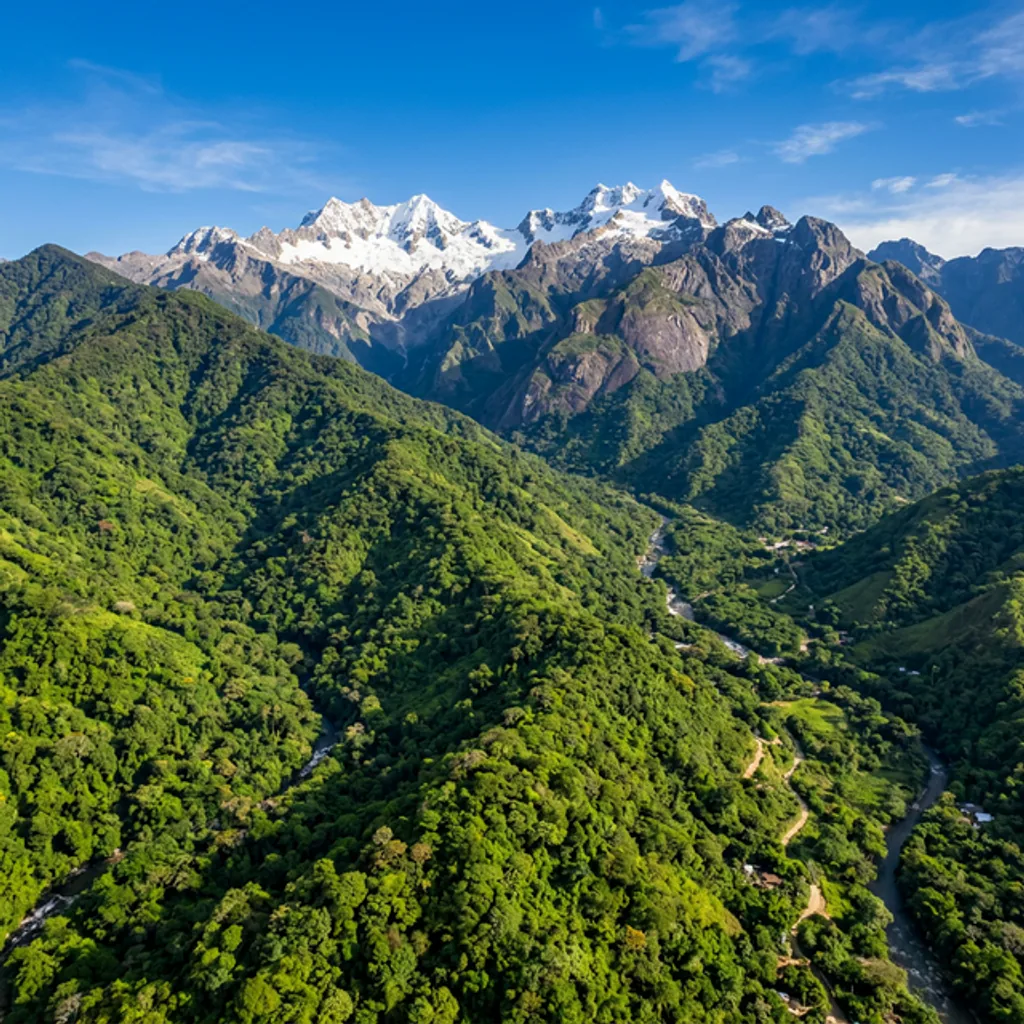
There is no place on Earth quite like the Sierra Nevada de Santa Marta. Rising directly from the Caribbean Sea to a height of 5,775 meters, it is the world's highest coastal mountain range. In 2026, it remains one of Colombia's most sacred and ecologically significant regions—a "miniature continent" that contains almost every ecosystem found in the country, from sun-drenched beaches and tropical rainforests to high-altitude paramos and permanent glaciers. For the indigenous peoples who live here—the Kogi, Arhuaco, Wiwa, and Kankuamo—this mountain is the "Heart of the World," and its health is a reflection of the health of the entire planet.
This guide explores the biodiversity and unique landscapes of the wider Sierra Nevada region as they stand in 2026. The Parque Nacional Natural Sierra Nevada de Santa Marta itself has no ecotourism vocation and does not offer public tourism activities. Experiences in Minca, Ciudad Perdida, coffee farms, reserves, and community territories take place under different boundaries and rules; they should not be described as permission to enter the national park.
A Vertical Journey: From Jungle to Glacier
The most extraordinary feature of the Sierra Nevada is its verticality. Within a horizontal distance of just 42 kilometers, the landscape rises from the tropical heat of the Caribbean coast to the freezing temperatures of the high peaks. This ecological gradient is a vital laboratory for scientists studying climate change and biodiversity, but the upper protected zones are not a public trekking corridor.
- The Tropical Lowlands (0-1,000m): This is the land of dense rainforests and dry tropical forests. It is home to howler monkeys, jaguars, and hundreds of species of colorful butterflies. In 2026, sustainable coffee and cacao farms in this belt provide a buffer zone that protects the deeper jungle.
- The Cloud Forest (1,000-3,000m): As you climb, the air becomes cool and misty. This is a realm of giant ferns, moss-covered trees, and rare orchids. In 2026, the cloud forests of the Sierra Nevada are a premier destination for birdwatchers, who come to see endemics like the Santa Marta Parakeet.
- The Paramo and the Snow (3,000m+): Above the tree line, the landscape opens up into the rugged, wind-swept paramo, dominated by the iconic Frailejones. Finally, the peaks of Cristóbal Colón and Simón Bolívar are capped with permanent snow, providing a stark white contrast to the deep green jungle below.
Endemic Paradise: A World Within a World
Because the Sierra Nevada is isolated from the main Andes chain, it has evolved in its own unique way. In 2026, it is recognized as the world's single most important concentration of endemic birds and amphibians. This means there are dozens of species here that exist nowhere else on the planet.
The Blue-bearded Helmetcrest, a stunning hummingbird that lives in the high-altitude paramos, is one of the most sought-after sights for nature lovers. Scientists in 2026 are also discovering new species of frogs and insects in the remote valleys of the mountain, reminding us that even in the 21st century, the Sierra Nevada still holds many secrets.
The Heart of the World: Indigenous Wisdom
You cannot talk about the Sierra Nevada without talking about its human inhabitants. The four indigenous groups who call this mountain home consider themselves the "Older Brothers," tasked with protecting the balance of nature. In 2026, their wisdom is increasingly being integrated into conservation efforts.
Visitors to the wider Sierra Nevada region are encouraged to learn about the Indigenous worldview, which sees the mountain as a living being. The famous trek to the Lost City (Ciudad Perdida) passes through Indigenous territories and follows its own authorized route outside the assumption of general national-park access. Use an authorized operator, obey community closures, and never treat sacred or high-mountain areas as open simply because a trail appears on a map.
Practical Tips for the 2026 Nature Explorer
- Minca: The Gateway: Start your journey in Minca, a small mountain village known for its coffee farms and incredible birdwatching. In 2026, it has become a hub for sustainable travel, with many eco-lodges offering panoramic views of the sea from the mountains.
- Check Boundaries: Ask for the exact location and authorization of every excursion. The official national park page lists the park as having no ecotourism activity.
- Preparation: Authorized routes in the wider Sierra Nevada are rugged. Be prepared for sudden weather changes, and carry waterproof gear and sturdy boots.
- Respect the Sacred: Always ask for permission before taking photos of indigenous people, and stay on marked trails. Many areas of the mountain are off-limits to visitors for spiritual reasons.
- Birdwatching: If you are a bird enthusiast, consider staying at the El Dorado Bird Reserve. In 2026, it remains one of the best places in the world to see the Sierra's endemic species in their natural habitat.
The Sierra Nevada de Santa Marta is a reminder of the power and the fragility of nature. It is a place that demands respect and offers, in return, a glimpse into a world of prehistoric beauty and ancient wisdom. In 2026, as you stand on a ridge and watch the clouds roll in from the Caribbean, you will understand why this mountain is, and will always be, the Heart of the World.
🕵️ Insider Secrets
- The Secret Waterfall of Minca: Most people visit Marinka, but if you ask a local guide, they can take you to "Pozo Azul" early in the morning before the crowds arrive. The water is ice-cold and crystalline, perfect for a refreshing dip.
- The Giant Hammocks: Look for the eco-lodges near Minca that feature giant "nets" or hammocks suspended over the jungle canopy. It’s the ultimate way to experience the scale of the Sierra's forests.
- The Best Sunrise: Hike to the "Cerro Kennedy" viewpoint. From here, on a clear morning in 2026, you can see the snow-capped peaks glowing orange in the first light of the sun, with the Caribbean Sea shimmering in the distance. It is one of the most spectacular sights in all of South America.
eSIM for Colombia
Avoid high roaming fees. Get instant 4G/LTE data with Airalo as soon as you land in Bogotá or Medellín.
- Instant Activation
- No Physical SIM Card
- Local & Regional Plans