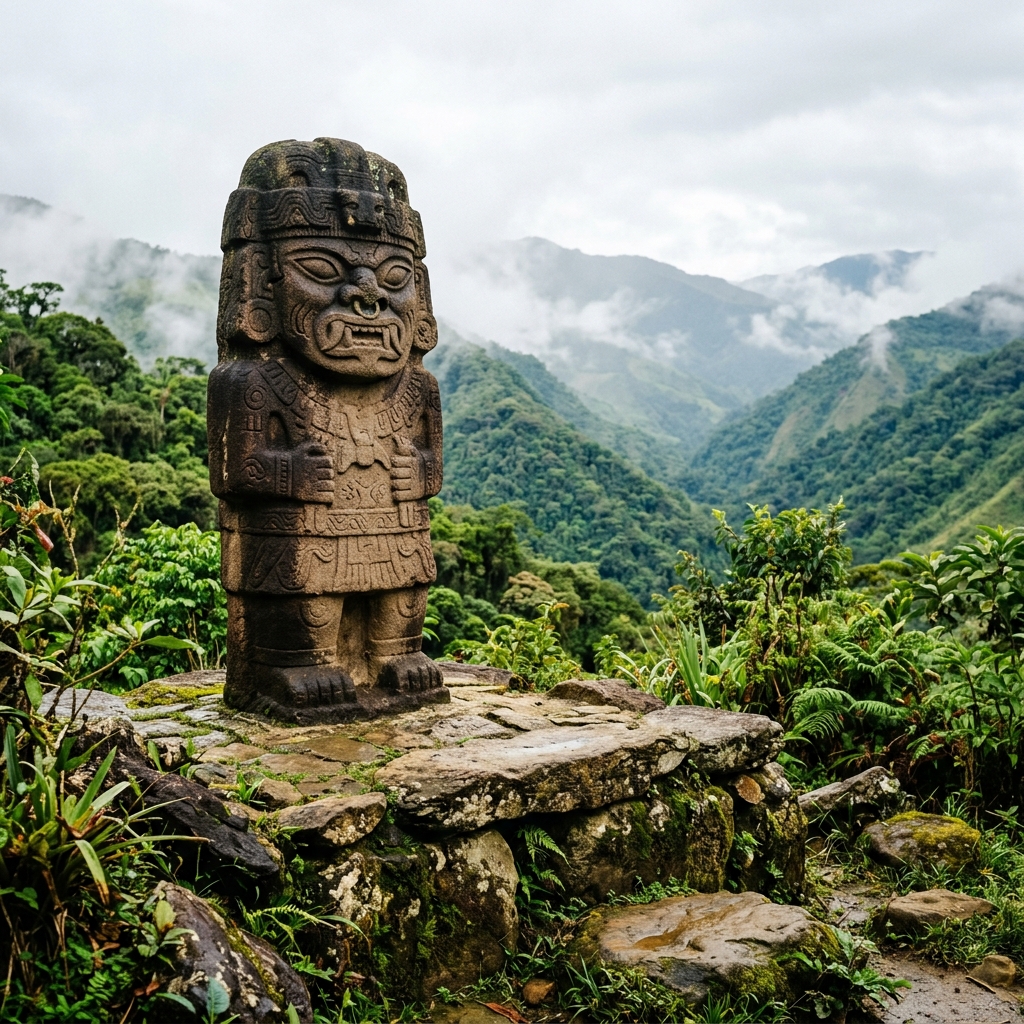
Nestled in the high-altitude hills of Huila, where the Colombian Massif gives birth to the country's most important rivers, lies one of the most enigmatic and awe-inspiring archaeological sites in the world: the San Agustín Archaeological Park. This UNESCO World Heritage site is home to the largest collection of religious monuments and megalithic sculptures in South America, created by a mysterious civilization that vanished long before the Spanish arrival.
The Mystery of the Statuemakers
Unlike the well-documented Incas or Mayans, the people who carved the thousands of statues in San Agustín left no written records. Archeologists believe they settled in the Magdalena River valley as early as 3300 BC, reaching their cultural peak between 1 AD and 900 AD. They were master stonecarvers, transforming volcanic rock into deities, warriors, and mythical creatures that were placed atop elaborate tombs to protect the elite in the afterlife.
The statues range from small, delicate pieces to massive figures over four meters tall. Many feature "dual natures"—a characteristic of Andean spirituality—where a human form is merged with animal features like feline fangs, eagle talons, or snake-like attributes, symbolizing the connection between the physical and spiritual realms.
Key Sites within the Park
The park is divided into several "Mesitas" (plateaus) and specific areas of interest. Here are the highlights you cannot miss:
- The Forest of Statues (El Bosque de las Estatuas): A beautiful winding path through lush vegetation where 35 ancient sculptures have been placed, allowing you to see the incredible variety of styles and expressions in a serene, natural setting.
- The Fountain of Lavapatas (Fuente de Lavapatas): Perhaps the most impressive feat of engineering in the park, this is a complex system of channels and pools carved directly into the rocky bed of a stream. It was likely used for ritual baths and religious ceremonies, decorated with carvings of salamanders, snakes, and human faces.
- Alto de los Ídolos and Alto de las Piedras: Located a short drive or horse ride away in the neighboring municipality of Isnos, these sites contain some of the best-preserved tombs and the tallest statue in the region, standing at an imposing seven meters.
Planning Your Adventure
Getting to San Agustín is a journey in itself, but the rewards are well worth the effort. The town of San Agustín serves as the base for all explorations, offering a range of cozy hostels, boutique hotels, and excellent local coffee.
- Getting There: The most common route is a flight to Neiva followed by a 4-5 hour drive south, or a long-distance bus from Bogotá (approx. 10 hours). You can also arrive from Popayán via a notoriously bumpy but incredibly scenic road through the Paramo of Puracé.
- Best Time to Visit: The dry season from December to March and July to August is ideal, though the lush green landscape is beautiful year-round. Bring layers, as the temperate mountain climate can get chilly at night.
- Beyond the Statues: Don't miss the "Estrecho del Magdalena," the narrowest point of Colombia's longest river, where the mighty Magdalena is squeezed into a rocky gorge just 2.2 meters wide.
San Agustín is more than just an outdoor museum; it is a place of deep spiritual energy and natural beauty. Standing before these ancient stone sentinels as the mist rolls over the green Huila hills is a humbling experience that connects you directly to the heartbeat of Colombia's ancient soul.
🕵️ Insider Secrets
- Salto de Mortiño: Visit this spectacular waterfall located near Isnos, offering one of the most drastic drops in the region. It's a breathtaking spot often overlooked by the standard park tours.
- Restaurante El Huaso: Located on the road toward the archaeological park, this spot is highly rated for its traditional "asado huilense" (Huila-style barbecue) and offers stunning views of the surrounding hills while you dine.
- Feria Artesanal (July Festival): If visiting in July, stay tuned for the local cultural festivities in San Agustín town, where traditional music, dance, and craft markets turn the main square into a vibrant display of Huila's rich heritage.
- La Chaquira at Golden Hour: For a quieter, dramatic view, head 4 km north of town to La Chaquira, where pre-Hispanic carvings face the Magdalena River canyon about 200 meters below. Go late afternoon for softer light and fewer groups on the stairs and viewpoint path.
- Casa Blanca La Parrilla de Moas (Local Grill Stop): A strong post-park lunch option on the park road, known for wood-fire grilling. Address: Vía al Parque Arqueológico km 1, San Agustín (cell: 310 316 1367).
- Upcoming Festival Window (June 28-30, 2026): If your trip overlaps late June, combine San Agustín with a cultural detour to Huila's Feast of Saints Peter and Paul events in Neiva (parades, Sanjuanero dance, and Bambuco celebrations).