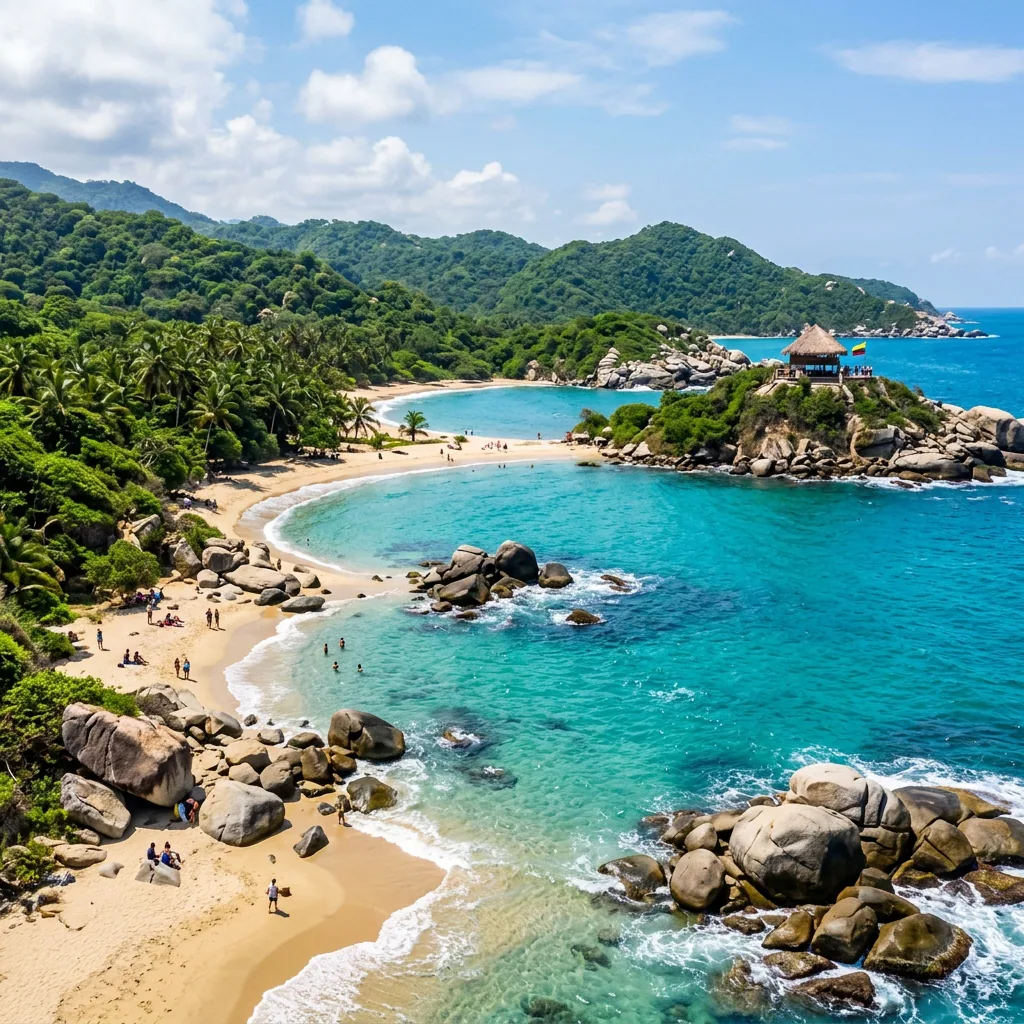
To visit Tayrona National Park in 2026, use Santa Marta as your main base, choose the entrance that matches the beach or trail you want, and confirm the live sector status and capacity before paying. Most first-time visitors either enter through Zaino for the forest walk toward Arrecifes and Cabo San Juan or choose Palangana and Bahía Concha for a shorter beach-focused day. If you want an organized transfer or guide, compare the formats in our Santa Marta tours guide. Do not treat an old itinerary as a guarantee: access, sea conditions, visitor limits, and transport can change.
As of the official 3 July 2026 update, Calabazo, Zaino, Palangana, and Bahía Concha were operating for visitors. Check the Tayrona page from Colombia's National Parks authority again immediately before travel. You can also review the local Tayrona park planner and open the Tayrona marker on our interactive map for route context.
Tayrona Trip at a Glance
- Best gateway: Santa Marta for transport, accommodation, cash, and a weather buffer.
- Sensible time: One full day for one sector; add a night if you want a slower trail day or park-area stay.
- Main decision: Select your entrance before booking transport because the sectors do not offer the same experience.
- What to verify: Opening status, daily capacity, entry process, accident insurance, sea conditions, and the final return.
- What to avoid: Combining distant sectors in one day or assuming every photogenic beach is safe for swimming.
Choose the Right Entrance and Beach
Zaino is the usual choice for the classic Tayrona walk. It leads toward Cañaveral, Arrecifes, La Piscina, and Cabo San Juan del Guia. The route includes heat, humidity, uneven ground, and substantial walking even when an internal shuttle covers the first road section. Arrecifes is known for dangerous water, so follow signs rather than swimmers. La Piscina and Cabo can have more sheltered areas, but permission to swim still depends on conditions that day.
Calabazo serves routes toward Playa Brava, Boca del Saco, and Cabo San Juan and suits prepared hikers who have confirmed the trail and exit plan. Palangana is used for day visits around Gayraca and Neguanje, with boat connections to places such as Playa Cristal or Cinto when authorized. Bahía Concha offers a shorter approach from Santa Marta and works well when the priority is a beach day rather than the long coastal trail. Compare these options with the broader Colombia beaches planner before deciding that Cabo is automatically the right fit.
Tickets, Closures, and What to Book
The official park guidance asks visitors to confirm capacity and dates before beginning payment, pay the current entrance fee where applicable, complete registration and induction, and obtain accident insurance with visitor assistance. Entrance, insurance, guiding, transport, food, and accommodation can be separate charges. Rates and payment channels can change, so use the official park page instead of a price copied into a blog or social post.
Tayrona suspends ecotourism during three annual cultural and ecological rest periods: 1 to 15 February, 1 to 15 June, and 19 October to 2 November. Additional safety or weather closures are also possible. The official page currently says a guide is not mandatory for groups of fewer than eight people, but confirm that rule before travel. A suitable operator can still help with transfers, sector choice, insurance, and a reliable return. Before booking through the Colombia tours hub, ask which entrance is included, whether admission and insurance are separate, how much walking is required, and what happens if a sector closes.
Getting There and Planning Your Stay
From Santa Marta, road transport follows the Caribbean corridor toward the land entrances. Public buses, private transfers, and organized outings serve different sectors, but the pickup point, luggage allowance, and final return should be confirmed directly. Boats may leave from Santa Marta-area points such as Taganga or El Rodadero for authorized marine sectors. Choose them only with a responsible operator, a life jacket, visitor insurance, and acceptable sea conditions; the Caribbean crossing can be rough.
For a day visit, sleep in Santa Marta or near the entrance, depart early, and keep the evening free from tight onward connections. An overnight inside or near the park reduces rushing but requires an advance reservation and a clear plan for meals, water, luggage, and the next day's exit. The Colombia accommodation guide helps compare a city base with a nature stay. If continuing east toward Palomino, confirm the coastal-road transport after you leave the park rather than assuming a late connection will wait.
A Realistic First Visit
- Previous evening: Check the official status, weather, sector capacity, ticket instructions, insurance, and return transport.
- Morning: Reach your chosen entrance early enough for induction and the full route without racing the exit time.
- Midday: Rest in shade, refill only where safe water is confirmed, and swim solely in an authorized area.
- Afternoon: Begin the return with a generous buffer for trail, shuttle, road, or boat delays.
Safety and Respect for a Sacred Landscape
Heat exposure, dehydration, slippery trails, strong currents, and changing seas are the practical risks. Carry water, sun protection, repellent, a light rain layer, basic medication, and footwear with traction. Obey red flags and local instructions; calm-looking water can still be unsafe. Do not fly a drone without permission, light fires outside authorized areas, bring pets or speakers, feed wildlife, or carry prohibited single-use plastics.
The park is part of the ancestral territory of the Kogi, Wiwa, Arhuaco, and Kankuamo peoples. The closure periods support cultural and spiritual work as well as ecological recovery. Stay on marked paths, respect sacred sites and families, ask before photographing people, and treat every restriction as part of the visit rather than an inconvenience.
Practical Tips
- Carry identification: Visitor category and current entry requirements may depend on it.
- Separate the costs: Ask for an itemized total covering entry, insurance, guide, transport, meals, and accommodation.
- Pack for the walk: Keep luggage light and use a small dry bag for electronics and documents.
- Protect your exit: Confirm the last shuttle, road transfer, or boat before entering the sector.
- Keep a backup: Plan a Santa Marta or Minca day in case weather or park operations change.
🕵️ Insider Secrets
- The best entrance is the one that fits your walking ability and desired sector, not necessarily the one most photographed online.
- A night near the entrance can be more useful than sleeping inside when you need an early start without carrying overnight gear.
- Weekdays outside Colombian holiday periods usually make transport and accommodation easier to coordinate, but capacity still needs checking.
- If Cabo San Juan is not sensible that day, a shorter authorized sector is a successful Tayrona visit, not a consolation prize.
Tayrona rewards a precise plan and a flexible attitude. Base yourself honestly, choose one sector, verify official conditions, and leave enough time to return safely. That approach supports a better trip, more responsible bookings, and the protected landscape that made you want to visit.
eSIM for Colombia
Avoid high roaming fees. Get instant 4G/LTE data with Airalo as soon as you land in Bogotá or Medellín.
- Instant Activation
- No Physical SIM Card
- Local & Regional Plans