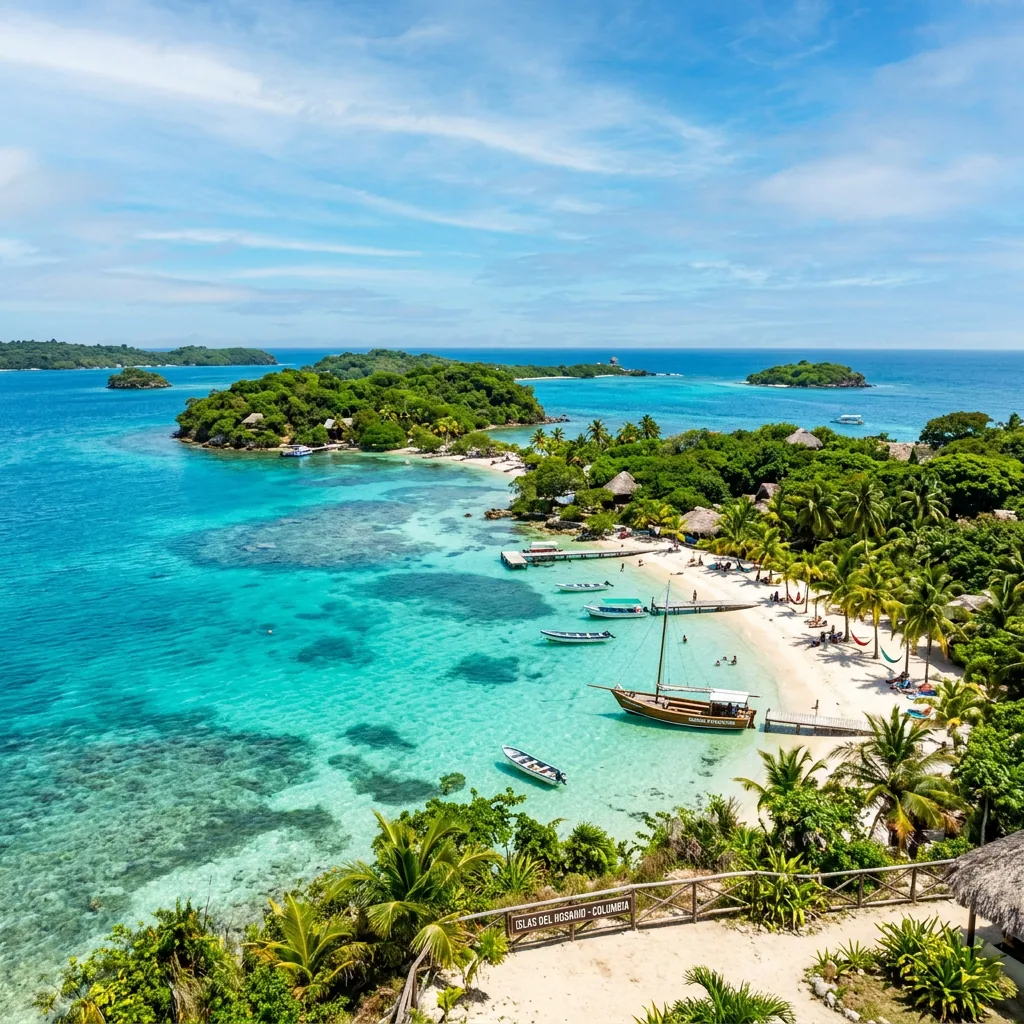
For a Rosario Islands day trip from Cartagena in 2026, choose the experience before comparing prices: a shared multi-stop boat for variety, a beach-club day for an easier base, a private charter for control, or a dedicated snorkeling trip for reef time. Use Cartagena as the gateway, confirm the exact island and authorized departure dock, and ask for the complete cost, accident insurance, return plan, and weather policy before paying.
The islands form part of Corales del Rosario y de San Bernardo National Natural Park, not a generic beach zone. Check the official park page before travel for current entry rights, registration, induction, insurance, and operator requirements. Our protected-area planner and Rosario Islands map marker add local context.
Rosario Islands Trip at a Glance
- Best gateway: Cartagena for licensed departures, accommodation, and a flexible weather buffer.
- Main decision: Decide whether your priority is island variety, one comfortable beach, privacy, snorkeling, or an overnight.
- What to verify: Exact stops, departure dock, vessel, life jacket, park charges, accident insurance, lunch, equipment, and return time.
- What to avoid: Buying only from a photo or a vague "five islands" label that does not identify the beaches and services.
- Useful alternative: Stay one or two nights on Isla Grande when quiet mornings matter more than seeing many stops.
Choose the Right Day-Trip Format
A shared multi-stop tour offers variety at lower cost, but it can mean a fixed pace, music, wet boarding, and little time at each stop. Ask for named islands and beaches because Barú, Playa Blanca, Cholón, Tierra Bomba, and the Rosario archipelago are not interchangeable. One route may combine several areas.
A beach-club or hotel day pass provides one base, shade, bathrooms, lunch, and fewer transfers. Confirm the boat and whether access is from a dock or through shallow water. A private charter gives a group more control, but the quote still needs a licensed captain, fuel, safety equipment, park obligations, and a cancellation policy. A snorkeling or diving trip should prioritize a qualified provider, equipment fit, supervision, and the actual reef site.
Check the Booking Before You Pay
Request an itemized confirmation naming the operator, vessel, departure point, check-in time, stops, activities, meal, water, equipment, park and port charges, visitor accident insurance, and expected return. Ask what is paid separately and whether card surcharges or cash-only charges apply. Rates change, so this guide does not freeze a price.
The Cartagena tourism authority identifies Muelle de La Bodeguita as the authorized departure point for tourist boats to these islands and advises using formal companies. If a seller names another dock, verify its authorization. Compare products through the Colombia tours planner, then judge the inclusions and operator.
Departure, Sea Conditions, and Overnight Options
Leave time for check-in, registration, and park induction. Cartagena's port authority can restrict or suspend routes when wind and sea conditions deteriorate. Review the same-day operator message and official notices; never pressure a captain to sail through unsafe water. Small speedboats can feel rough, so disclose mobility limitations, pregnancy, back problems, or severe motion sickness before booking.
If you dislike rushed stops, compare the trip with one or two nights on Isla Grande. Confirm luggage limits, dock or wet landing, final departure, meals, electricity, water, and communication. The accommodation planner weighs a Cartagena base against an island stay, while the Colombia islands guide compares archipelagos.
A Realistic Cartagena Day Trip
- Previous evening: Confirm the vessel, departure status, meeting point, inclusions, and return contact.
- Morning: Check in early, complete required registration or induction, and keep identification and valuables dry.
- Midday: Follow the planned activity, hydrate, and verify the boat before reboarding at every stop.
- Afternoon: Return with enough margin before a flight, long-distance bus, restaurant booking, or onward transfer.
Reef Safety and Responsible Island Travel
Wear the provided life jacket when required and follow boarding instructions. Swim only where the operator confirms it is safe, stay clear of propellers and navigation lanes, and do not assume calm-looking water has no current. Carry sun protection, a dry bag, water, medication, and suitable motion-sickness support.
Coral is living habitat. Never stand on, touch, feed, collect, or anchor on the reef, and do not chase wildlife for a photograph. Choose established entry points, keep fins from striking coral, take all waste back, and avoid single-use plastics where possible. Read the broader Colombia beaches planner if swimming conditions and transfer style matter more to you than a specific island name.
Practical Tips
- Identify the destination: Save the exact island, beach club, and dock rather than only the tour brand.
- Separate every charge: Confirm park rights, port charges, insurance, meals, gear, fuel, and tips before payment.
- Protect documents: Carry identification and booking details in a waterproof pouch with a charged phone.
- Plan for spray: Wear quick-drying clothes and protect cameras, prescriptions, and electronics.
- Keep a Cartagena backup: Use the Cartagena guide if marine operations are restricted.
🕵️ Insider Secrets
- A longer list of stops often means less useful time at each island; compare minutes on land and in the water, not only names.
- An overnight can deliver the quiet island feeling that a busy day circuit cannot, even if both products use the same photographs.
- A formal operator should answer specific questions about the vessel, insurance, safety equipment, and weather cancellation without avoiding detail.
- For snorkeling, a smaller supervised group and a clearly named reef site usually matter more than a party atmosphere or included open bar.
The best Rosario Islands day trip is the one whose exact route, safety plan, and inclusions match your priorities. Choose the format first, verify the authorized operation and current park requirements, and keep the schedule flexible enough for the Caribbean Sea. That preparation makes the booking easier to compare and the protected archipelago better to experience.
eSIM for Colombia
Avoid high roaming fees. Get instant 4G/LTE data with Airalo as soon as you land in Bogotá or Medellín.
- Instant Activation
- No Physical SIM Card
- Local & Regional Plans