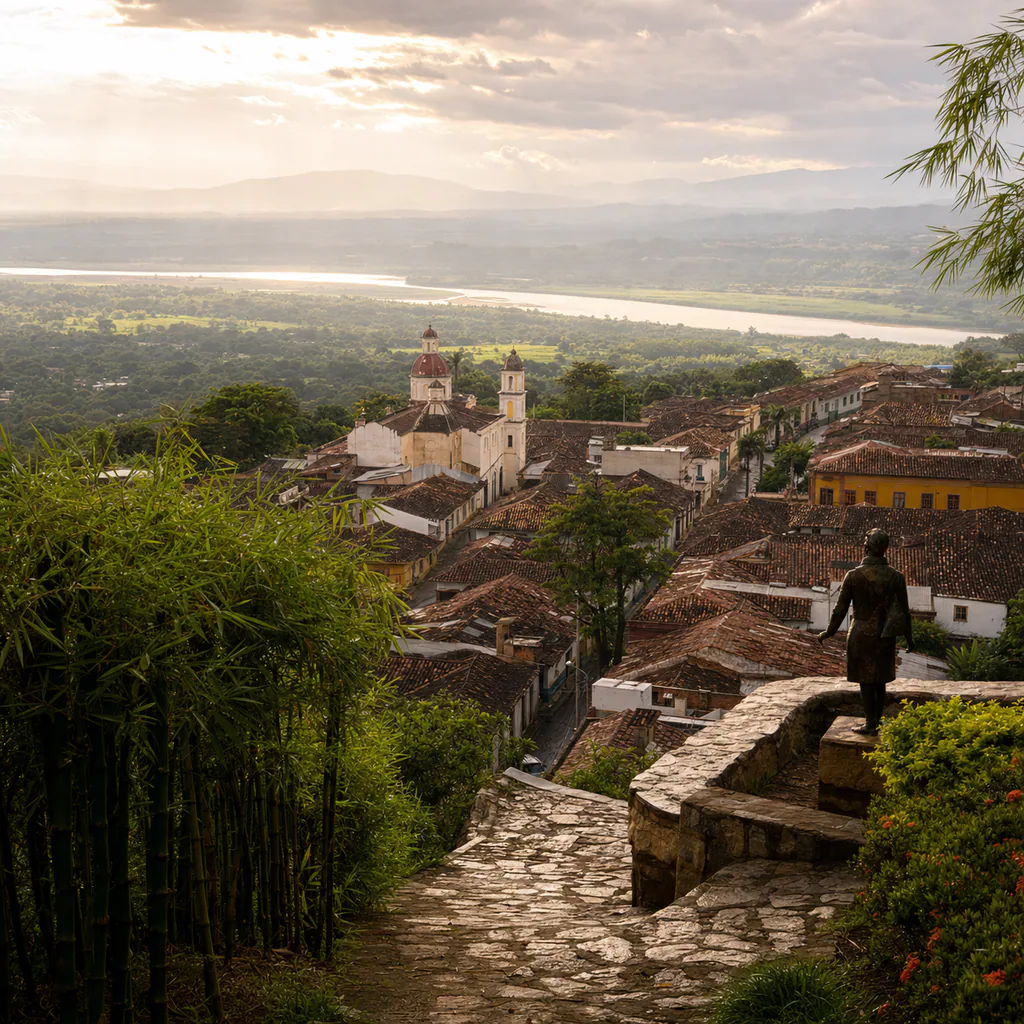
Guaduas, Cundinamarca, is a warm-climate heritage town best known as the birthplace of Policarpa Salavarrieta, or La Pola, its preserved colonial center, and the Piedra de Capira viewpoint. A full day covers the historic core and independence story; an overnight stay gives you cooler walking hours and more flexibility for the viewpoint.
For a useful 2026 route, explore the plaza and Policarpa-related sites in the morning, pause during the hottest hours, then confirm local access conditions before heading toward Piedra de Capira. Guaduas works especially well as a cultural stop between Bogotá, Honda, and the Magdalena River corridor.
Why Guaduas Matters
Guaduas matters because it connects Colombia's independence memory with the geography of movement. Long before modern highways, the route between Bogotá, Honda, and the Magdalena River made this area strategically important. Travelers, goods, letters, and ideas moved through the region. Guaduas grew as a resting point and civic center along that corridor, which helps explain why the town feels historical without needing to shout.
The figure most visitors come looking for is Policarpa Salavarrieta. Her story gives Guaduas a national emotional charge: courage, secrecy, youth, sacrifice, and the human side of independence history. Even with only a few hours, make space for the places connected with her memory. They give the town a depth that a quick plaza photo cannot capture.
Walking the Historic Center
The best way to begin is simple: walk. Guaduas works through scale. Its streets are designed for noticing doors, eaves, tiles, balconies, church bells, street corners, and the color changes that happen when late light touches old walls. Start around the main plaza, then drift into quieter side streets before deciding where to eat or rest.
Because this is a heritage town, treat the center as a shared living space. Keep noise low near homes, avoid climbing on old walls for photos, and ask before photographing people directly. The most beautiful images often come from patience: a shadow crossing a facade, a bicycle against a doorway, or a narrow street opening toward the hills.
Piedra de Capira and the Valley View
Piedra de Capira is the landscape counterpoint to the historic center. From the viewpoint, Guaduas opens toward hills, vegetation, roofs, roads, and the Magdalena valley. On a clear day, the view helps you understand why this town was tied to movement between the Andes and the river corridor. It is not just an overlook; it is a geography lesson with wind and sunlight.
Go with realistic expectations. Access, weather, visibility, and local transport can vary, especially after rain. Ask in town about current conditions before setting out, wear shoes with grip, and bring water. If clouds arrive, wait a little. Shifting light can turn an ordinary view into the best moment of the day.
Food, Heat, and Local Rhythm
Guaduas has a warm, lower-altitude feel compared with Bogotá. Plan around heat rather than pretending it is a highland town. Morning and late afternoon are better for walking; midday is better for lunch, shade, juice, or a slow café pause. Bring a hat, refillable bottle, and light clothing that still feels respectful for churches and museums.
Local meals tend to be straightforward and generous. Ask what is fresh that day instead of arriving with a rigid checklist. If you are continuing by road, Guaduas is a natural place to pause for a proper meal. The town feels better when you let it set the pace.
How to Plan a Visit
Guaduas can work as a day trip from Bogotá for travelers comfortable with road time, but it feels richer as an overnight stop. Staying the night gives you cooler hours in the center, flexible timing for Piedra de Capira, and a better chance to see the plaza when local life replaces daytime movement.
A balanced route starts with the historic center and Policarpa-related stops, continues with lunch and shade, and saves the viewpoint for later light. If you are linking Bogotá with Honda or the Magdalena valley, Guaduas makes a logical cultural pause. Confirm transport times before relying on late returns.
Practical Tips
- Verify the viewpoint conditions: Ask locally about access, weather, and transport before heading to Piedra de Capira.
- Walk early or late: Guaduas can feel hot at midday, so use the strongest sun for lunch, shade, or indoor heritage stops.
- Respect heritage spaces: Do not climb on old walls, lean on fragile doors, or treat residential streets like a photo set.
- Carry cash: Small restaurants, local transport, and family-run shops may not always accept cards.
- Give history time: The Policarpa story lands better when you are not racing through town in one hour.
🕵️ Insider Secrets
- The best first impression is often not the plaza itself, but the walk into it from a quieter side street where the roofs and hills start to align.
- If the Piedra de Capira view looks hazy, wait for a gap in the clouds instead of leaving immediately. The valley changes quickly.
- Look for guadua bamboo in the landscape. The plant is part of the town's visual identity, not just a name.
- Overnighting changes the mood completely. Evening in Guaduas feels slower, warmer, and more local than a midday road stop.
Guaduas is a town for travelers who like Colombia's history to feel physical: stone underfoot, heat in the streets, bamboo at the edge of the view, and a national heroine remembered in the place where she was born. Visit slowly, leave room for the viewpoint, and Guaduas becomes more than a heritage label. It becomes one of Cundinamarca's most meaningful pauses between mountain and river.
eSIM for Colombia
Avoid high roaming fees. Get instant 4G/LTE data with Airalo as soon as you land in Bogotá or Medellín.
- Instant Activation
- No Physical SIM Card
- Local & Regional Plans