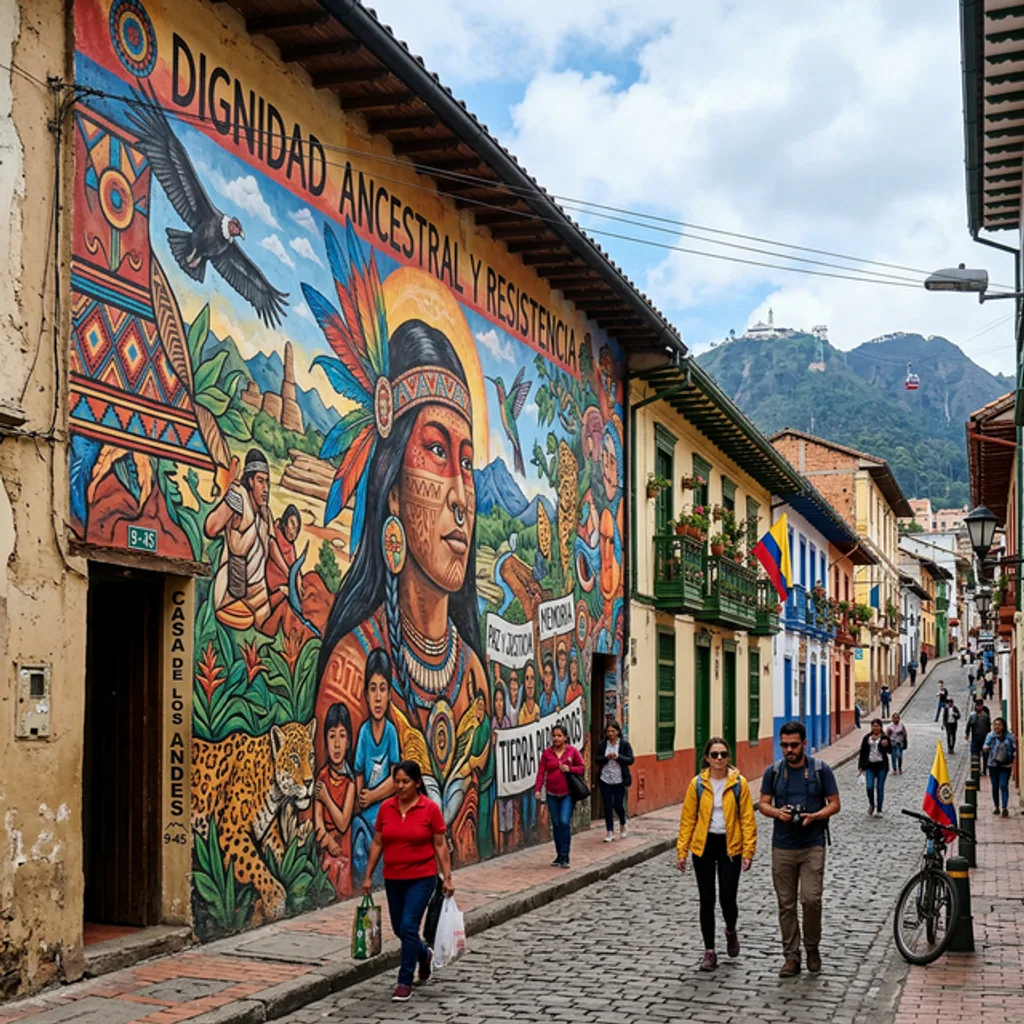
The best Bogotá street art tour depends on whether you want a compact historic walk in La Candelaria, a specialist mural tour with deeper artist context, or a separate trip to the large-format works of Distrito Grafiti. First-time visitors should usually begin in La Candelaria, then add Puente Aranda only if they have enough time and confirmed transport.
Bogotá's murals are not a fixed museum collection. Works change, walls are repainted, and local context matters. A good guide should identify artists when known and distinguish interpretation from fact. Compare formats here, then connect the walk with the Bogotá city guide and the capital's stops on the interactive Colombia map.
Choose the Right Bogotá Street Art Tour
A “graffiti tour” can mean several things. Before paying, compare the route, duration, guide credentials, language, group size, and rain policy.
- Official historic-center orientation: Bogotá's tourism authority advertises free guided walks in La Candelaria with registered professional guides. The broader historic-center format lasts about 45 minutes to two hours and limits groups to 20. Confirm the day's theme instead of assuming every departure focuses on murals.
- Specialist La Candelaria walk: Choose this for artist attribution, techniques, political context, and dense central mural corridors. Ask who leads and whether fees support artists or neighborhood projects.
- Distrito Grafiti visit: This suits monumental works on industrial façades. Bogotá's official portal places Distrito Grafiti in Puente Aranda, near Avenida de las Américas and Carrera 50. Price the transfer and return plan.
- Private or combined tour: A vehicle makes a two-area itinerary realistic; a central walk pairs naturally with food. Compare the Colombia tours planner, but judge each listing by its stated route.
La Candelaria or Distrito Grafiti?
La Candelaria is the efficient first-day choice. Its murals sit among museums, plazas, cafés, and colonial streets. Expect slopes and uneven pavement. Ask for the meeting and finishing points; tours of equal duration can cover different ground.
Distrito Grafiti offers scale. The official Idartes program page places it within Bogotá's responsible urban-art strategy. Travel in daylight, plan the return, and do not assume transport is included.
With half a day, choose one area. Combining both creates traffic pressure; a two-area private tour better suits repeat visitors or a dedicated urban-art day.
What to Check Before Booking
Search the provider or guide in the official National Tourism Registry directory. The Ministry of Commerce says RNT registration is mandatory and renewed annually. A marketplace profile is not a substitute.
- Route: Request the neighborhoods, walking distance, and final stop. “Bogotá street art” does not mean both areas are included.
- Guide and language: Confirm the live guiding language, current RNT details, and whether the experience is artist-led, community-led, or a general city walk.
- Group and access: Ask for the maximum group size, accessibility limits, restroom opportunities, and whether steep or uneven streets are unavoidable.
- Inclusions: Check whether transport, museum entry, drinks, tips, or artist contributions are included. “Free” walks normally still require advance registration and may have a stated tipping policy.
- Weather policy: Bogotá rain can arrive quickly. Ask whether the tour proceeds, shortens, changes route, or refunds when conditions make walking impractical.
- Photography and conduct: Do not block residents or traffic; ask before photographing people. Colombia's responsible-tourism guidance is a useful operator baseline.
Build a Realistic Bogotá Day
Leave a buffer before timed entries or transfers. At roughly 2,600 meters, Bogotá can make walking harder on arrival day. Combine La Candelaria with one museum, Plaza de Bolívar, and a meal. Our Bogotá street food guide helps plan that pause.
Save Monserrate for a separate weather window if visibility matters. If the tour starts early or finishes after dark, compare bases through where to stay in Colombia; a central bed can be worth more than a cheaper room followed by two long cross-city rides.
Practical Tips
- Book the route, not the rating: Read the newest reviews for changes in meeting point, guide language, group size, and actual neighborhoods visited.
- Carry layers: Bring a light waterproof jacket, sun protection, water, and shoes with grip. Bogotá can move from strong high-altitude sun to rain during one walk.
- Keep valuables discreet: Use a phone deliberately, step away from traffic before taking photographs, and follow the guide's neighborhood instructions.
- Allow traffic time: Do not schedule a Distrito Grafiti return immediately before a flight, intercity bus, or fixed dinner reservation.
- Reconfirm: Check the meeting point and departure status on the day of the tour because public events, road closures, and weather can change the route.
🕵️ Insider Secrets
- Look beyond the largest wall: Small paste-ups, stencils, stickers, and repeated symbols often reveal an artist's visual language more clearly than a single monumental mural.
- Ask what has changed: A strong guide can explain which works are recent, which have disappeared, and why repainting is part of a living street-art scene rather than a failure to preserve it.
- Use food as the pause: Instead of adding another distant attraction, leave time after a La Candelaria walk for a nearby meal and notes while the stories are still fresh.
The right Bogotá street art tour is the one whose route, guide, logistics, and community context match your available time. Verify those details before paying, treat the walls and neighborhoods with respect, and the experience becomes more than a collection of photographs: it becomes a readable introduction to how Bogotá represents itself in public.
eSIM for Colombia
Avoid high roaming fees. Get instant 4G/LTE data with Airalo as soon as you land in Bogotá or Medellín.
- Instant Activation
- No Physical SIM Card
- Local & Regional Plans