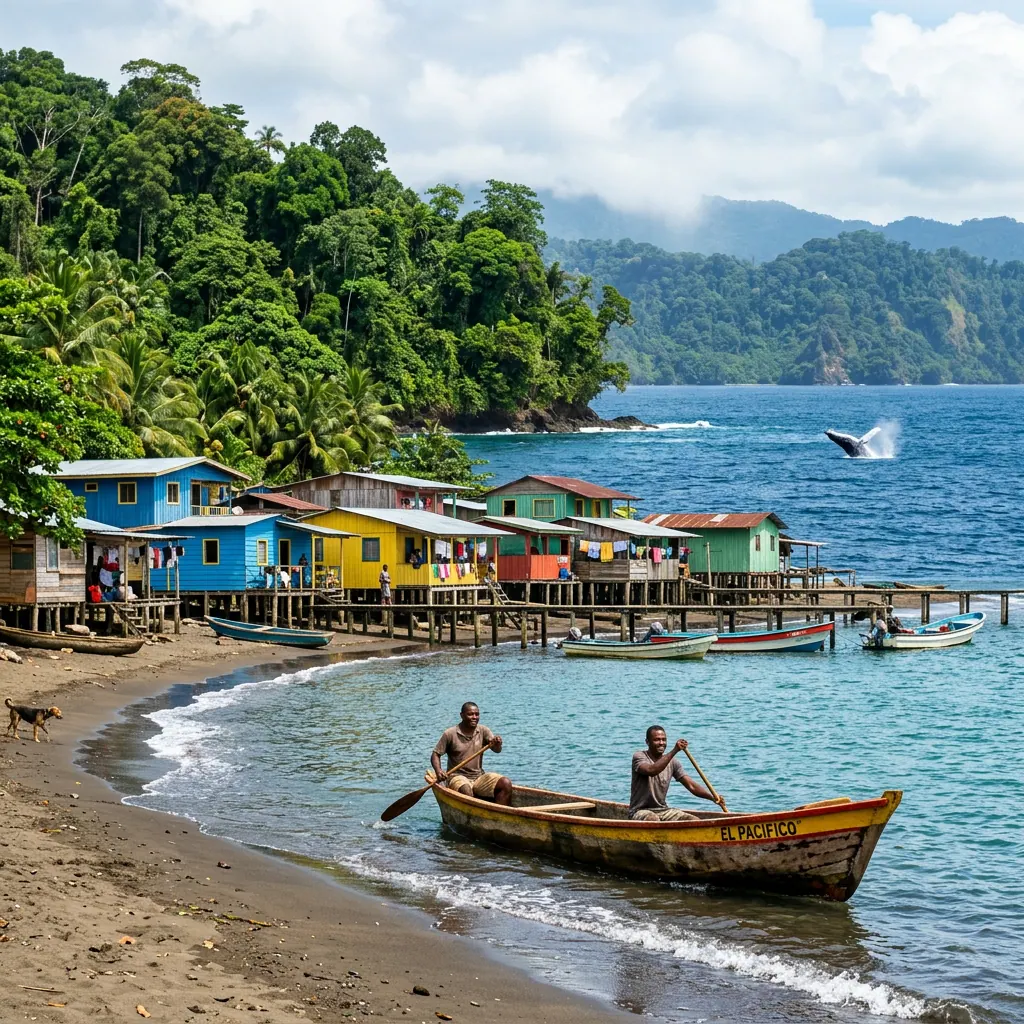
The Pacific coast of Colombia is a world apart. While the Caribbean is defined by turquoise water and white sand, the Pacific is raw, powerful, and deeply green. This immense region spans Chocó, Valle del Cauca, Cauca, and Nariño, where the Chocó Biogeographic rainforest reaches the ocean. Access changes sharply by gateway: Bahía Solano and Nuquí rely on air or confirmed sea connections, while Buenaventura is connected by road to Cali and opens a different marine route toward Uramba Bahía Málaga.
This guide is your introduction to the Pacific's unique blend of nature and culture in 2026.
The Great Migration: Humpback Whale Watching
Between July and October, Colombia's official 2026 responsible whale-watching season brings humpback whales to warm Pacific breeding and nursery waters. Nuquí and Bahía Solano are well-known Chocó bases, while Uramba Bahía Málaga National Natural Park protects another major nursery area off Buenaventura. Before choosing a base or operator, use the detailed Colombia whale-watching guide to compare departure points, booking checks, weather policies, and current responsible-viewing rules.
Whales are wild animals, not a timed attraction. Choose a provider that explains approach distances, group limits, viewing time, engine behaviour, and what happens if marine conditions prevent departure. A responsible trip can end without a close sighting; respecting mothers and calves matters more than producing a photograph.
Nuquí and Bahía Solano: Gateways to the Wild
The two main hubs for travelers are Nuquí and Bahía Solano. In 2026, these towns have resisted large-scale development, choosing instead to focus on boutique eco-lodges that blend into the jungle. Nuquí is famous for its "Thermal Springs" (Termales), where you can soak in hot volcanic water while looking out at the crashing waves of the Pacific. Bahía Solano is one gateway for a separately arranged visit to Utría National Park, a protected inlet that serves as a nursery for whales and habitat for hundreds of bird species.
Uramba Bahía Málaga: The Buenaventura Route
Uramba Bahía Málaga is not an extension of a Nuquí or Bahía Solano itinerary. Start in Cali or Buenaventura, reach Buenaventura's tourist pier, and continue by boat toward Juanchaco. The official park page describes an approximately one-hour crossing, followed by local connections for Juanchaco, Ladrilleros, or La Barra. Schedules, luggage rules, sea conditions, and return times can change, so confirm the named operator and both directions before committing to accommodation or onward transport.
The park is open, but attractions require an approved local guide or interpreter, plus registration and induction. Visitor insurance is recommended, and transport, guiding, meals, lodging, and boat activities are normally paid separately. Whale-watching vessels require authorization and a community environmental interpreter. Use the Uramba Bahía Málaga map entry to keep the gateway, protected-area status, and official source together while planning.
Gorgona Is a Separate Southern Expedition
Gorgona Natural National Park belongs to the same immense Pacific story, but it is not a simple onward boat stop from Nuquí. Plan it as a separate protected-area expedition: reconnect by air through an inland hub toward Cali and Guapi, then continue by sea with an operator authorized by Parques Nacionales. Read the complete island guide before committing to the extra travel days. Never buy a generic “coastal transfer” and assume it includes park admission, insurance, a guide, or a permitted landing.
Current 2026 guidance describes day visits, advance reservation, visitor induction, insurance, and an authorized guide or interpreter. Marine weather can delay or cancel the boat even after the inland flights are confirmed, so keep a buffer night near the gateway and verify the complete itinerary with the authorized operator before leaving Nuquí. The route shown on our map is an editorial planning connection, not a claim that a direct Nuquí–Gorgona service exists.
Afro-Colombian Heritage: The Rhythm of the Sea
Afro-Colombian communities shape the culture and stewardship of much of this coast. Marimba music, currulao, oral history, fishing knowledge, and food are living traditions rather than add-ons to a wildlife trip. Ask before photographing people or community spaces, agree clearly on services, and choose local guides, cooks, boat crews, and accommodation whenever practical.
Gastronomy: Flavors of the Jungle and the Ocean
Pacific cooking brings together seafood, coconut, plantain, tropical fruit, smoked fish, and local herbs. Look for community kitchens and matronas serving encocados and regional rice dishes, and ask about locally produced viche where it is offered legally. Clarify meal times and dietary needs in advance because remote lodges and villages cannot always replace ingredients at short notice.
Practical Tips for the 2026 Pacific Adventurer
- Access: There are no roads into Bahía Solano or Nuquí, but Buenaventura is reached by road from Cali. Match the inland gateway to the exact coastal destination, reserve every sea segment, and never assume that one Pacific boat route continues to another park.
- Weather: It rains. A lot. Embrace it! The rain is what makes the jungle so lush and the waterfalls so powerful. Bring high-quality waterproof gear and dry-bags for your electronics.
- Sustainability: The Pacific is a delicate ecosystem. In 2026, travelers are expected to be "Zero-Waste." Avoid all single-use plastics and choose lodges that use solar power and rainwater harvesting.
- Money: There are no ATMs in many of these coastal villages. Carry enough cash (Colombian Pesos) for your entire stay, including tips for guides and local purchases.
A strong Pacific itinerary leaves room for rain, sea delays, and community timing. Choose one gateway at a time, verify every protected-area requirement, and keep enough buffer to travel without pressuring a crew or guide into unsafe conditions.
🕵️ Insider Secrets
- Ask for the exact gateway: A quote that says only “Colombian Pacific” is incomplete. Confirm the airport or road terminal, pier, village, and every boat segment.
- Separate wildlife from transport: A transfer boat is not automatically an authorized whale-watching vessel or a permitted park excursion.
- Keep a weather alternative: Ask what community, food, music, or rainforest activity is available if sea conditions cancel the original plan.
eSIM for Colombia
Avoid high roaming fees. Get instant 4G/LTE data with Airalo as soon as you land in Bogotá or Medellín.
- Instant Activation
- No Physical SIM Card
- Local & Regional Plans