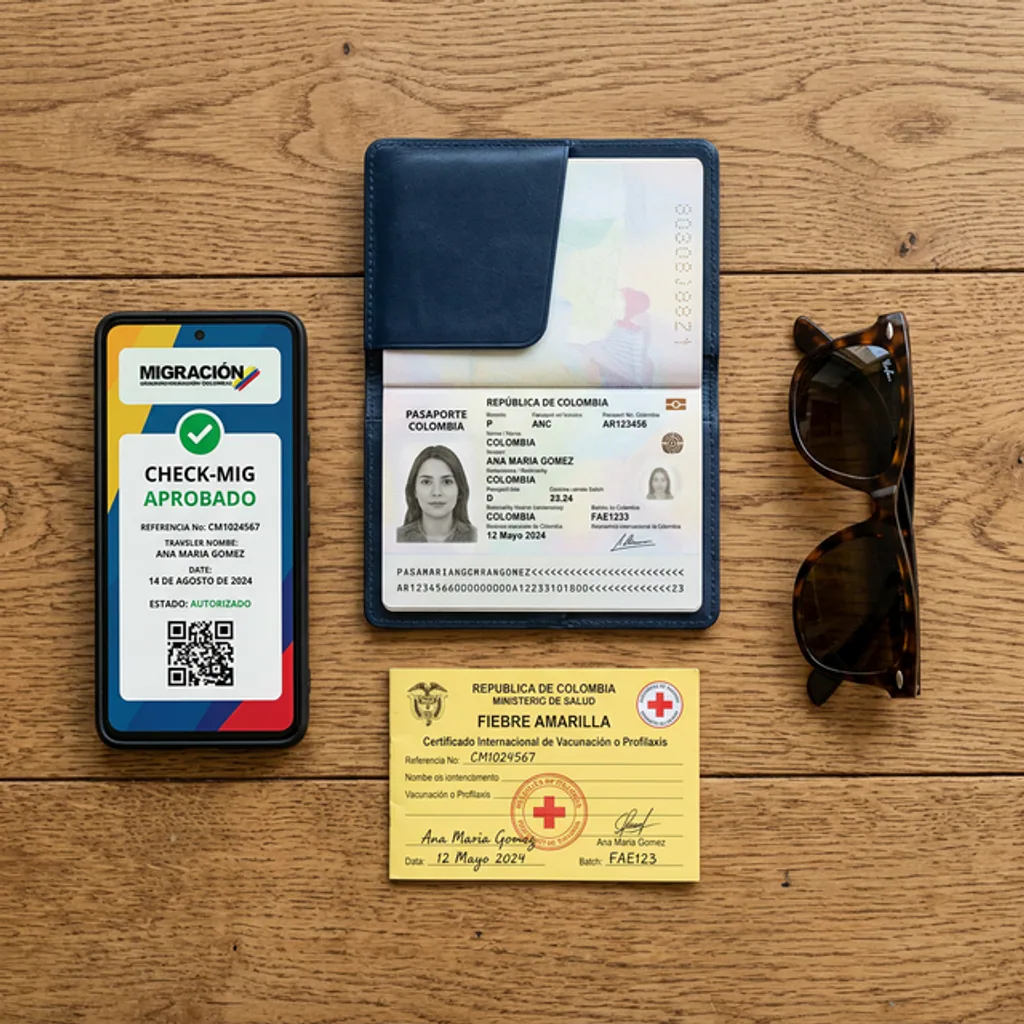
Good preparation makes arrival in Colombia much easier, but travel requirements change and should never be reduced to a single checklist copied from an old guide. The most reliable approach in 2026 is to confirm your own passport, route, airline, and health circumstances with the relevant Colombian authority before departure. This guide explains the main systems and the questions to resolve without presenting recommendations as universal legal requirements.
1. Check-Mig Is Useful, Not Mandatory
Check-Mig is a free, optional pre-registration service. Migración Colombia says that national and foreign travelers entering or leaving the country may use it to preload trip information and speed up the migration interview. It is not an entry visa and it does not replace the immigration officer's decision.
- Timing: The form can be completed up to 72 hours before travel and until one hour before the journey.
- Information: Have your travel document, carrier details, accommodation address, contact information, and reason for travel ready.
- Confirmation: Keep the email or downloadable confirmation available in case you want to present it during control.
- Cost: The official service is free. Use the Migración Colombia Check-Mig page rather than a paid intermediary.
If an airline gives you a different instruction, ask it to identify the rule it is applying to your route. Carrier documentation checks and Colombian immigration requirements are related, but they are not always the same process.
2. Visas, Entry Permission, and Length of Stay
Whether you need a visa depends on your nationality, travel document, purpose of travel, and sometimes your transit history. Do not assume that advice written for another nationality applies to you. Check the current entry and exit requirements published by Migración Colombia and the visa information from Colombia's Ministry of Foreign Affairs before buying a non-refundable ticket.
Visa-exempt visitors admitted for tourism normally receive a Permiso de Ingreso y Permanencia (PIP), with the authorized category and duration decided at entry. Check the date or permission recorded by the officer before leaving the counter. An initial tourism permission is commonly granted for up to 90 days, but it is the authorization actually issued to you that controls your stay.
Eligible travelers who want more time may apply online for a Permiso Temporal de Permanencia (PTP), also called a prórroga de permanencia. Migración Colombia states that a tourism permission may be extended by up to 90 calendar days and that total stay cannot exceed 180 days, continuous or discontinuous, in the same calendar year. Apply while your current permission is still valid and consult the official PTP procedure for current fees and documents.
3. Yellow Fever and Personal Health Planning
Yellow-fever advice is based on itinerary and risk area, not on a simple nationwide altitude rule. Colombia's Ministry of Health identifies municipalities with high or very high transmission risk and recommends vaccination before travel to those areas. The vaccine should generally be received at least ten days before exposure so protection can develop.
Colombia does not apply one universal yellow-fever document rule to every international arrival. However, authorities or carriers may request a vaccination record for travel to high-risk areas, and another country on your itinerary may impose its own certificate requirement after a stay in Colombia. Since May 2025, Parques Nacionales has also required visitors to its protected areas to have received the vaccine at least ten days before entry and to present a valid record. Review the Ministry of Health guidance for travelers and the National Parks notice, discuss contraindications or exemptions with a qualified health professional, and verify every onward destination.
In warm, humid regions, reduce mosquito exposure with repellent, long clothing when practical, screened accommodation, and mosquito nets where supplied. Medical needs vary by traveler and region, so a pre-travel consultation is especially valuable for pregnancy, chronic conditions, remote expeditions, or plans involving altitude.
4. Insurance, Documents, and Connectivity
Travel insurance is not a universal entry requirement, but medical care, evacuation from remote areas, weather disruption, and missed transport can be expensive. Read the policy exclusions closely: trekking altitude, diving, motorbike use, and pre-existing conditions may require specific coverage.
Store offline copies of your passport identity page, entry authorization, insurance details, prescriptions, and reservations. Keep the copies separate from the originals and leave one set with a trusted contact. A local SIM or eSIM can help with navigation, bookings, and emergency communication, but download essential maps and addresses before traveling to rural areas where service may disappear.
5. Money and Arrival Basics
The Colombian peso (COP) is the local currency. Cards are common in cities, while small businesses, rural transport, markets, and remote communities may rely on cash. Use ATMs in controlled locations, shield your PIN, decline unfamiliar assistance, and check both the machine fee and your bank's foreign-transaction terms. When a terminal offers conversion into your home currency, compare the displayed rate before accepting it.
Practical Tips
- Recheck before departure: Review official requirements again during the final week because health alerts and administrative procedures can change.
- Inspect your admission: Confirm the permitted stay recorded at immigration instead of assuming you received 90 days.
- Keep an offline arrival pack: Save your first accommodation address, host contact, onward booking, and insurance assistance number.
- Plan for remote areas: Carry sufficient medication, cash, water treatment where appropriate, and a communication plan.
- Use official portals: Government forms should not require a travel agency or an unofficial payment page.
🕵️ Insider Secrets
- Screenshot the final page: Email delivery can be delayed, so save confirmations immediately after completing an official online process.
- Record the right numbers: Put your passport number, insurer case line, bank card cancellation line, and accommodation contact in an encrypted offline note.
- Carry small pesos on arrival: A modest amount is useful for tolls, local transport, or a vendor whose card terminal is offline.
- Separate essentials: Do not keep every card, document, and cash reserve in the same bag.
The best logistics guide is one that helps you ask the right questions. Confirm current rules with Colombian authorities, keep proof of the permissions actually granted to you, and build enough flexibility into your itinerary for weather, transport, and administrative changes.
eSIM for Colombia
Avoid high roaming fees. Get instant 4G/LTE data with Airalo as soon as you land in Bogotá or Medellín.
- Instant Activation
- No Physical SIM Card
- Local & Regional Plans